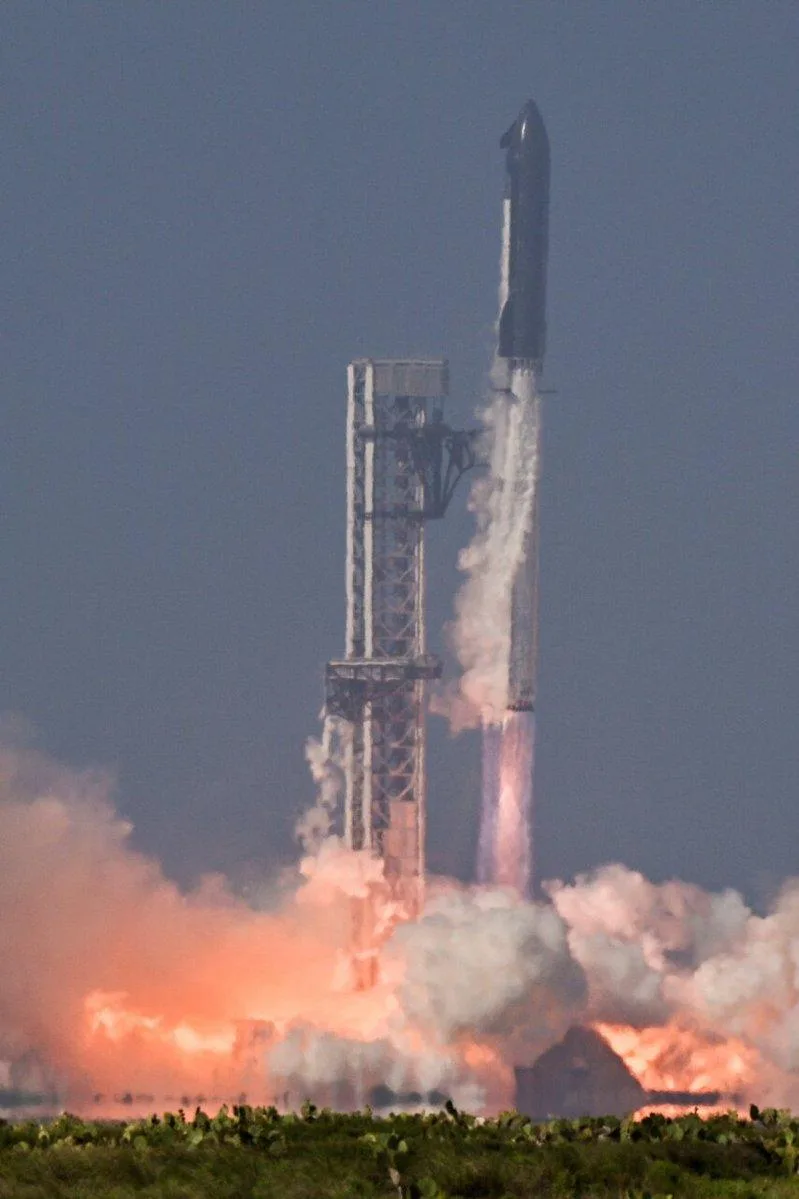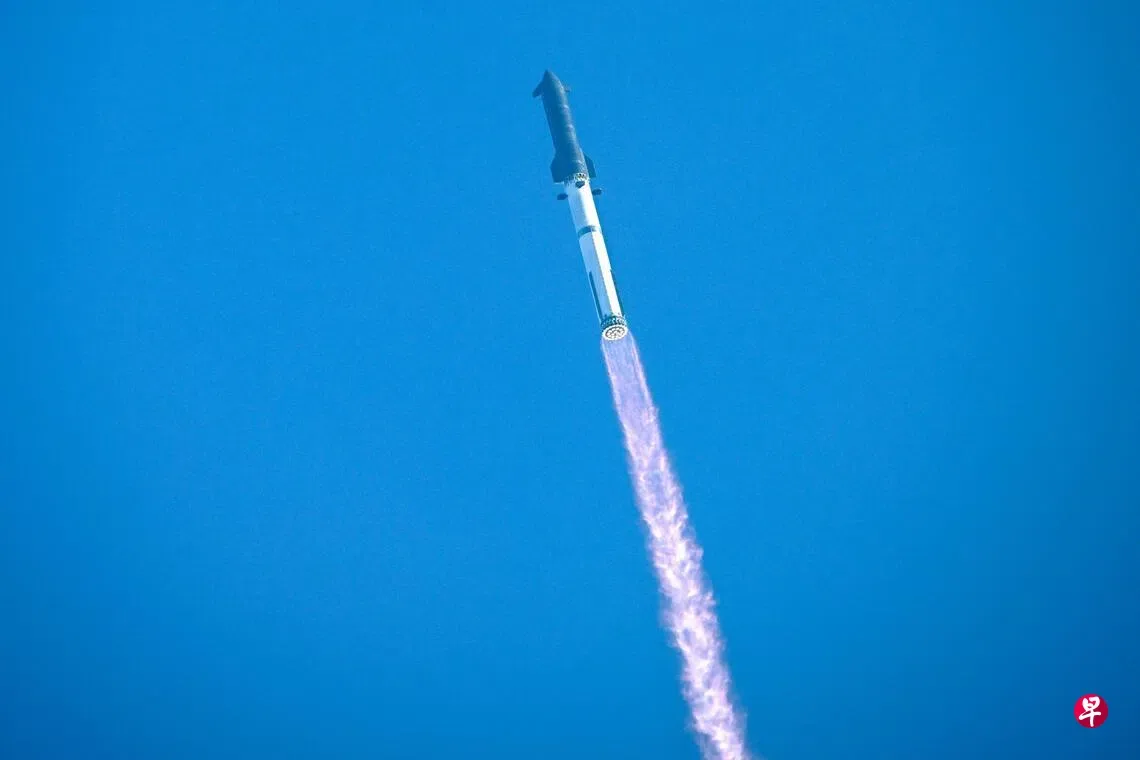
SpaceX conducted the 12th test flight of its upgraded Starship V3 rocket system on May 22, 2026, from its Starbase facility in Texas. The roughly 120-124 meter tall rocket consists of a first-stage Super Heavy booster about 70 meters tall with 33 upgraded Raptor engines and a second-stage Starship spacecraft atop it [1, 2, 3]. Launch occurred around 5:30 pm Central Time.
Approximately two minutes after liftoff, the Super Heavy booster separated successfully from the Starship second stage [1, 4, 5]. However, the booster failed to complete its boost-back burn and fell uncontrollably into the Gulf of Mexico, as SpaceX did not plan to recover it during this flight [1, 4, 5, 3]. Meanwhile, Starship deployed 20 simulated Starlink satellites along with 2 specially equipped real Starlink satellites designed to image the heat shield during reentry [1, 6, 4, 5].
One of the six Raptor engines on the Starship spacecraft shut down earlier than expected, prompting mission control to cancel a planned on-orbit engine relight test [1, 6, 4, 5, 3]. Despite this, the spacecraft completed about 40 minutes of flight, reentering Earth's atmosphere and splashing down in the Indian Ocean, where it disintegrated upon impact as planned [1, 6, 4, 5, 3].
The test flight included experimental maneuvers such as removing a heat shield tile to assess aerodynamic loads, tail fin stress testing, and dynamic tilting to simulate future ground landing trajectories [1, 5]. The primary goal was to validate multiple upgraded and redesigned systems of the integrated Starship system, including the spacecraft, booster, Raptor engines, and launch mount [1, 7, 4, 2, 5].
SpaceX CEO Elon Musk described the flight as "epic," congratulating the team by stating, "你们为人类实现了一个目标" (You have accomplished a milestone for humanity) [5, 8, 3]. NASA Administrator Bill Nelson praised the flight, saying, "离月球又近了一步……离火星又更近一步" (One step closer to the Moon... one step closer to Mars) [5, 8, 3]. NASA regards the upgraded Starship as a core part of the Artemis lunar program and aims for orbital rendezvous tests by 2027.
The full Starship V3 weighs about 5,533 tons and produces roughly 9,240 tons of thrust, improvements over previous versions [2]. SpaceX has invested over $15 billion in the Starship program as of May 2026 [4, 5]. The flight marked Starship's first test after a seven-month pause [5, 8]. Earlier hydraulic issues with the launch tower's mechanical arm delayed the launch by one day but were fixed before liftoff [5, 8, 3].
SpaceX is preparing for an initial public offering expected next month, potentially the largest in history, with a valuation exceeding $1.5 trillion [6, 4, 9, 3]. The next major steps include refining engine reliability and conducting orbital rendezvous tests with NASA’s Artemis program by 2027.