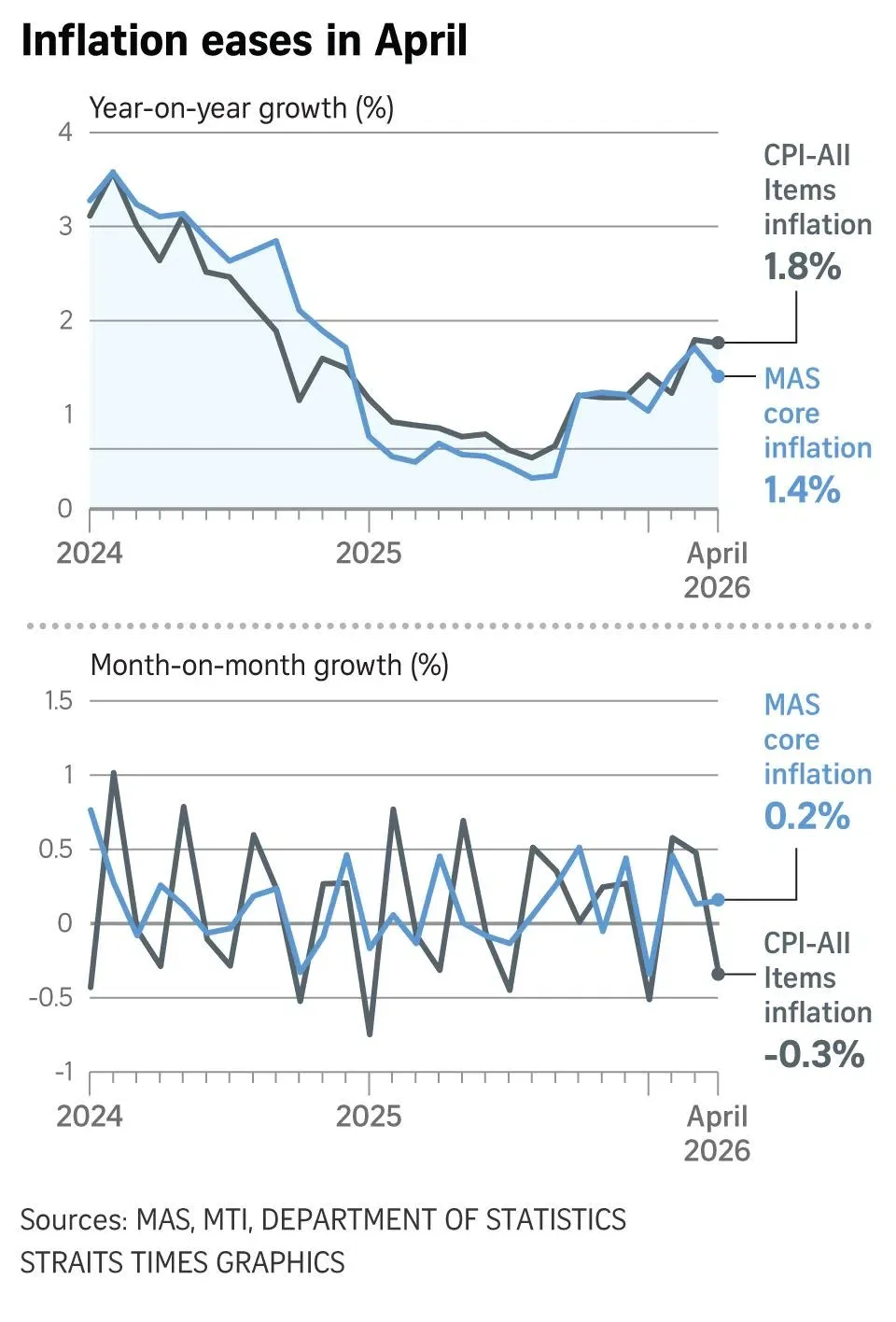
Singapore’s core inflation rate dropped to 1.4% in April 2026, down from 1.7% in March, according to official data released today by the Monetary Authority of Singapore (MAS) and Ministry of Trade and Industry (MTI) [1, 2, 3]. Core inflation excludes accommodation and private transport costs.
Overall consumer price inflation remained steady at 1.8% in April, the same as March, despite a 0.3% month-on-month decline in the overall Consumer Price Index (CPI) [1, 3]. By contrast, core inflation rose 0.2% month on month.
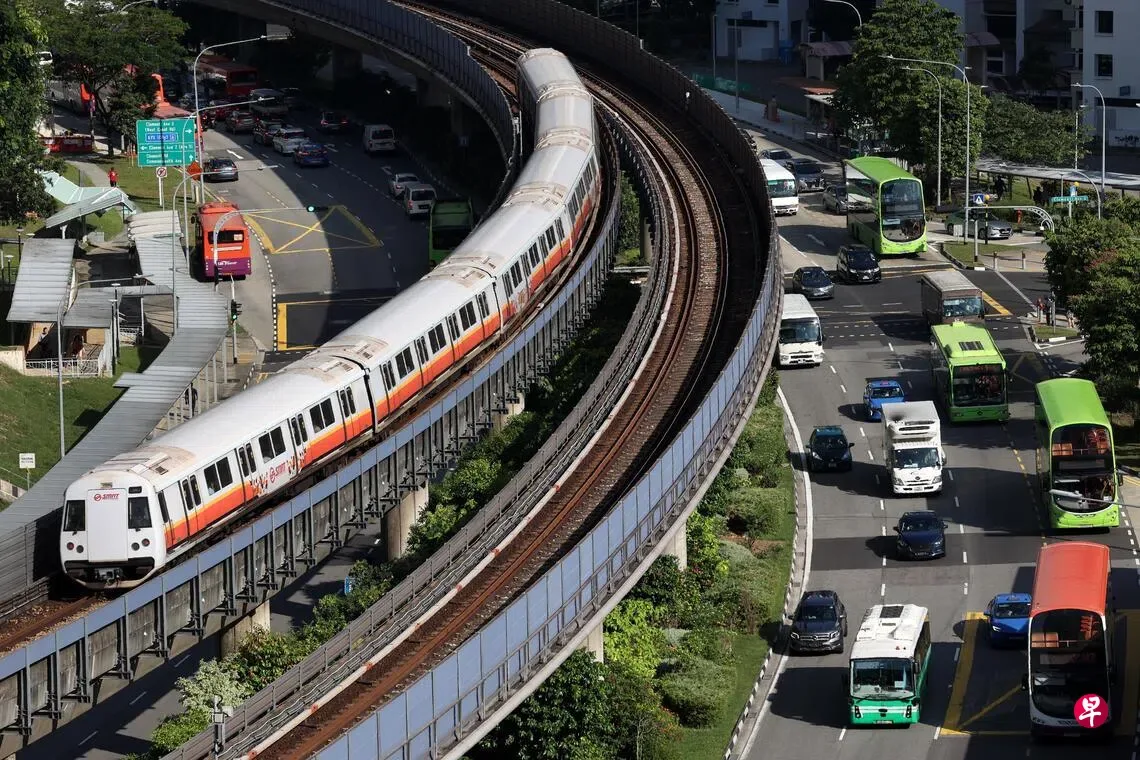
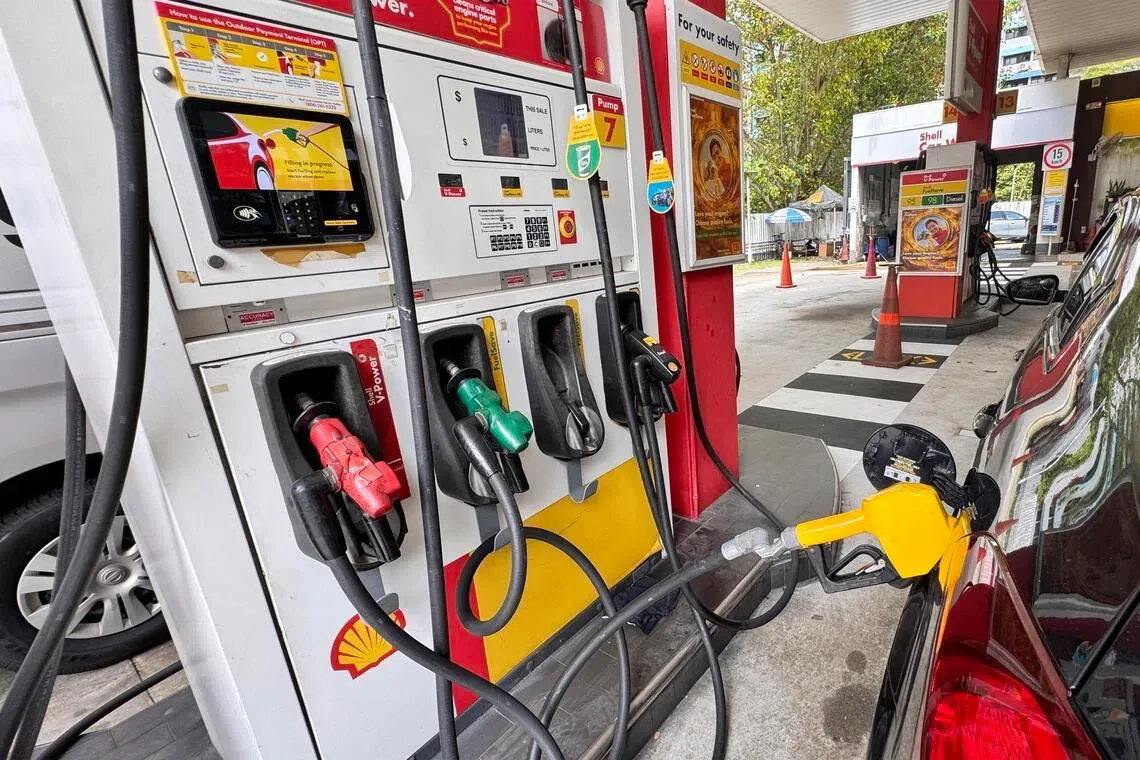
Private transport inflation jumped sharply from 6.6% in March to 8.1% in April, driven by higher petrol and car prices [1, 2]. Accommodation inflation edged up from 0.3% to 0.4%, reflecting increased housing rents.
Services inflation eased from around 2.1% in March to 1.5% in April, helped by lower health insurance premiums and cheaper telecom prices [1, 2]. Retail and other goods inflation also slowed to 1.5% from 1.8%, partly due to easing water price increases [1, 2]. Meanwhile, electricity and gas prices fell at a slower pace, declining 3.0% in April compared to 4.3% in March as the fall in electricity prices moderated [1, 2]. Food inflation stayed steady at 1.6% [1, 2].
MAS and MTI said that imported cost pressures will rise and affect a broader range of goods and services due to higher global energy and input costs linked to recent Middle East developments. “As higher energy and other input costs arising from the developments in the Middle East pass through global supply chains, they will raise production and transport costs for a wider range of Singapore’s imported goods and services,” the agencies said [1]. They warned that higher global energy prices in April and May will push up regulated electricity tariffs starting in the third quarter of 2026 [2].
Economists were surprised by the larger-than-expected drop in core inflation, which fell below forecasts around 1.7%-1.8%. Analysts attributed the moderation partly to lower health insurance inflation after new Integrated Shield Plan riders took effect April 1, reducing premiums [4, 5]. Bank of America economists noted that “the decline in insurance premiums was not fully reflected in analysts’ forecasts,” while Barclays economist Brian Tan said “the drag from the health insurance segment was larger than expected” [4]. Market analyst Zavier Wong called the softer inflation reading a “mild positive surprise” driven by one-off factors such as health insurance and telecom prices [6].
DBS senior economist Chua Han Teng said the moderation in inflation did not indicate weaker demand, pointing instead to the resilience of Singapore’s labor market and overall economy [4]. The government revised its full-year 2026 inflation outlook upward to 1.5%-2.5%, up from an earlier 1%-2% forecast, reflecting the expected rise in imported costs [7, 4].
Singapore also raised its first-quarter 2026 GDP growth estimate to 6.0%, well above earlier estimates, with the full-year growth forecast now at 2%-4%, factoring in risks from energy supply disruptions [8].
Regulated electricity tariffs for each quarter are set based on average natural gas prices during the first 2.5 months of the prior quarter, meaning April-May energy price increases will influence tariffs starting from Q3 2026 [2, 6].