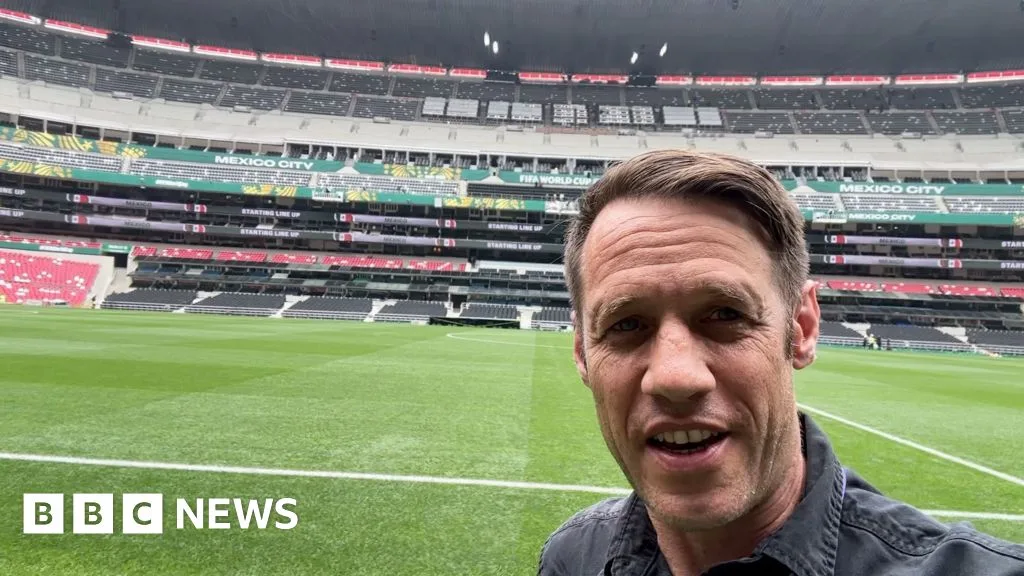
Mexico City's Azteca Stadium hosted the opening match of the expanded 48-team 2026 FIFA World Cup on June 11. The match marked the stadium’s third time staging a World Cup opener and featured Mexico facing South Africa in front of a near-capacity crowd of around 83,000 spectators [1, 2, 3, 4].
Mexico entered the tournament opener as a favorite, aiming to win their first-ever World Cup opening match after seven previous attempts without a victory. Coach Javier Aguirre spoke of his deep emotional connection, recalling memories of the 1986 Mexico City World Cup and saying, "I have not had a greater emotion in 50 years in football than a World Cup at home. It is something unforgettable." He added, "We will break that statistic [of no opening match wins]" [1, 3, 5].
South Africa’s coach Hugo Broos acknowledged Mexico’s home advantage and quality players, stating, "They play good football. They have very good players, players who can decide a match. And playing in front of 85,000 people gives them a boost." He also noted his team’s preparation for Mexico City’s altitude: "Because of the altitude, we had to be here a little bit sooner. We had 10 days, and I think 10 days is sufficient. From that side, I think we are ready" [5].
The 2026 World Cup is the first held in a 48-team format, with matches spread across 16 cities in Mexico, the U.S., and Canada over 39 days, drawing an estimated 5 million visitors [6, 7, 8, 1, 2]. This expanded geographic layout leads to an estimated 7.8 million metric tons of carbon dioxide emissions, more than double the footprint of the 2022 Qatar World Cup. Sports ecologist Madeleine Orr commented, "I think the World Cup, in theory, is really fun for the sport and for visibility -- but bad from a climate standpoint" [7, 8].
Preparations at Azteca Stadium were accompanied by protests in Mexico City from dissident teachers and families of missing persons, who highlighted the plight of approximately 133,000 disappeared individuals in Mexico. More than 50,000 police were deployed to secure the opening day and prevent disruptions. Mexican President Claudia Sheinbaum stated on June 10, "Everything is under control. It’s going to be a great opening ceremony" [9, 10, 4]. The festive atmosphere inside the stadium contrasted with the rallies outside, where fans like Alejandro Garcia called Azteca "our temple" and expressed hope that "all of the protests will now be forgotten" [4].
The tournament also introduced 11 new rule changes aimed at speeding up play and improving fairness. FIFA said the modifications focused on "combating discrimination, reducing time-wasting, improving the tempo of matches and enhancing the experience of players and fans" [11, 12]. The official 2026 World Cup trophy was created by Milan-based artisan GDE Bertoni [7].