The European Union ordered Meta on June 9, 2026, to allow competing AI chatbots free access to its WhatsApp platform within five working days as an interim step amid an ongoing antitrust investigation [1, 2, 3, 4, 5]. The order aims to restore the status quo that existed before Meta’s policy changes in October 2025, when the company effectively banned third-party AI assistants from WhatsApp starting January 15, 2026 [1, 3, 4].
Meta had initially changed its WhatsApp Business Solution Terms on October 15, 2025, blocking third-party general-purpose AI assistants. In March 2026, Meta modified the policy to allow access for a fee, but the EU found this still had an anticompetitive effect similar to the ban [1, 3, 4]. The commission requires Meta to restore access under the same conditions as before October 15, 2025, meaning no fees and no restrictions [1, 3, 4, 5].
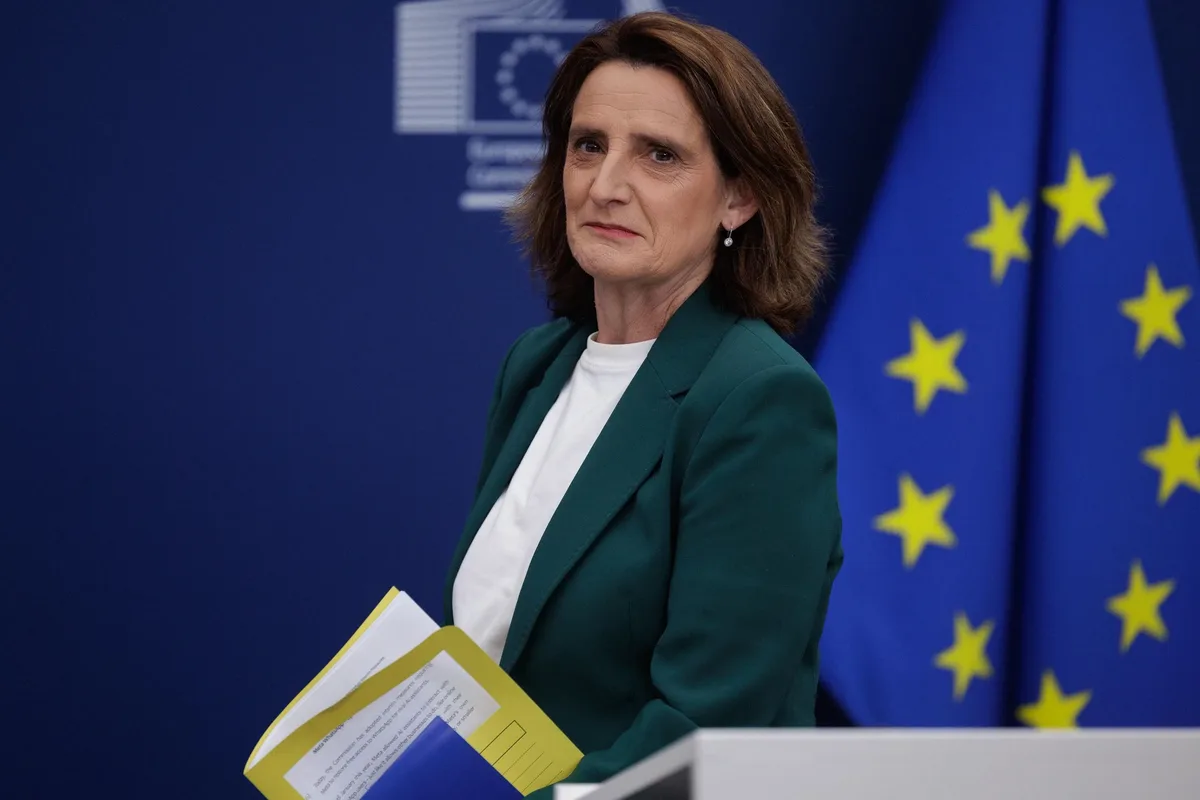
EU Antitrust Chief Teresa Ribera said, “Today, we require Meta to restore access to WhatsApp for competing AI assistants while we investigate whether the restrictions may infringe EU competition rules.” She added the measure is needed to “prevent serious and irreparable harm to competition in this growing market by Meta’s conduct, which at first sight infringes EU competition rules” [1]. Ribera noted competition can be lost quickly in fast-moving markets [4].
Meta responded by calling the EU order “regulatory overreach subsidised by the many European companies that pay,” and said it plans to appeal the ruling [1, 2, 6, 4, 5]. The company complained the order forces it to grant large firms free access to WhatsApp Business API at Meta’s expense [1].
The EU set a compliance deadline of five working days from June 9, 2026. Failure to comply could lead to fines of up to 10% of Meta’s global annual revenue, potentially exceeding $15 billion [1, 6].
The interim measure will stay in place until the EU concludes its antitrust investigation, which may last until June 2029 or until a final decision is adopted [6, 3, 5]. The investigation has expanded to cover Italy in cooperation with Italian authorities [3]. Meta has held a dominant position in the European messaging market since at least 2023 [4]. Before the October 2025 policy change, third-party AI chatbots accessed WhatsApp Business API freely and without restrictions [1, 3, 4].
The EU opened formal antitrust proceedings against Meta on December 4, 2025, following the company's restrictive actions. It warned Meta in February 2026 that interim measures could be imposed if WhatsApp access was not restored to rival AI developers [1, 6, 3]. On March 4, 2026, Meta’s revised fee-based access policy failed to satisfy EU concerns, leading to today’s order [3, 4].