Astronomers using NASA’s James Webb Space Telescope have identified faint, distant objects dubbed “little red dots” that do not behave like normal galaxies in the early universe. [1]
The objects appear compact, with diameters of only several hundred light-years, a tiny size in cosmic terms. They are estimated to be more than 11 billion to 12 billion years old, placing them in the early universe. [1]
The red color comes from temperatures of about 1,700 to 3,700 degrees Celsius, lower than those of typical stars. That temperature range helps set them apart from ordinary galactic light sources. [1]
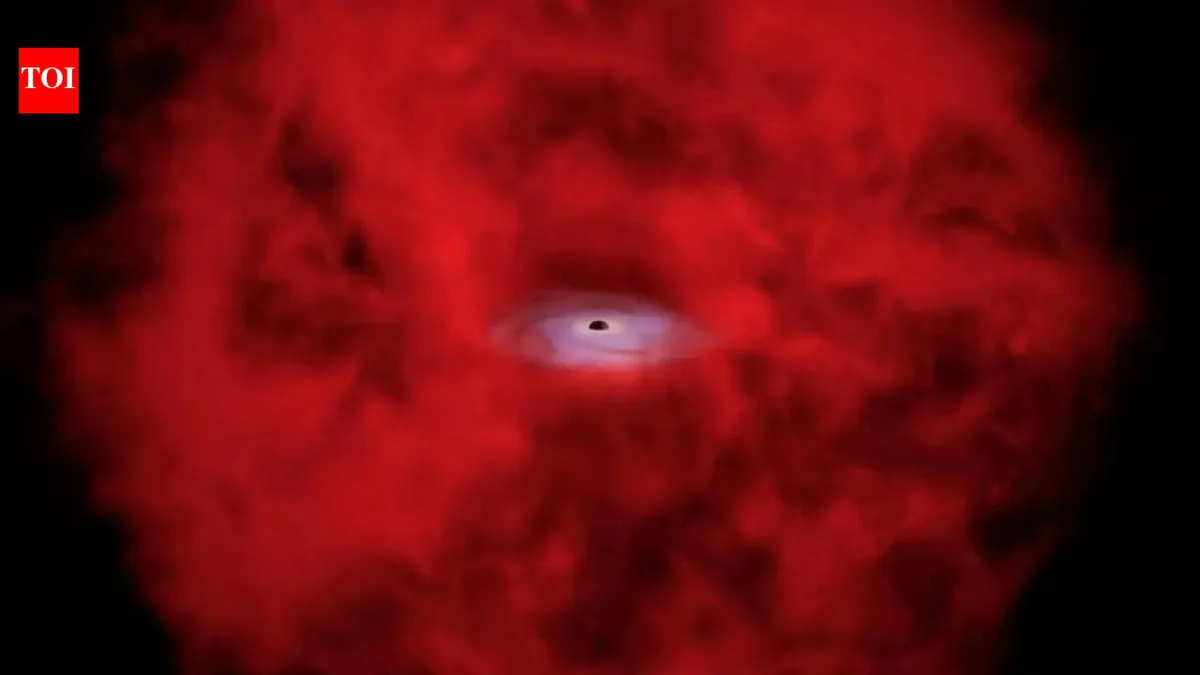
New X-ray observations from NASA’s Chandra X-ray Observatory detected emissions from the same locations, suggesting some of the objects may contain rapidly growing supermassive black holes buried inside dense gas clouds. [1]
Researchers say one explanation is that a black hole sits inside the clouds, feeds on surrounding material and heats the gas enough to produce the X-ray radiation seen by Chandra. The black hole theory is still a hypothesis, but it fits the compact structure and unusual radiation from the sources. [1]
The Webb and Chandra findings give astronomers a new target for studying how some of the earliest massive objects formed and how black holes may have grown so quickly after the Big Bang. [1]