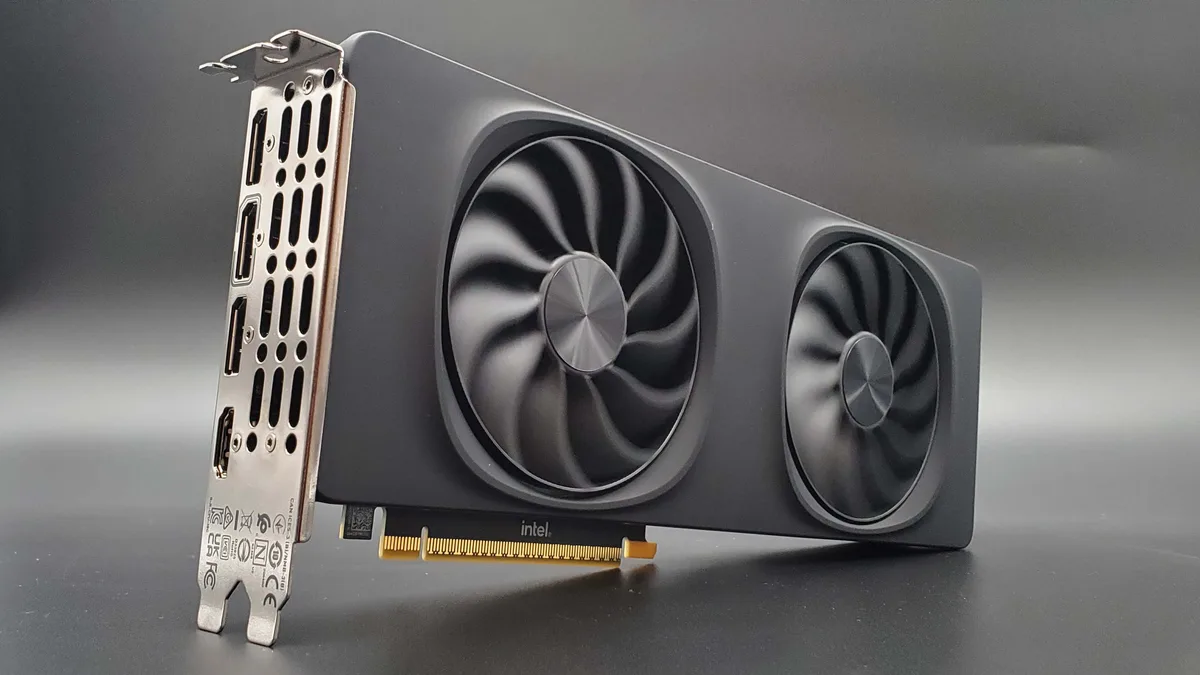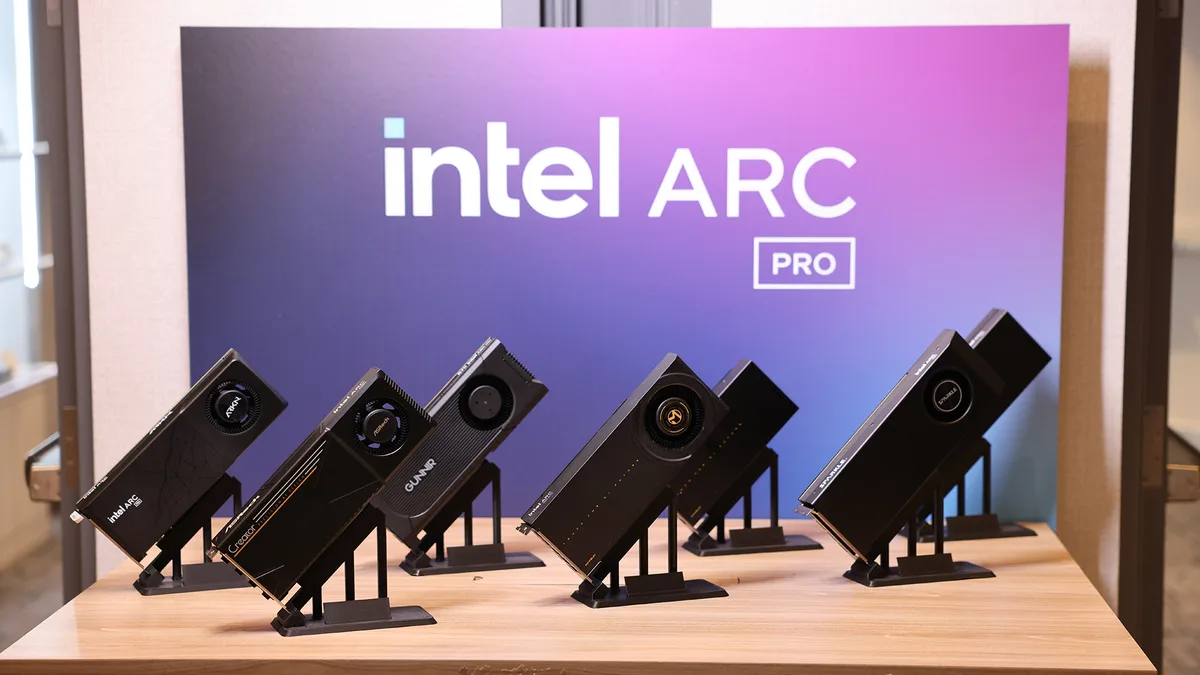
Intel’s Arc Pro B70 professional GPU uses the Big Battlemage G31 core with 32 Xe2 cores, 4,096 stream processors, 32 ray tracing units, 256 XMX engines, and 32GB of GDDR6 VRAM on a 256-bit bus [1, 2]. The chip measures 368 mm², manufactured on a TSMC N5-class node, significantly larger than Nvidia’s RTX 5060 Ti GPU at 181 mm², suggesting higher production costs for Intel [1].
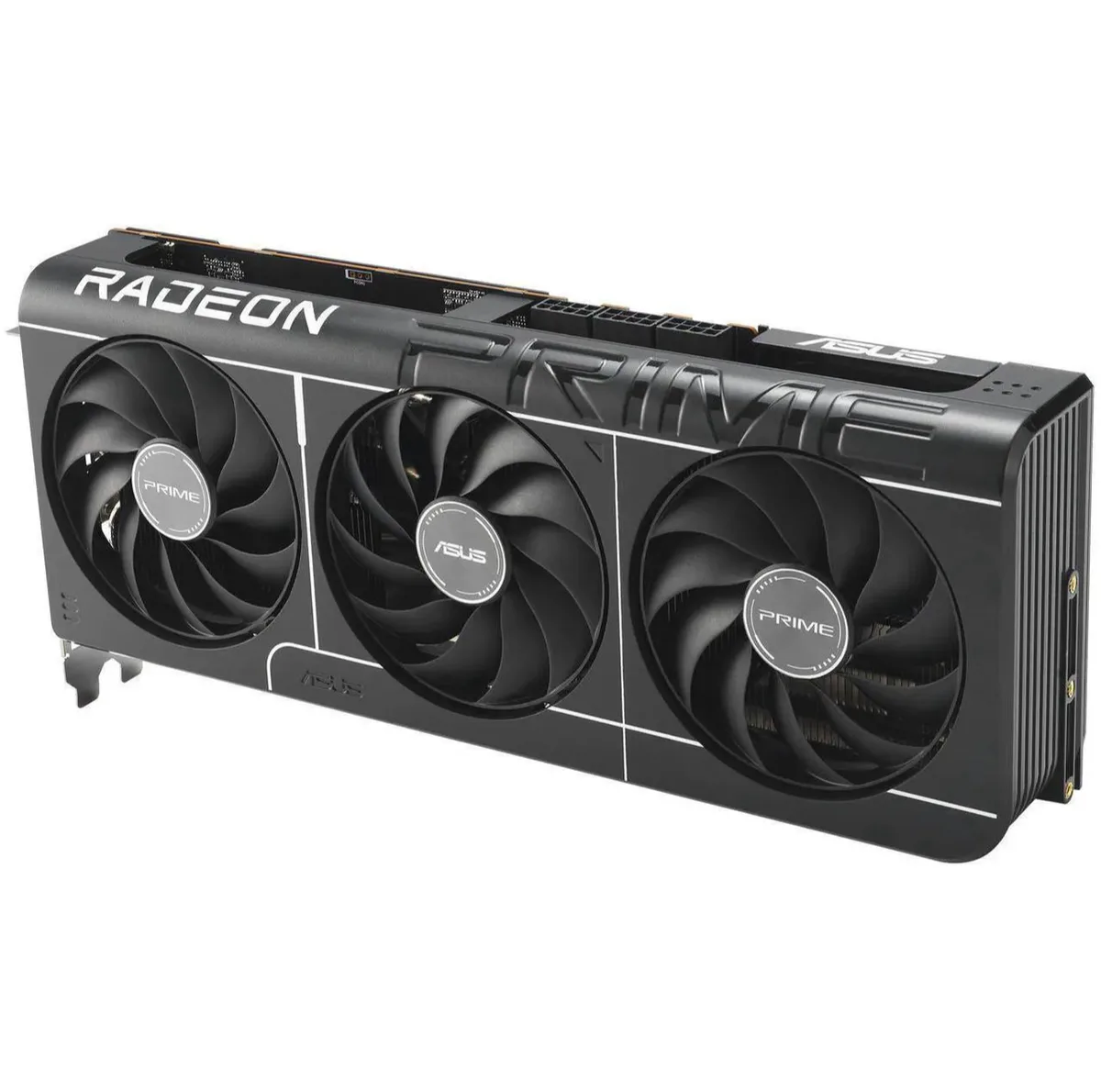
In gaming benchmarks focused on rasterization, the Arc Pro B70 performs at levels near identical to Nvidia’s RTX 5060 Ti 16GB, matching frame rates closely in tested titles [1]. However, under ray tracing and path tracing workloads, the Arc Pro B70 falls behind the Nvidia card but maintains better performance than AMD’s Radeon RX 9060 XT 16GB in pure raster tests [1, 2]. Sources agree the Arc Pro B70 beats the AMD RX 9060 XT in most games but is outperformed by Nvidia in ray tracing [1, 2].
Compared to its predecessor, the Arc B580, the Arc Pro B70 is about 36% faster in rasterization and 45% faster in ray tracing benchmarks [2]. It also supports a faster PCIe 5.0 x16 interface, while the B580 runs on PCIe 4.0 x8 [2]. The B70’s average operating frequency is about 2.6 GHz, slightly below the rated 2.8 GHz boost clock [2]. Power consumption under raster load is about 230 watts [2].
Intel currently has no plans to release a gaming variant of the BMG-G31 GPU, such as an Arc B770, citing the large die size and manufacturing expense as limiting factors that keep this GPU line restricted to professional cards [1, 2].