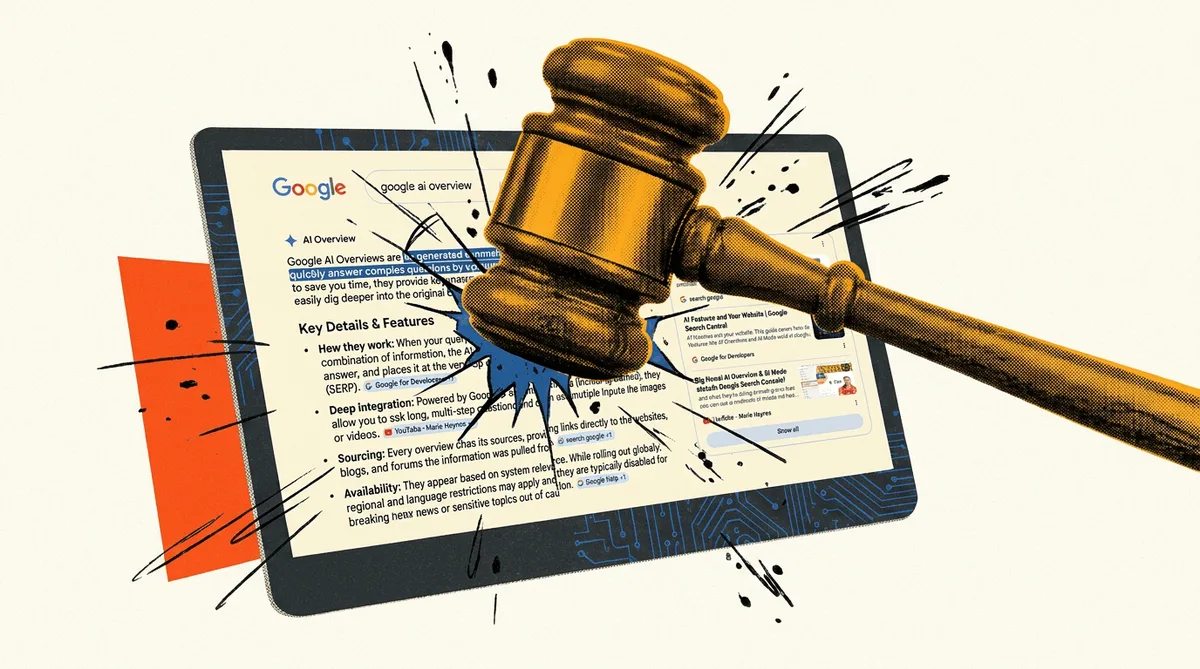
A regional court in Munich ruled that Google is directly liable for false claims made in its AI-generated search summaries known as AI Overviews [1, 2, 3, 4, 5, 6, 7, 8, 9]. The case centers on two Munich-based publishers who were wrongly linked by these summaries to scams, subscription traps, and questionable business practices [1, 2, 3, 4, 5, 6, 7, 8, 9].
The court determined that Google's AI Overviews are original content created by Google, not simple lists of search results, making Google legally responsible for any inaccuracies [1, 2, 3, 4, 5, 6, 7, 8, 9]. It ruled that traditional liability rules for search engines do not apply to AI-generated summaries, which produce independent and substantive statements rather than just relaying third-party content [2, 3, 5, 6, 7, 8].
According to the court, the summaries mixed information from different companies and fabricated links that did not exist in any sources [2, 3, 5, 6, 7, 8]. It added that the AI-generated summary forms a complete statement sufficient for readers to understand the accusations without needing to click further, rejecting Google's defense that users can fact-check via linked sources [3]. The court said, "Google owns what it produces [from AI Overviews] because it alone has influence over the AI's offering and the algorithms with which the AI operates" [2].
Google had argued that "most users know that information generated with AI should not be blindly trusted" and that users can verify facts by checking source links [4]. A Google spokesperson said, "This case focuses on specific and narrow errors, not the foundational way AI Overviews displays web content. We disagree with the ruling and plan to appeal" [1].
The court temporarily barred Google from spreading false information about the two publishers through AI Overviews as of May 28 [2, 6, 7]. It also ruled Google must pay 80% of litigation costs with plaintiffs responsible for the remaining 20% [3, 8].
Published analyses estimate Google's Gemini 3 AI model, which powers AI Overviews, has a 91% accuracy rate but still generates millions of errors per hour, some possibly defamatory [3, 8]. Studies show users rarely click sources linked in AI summaries, reducing fact-checking opportunities [3, 4, 8].
Google announced on June 12 it will appeal the liability ruling [1, 9].