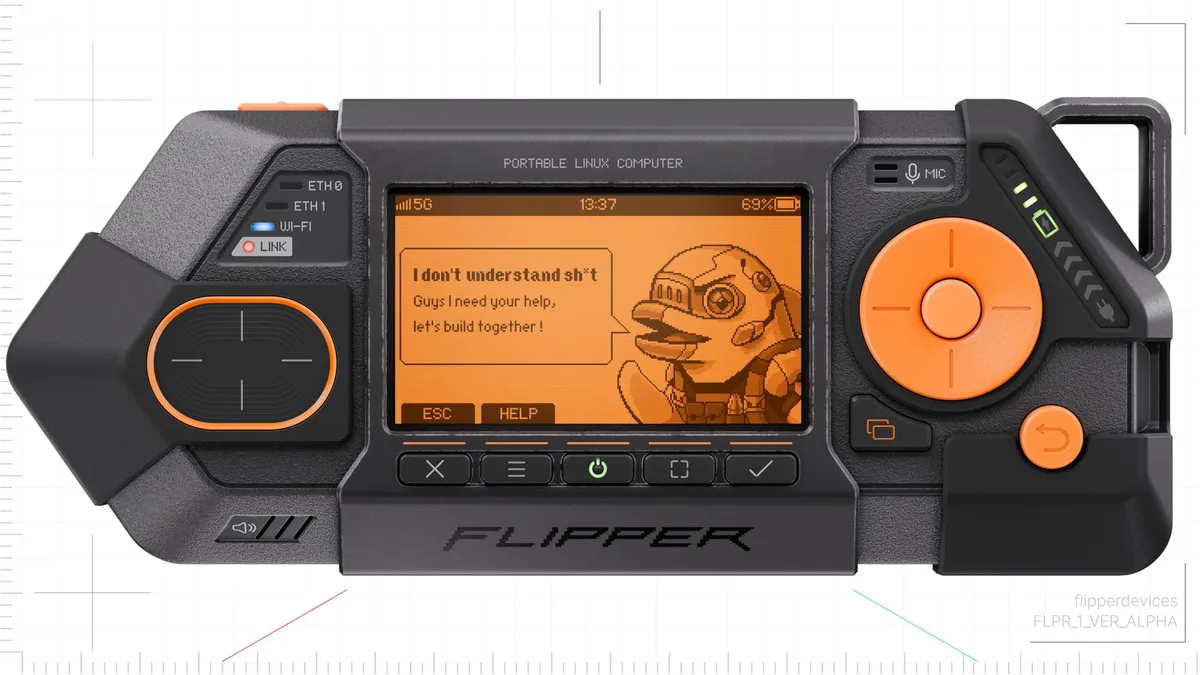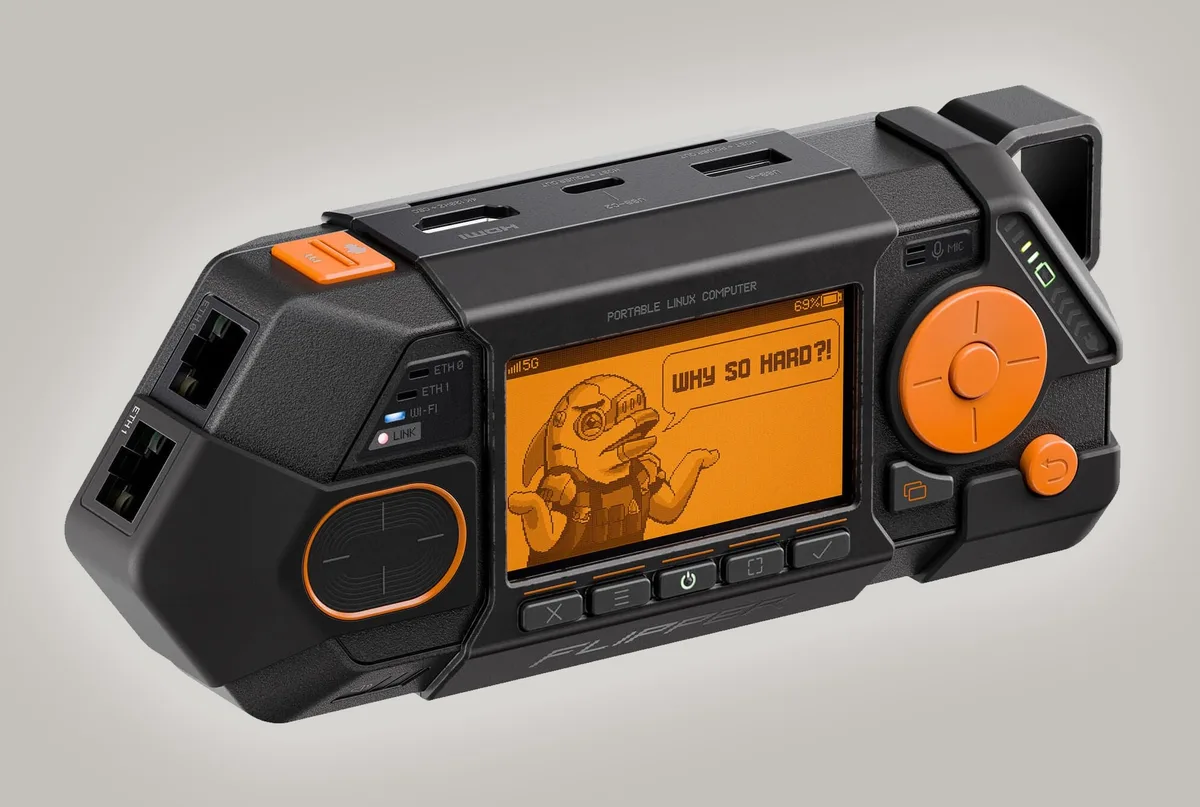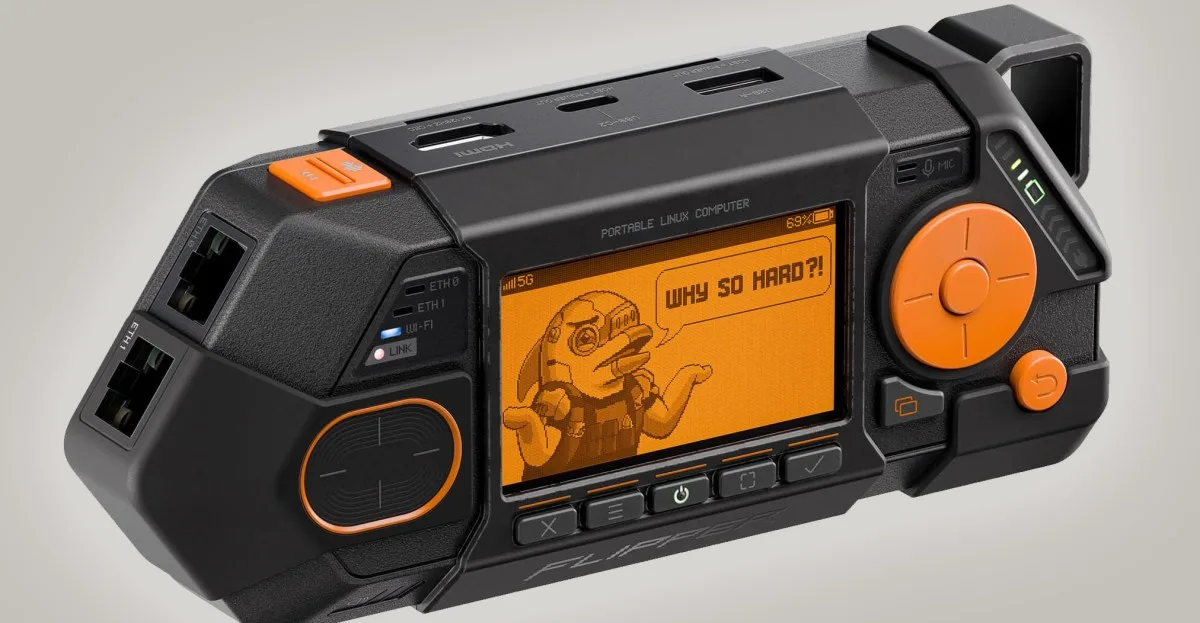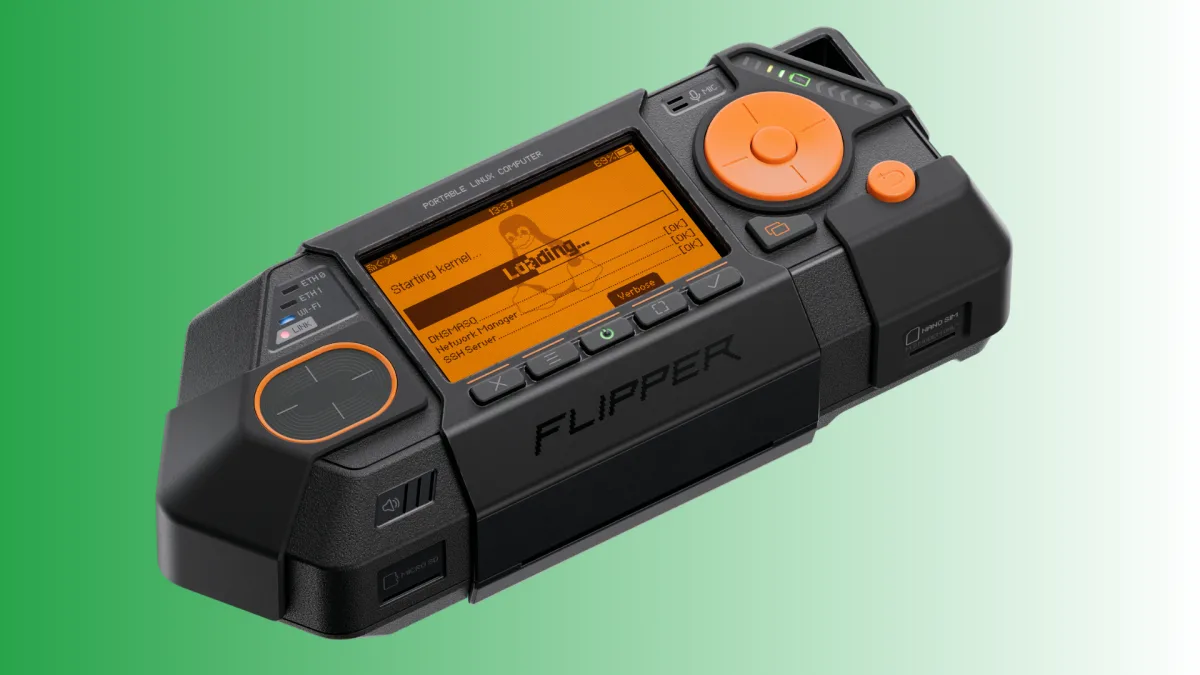
Flipper Devices introduced the Flipper One on May 22, a compact Linux computer powered by an 8-core Rockchip RK3576 ARM processor, 8GB of RAM, and a 6 TOPS neural processing unit for AI acceleration. [1, 2] The device supports high-speed interfaces including PCIe, SATA, USB 3.0, two ethernet ports, Wi-Fi 6E, and optional 5G cellular connectivity via modular M.2 expansion slots. [1, 3, 2]
The Flipper One is intended as a new category device rather than a replacement for Flipper Zero. It targets advanced network protocols like Wi-Fi, 5G, and Ethernet, expanding use cases beyond the original device. It features an open source design and a community-driven development process facilitated through a newly opened Developer Portal. [1, 3]
Users can navigate its interface using a built-in D-pad and customizable buttons, although the user interface is still under development. The device aims to provide a graphical wrapper around command-line tools to improve the cyberdeck experience on Linux. [1, 3]
Potential applications described include network debugging, wireless traffic analysis, running local AI workloads, playing Linux games or emulators, acting as a home server, and exploring nearby wireless signals. [2] Flipper Devices co-founder Pavel Zhovner said, "Flipper Zero taught us how much you can do with a tightly scoped, open product and a community that pushes it further than you can. Flipper One is what happens when we apply the same approach to a much bigger problem—building a fully open ARM Linux device that doesn't go obsolete the moment it ships." [2]
The modular design allows for hardware expansion via an M.2 slot for cellular or other functionalities. [1, 2] The Flipper One is expected to retail around $350 during the upcoming Kickstarter campaign. [1]
Following the announcement, the Flipper Devices team launched the online Developer Portal to gather community feedback and contributions as development continues. [1, 3, 2]