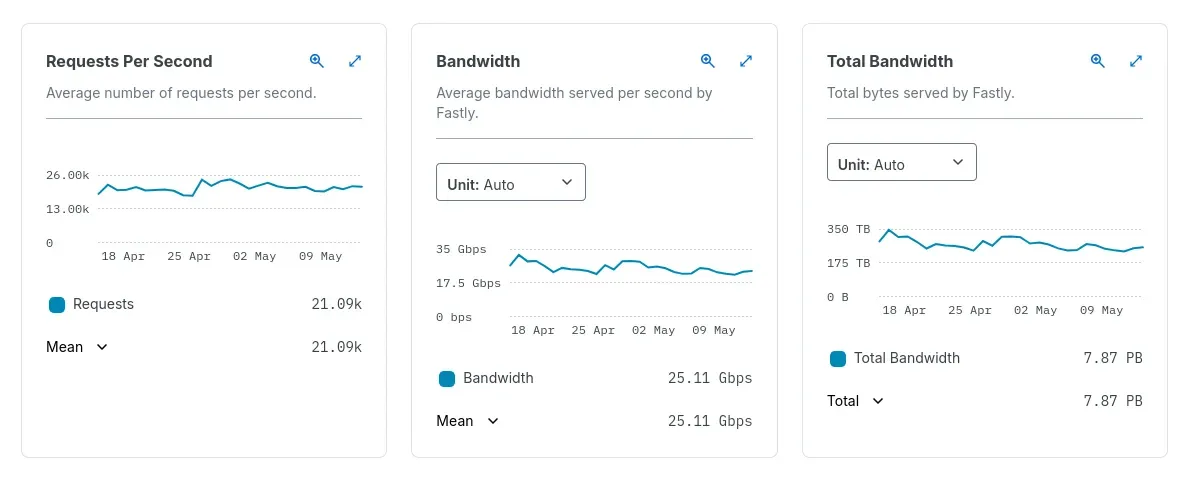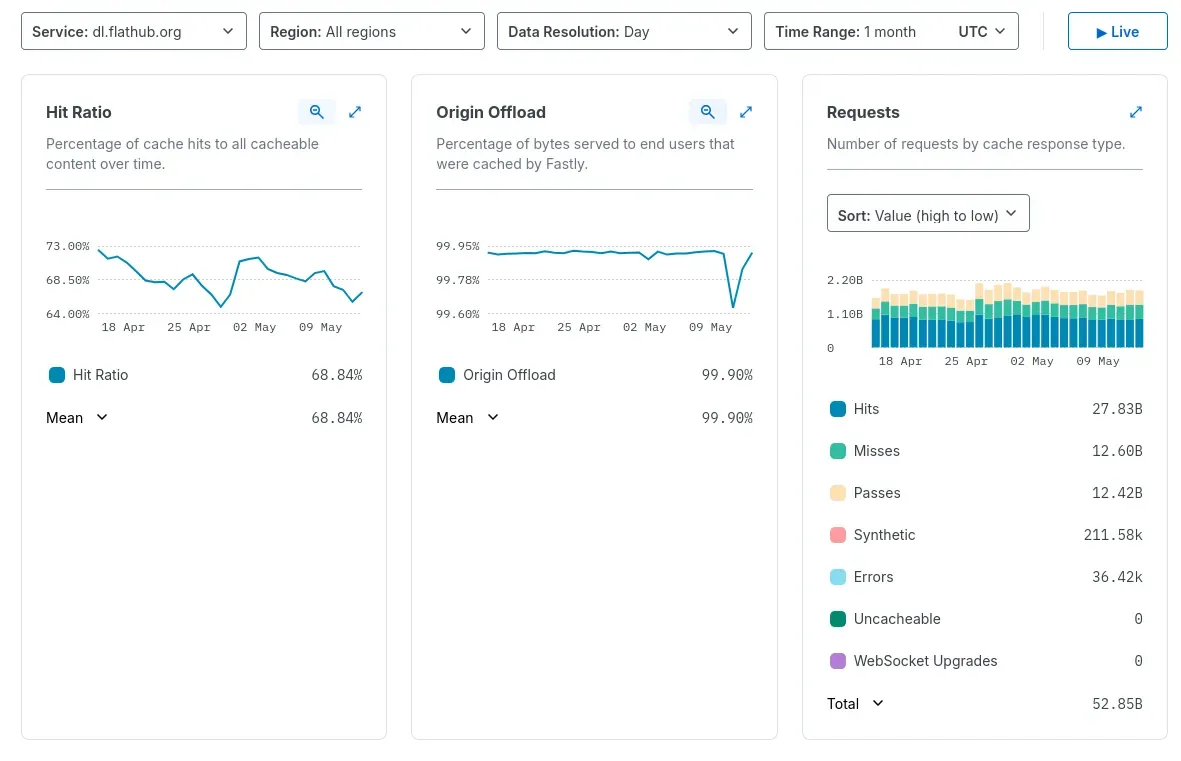
Flathub delivers its OSTree repository content using a content delivery network (CDN) and caching proxies to boost performance and reduce load on its origin servers [1, 2]. Fastly, an American CDN provider, handles the lion’s share of these requests, serving about 50 million cache hits every hour while forwarding approximately 20 million cache misses back to Flathub’s own servers [1].
To support this setup, Flathub operates eight caching proxies distributed across several virtual private server (VPS) providers: three at Mythic Beasts, two at Amazon Web Services (AWS), two at NetCup, and one at DigitalOcean [1]. Requests are routed through Fastly using a consistent hashing mechanism keyed by URL path, which increases cache efficiency by directing requests to specific caching proxies [1].
Fastly provides these CDN services to Flathub completely free of charge, a significant contribution to Flathub’s infrastructure [1]. However, the infrastructure has grown over time into a complex and only partially documented system, mainly understood by its author [1, 2]. One commentator noted that while Fastly’s free support is valuable, geopolitical or business changes could complicate this relationship in the future [2].
Meanwhile, Flatpak, the software packaging format underlying Flathub, is gaining acceptance among average Linux users and coexists well alongside traditional package managers [2].
Flathub continues to manage its caching proxies and CDN routing actively to maintain efficient content delivery. The current state reflects a balance between leveraging third-party CDN capacity and maintaining a fleet of VPS-hosted caching proxies across multiple providers [1].