Anthropic launched Claude Opus 4.8 on May 28 as an upgrade to Opus 4.7, maintaining the same pricing while adding major improvements in honesty, reasoning, coding, and practical knowledge tasks [1, 2, 3].
Opus 4.8 introduces user control over the effort the model puts into a task, allowing users to choose higher-effort, more in-depth responses using more tokens or lower-effort answers that consume fewer rate limits. "When giving it its all, Claude will think more frequently and more deeply to give a better response," Anthropic stated [1, 2, 3].
The new version includes a "dynamic workflows" feature in Claude Code. It enables tackling very large coding problems by running hundreds of parallel subagents within a single session. The system verifies outputs before delivering final results to users. Anthropic said Claude "can plan the work and then run hundreds of parallel subagents in a single session (and with Opus 4.8, the agents can run for even longer)" [1, 2, 3].
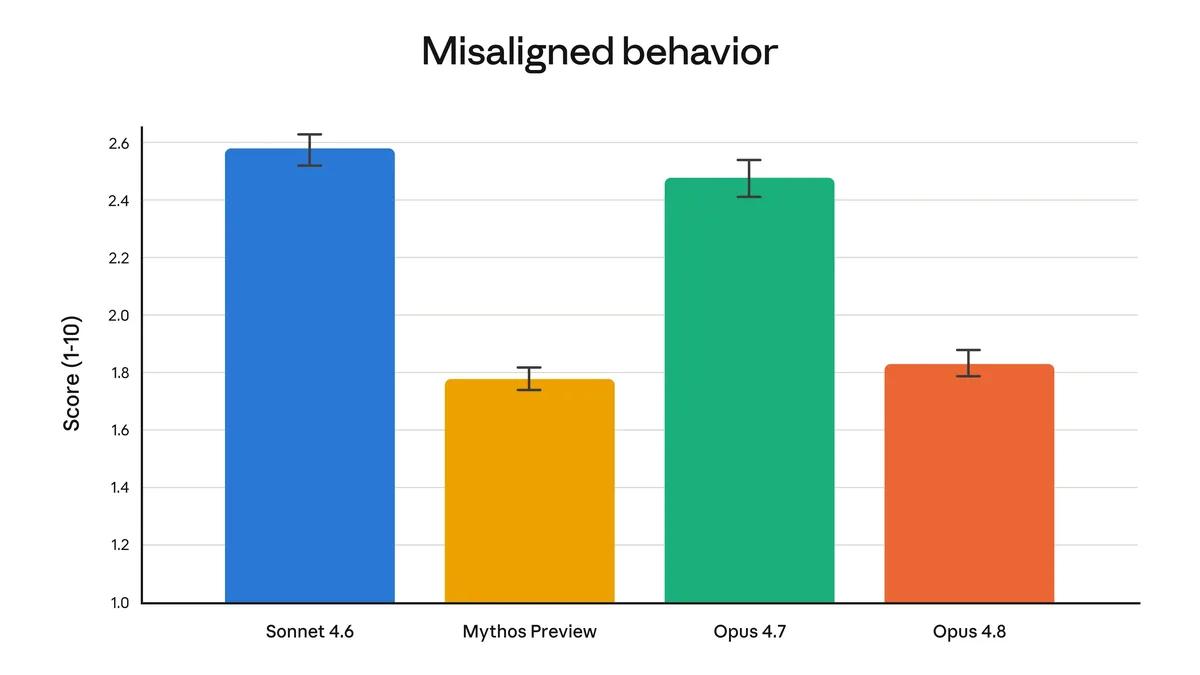
Opus 4.8 offers a fast mode running 2.5 times faster than normal and at one-third the cost compared to prior models [1, 3]. It also improves honesty, becoming about four times less likely than Opus 4.7 to produce unremarked code flaws. Anthropic emphasized their training focus: "We train all our models to be honest — for instance, to avoid making claims that they can’t support" [2, 3].
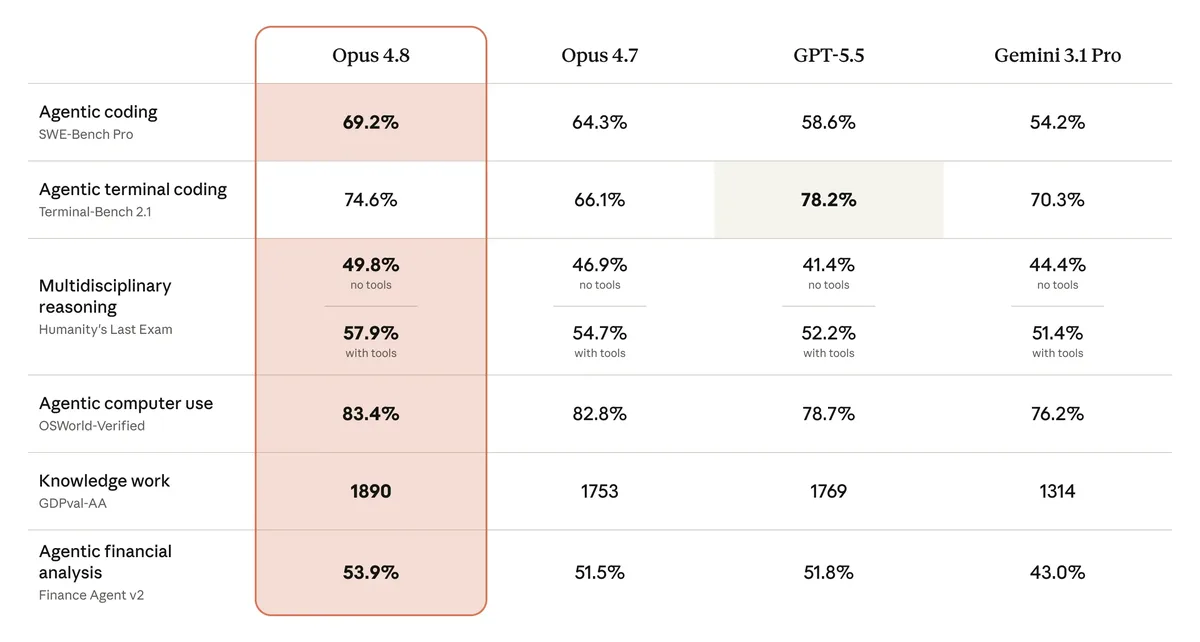
Benchmark testing shows Opus 4.8 ahead of previous Opus versions and beating GPT-5.5 on agentic and other tasks. It achieved a top score at the Legal Agent Benchmark, breaking a 10% all-pass standard [1, 3].
Rumors about the release circulated on social media on May 28 before the official launch that day [3]. The upgrade preserves the previous cost structure, helping users access the enhancements without extra expense [1, 2, 3].