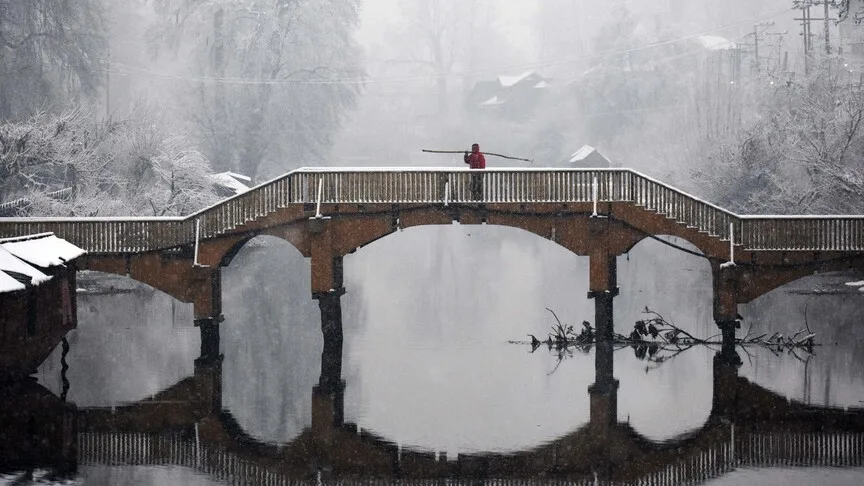
Glaciers in Indian-administered Kashmir are shrinking rapidly, scientists say. The region contains more than 12,000 glaciers, many of which are changing at an alarming pace [1].
Researchers are using artificial intelligence combined with satellite datasets to improve mapping of glaciers, glacial lakes, and permafrost in the area. AI helps analyze complex data to track glacier size and condition more precisely than before [1].
Irfan Rashid, a Kashmir researcher, told reporters AI is ‘‘a game changer,’’ allowing scientists to pinpoint glacier status and support early warning systems for hazards linked to melting ice [1]. He added AI can detect patterns in climate, snow cover, and ground temperature to predict permafrost occurrence, even in remote, data-poor regions [1].
One study of the Kohalai Glacier found it lost nearly 25% of its surface area over 60 years. The glacier’s snout has retreated approximately 900 meters since 1978, illustrating rapid ice loss [1].
A regional study recorded a rise in glacial lakes from 253 in 1990 to 324 in 2018, indicating increased glacial melting and water accumulation [1].
A 2019 study published in Science Advances showed Himalayan glaciers, including those in Kashmir, began losing ice at twice the previous rate starting around 2000. This acceleration reflects warming trends impacting these vital glaciers [1].
Efforts to monitor these changes with AI aim to improve understanding of glacier dynamics and related risks such as flooding from expanding glacial lakes. The use of AI tools represents a significant advancement in climate research for this challenging and sensitive region.
Next steps include ongoing AI-enhanced monitoring to better predict glacier behavior and inform disaster preparedness in Kashmir’s fragile mountain environment [1].