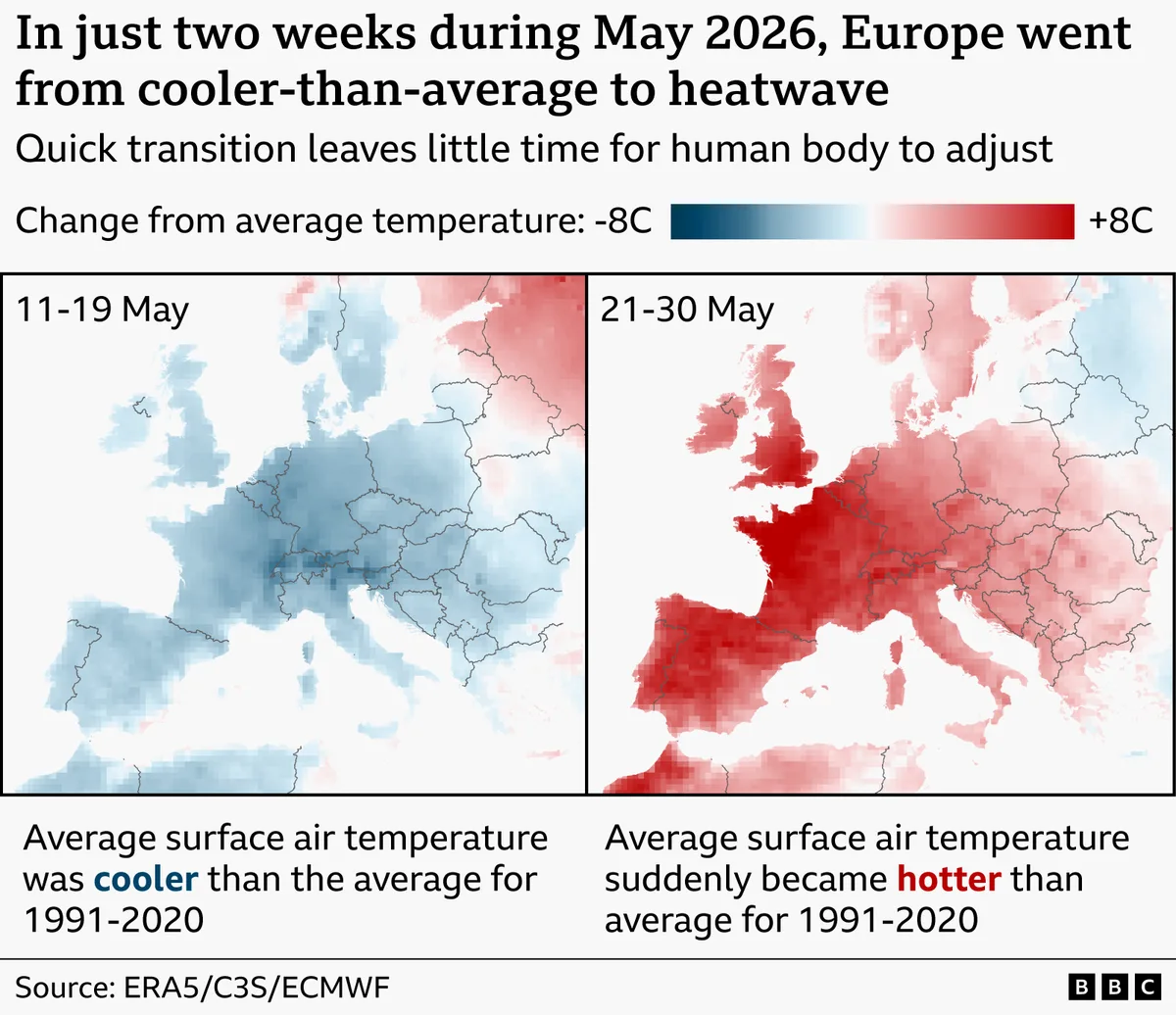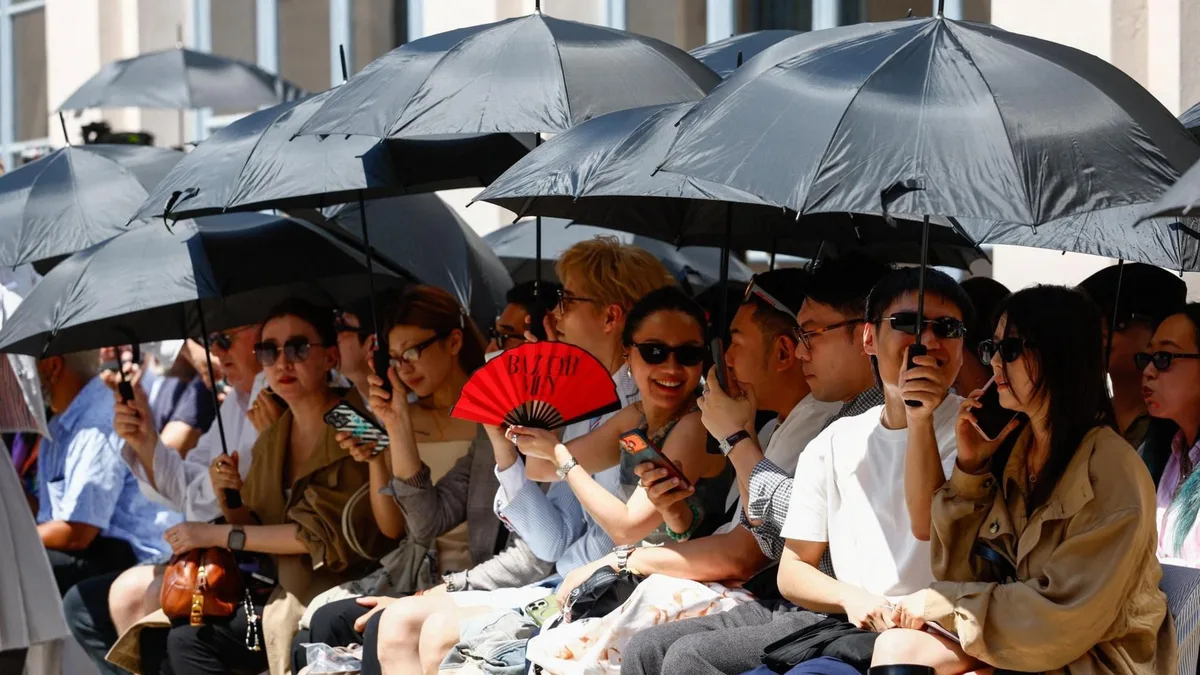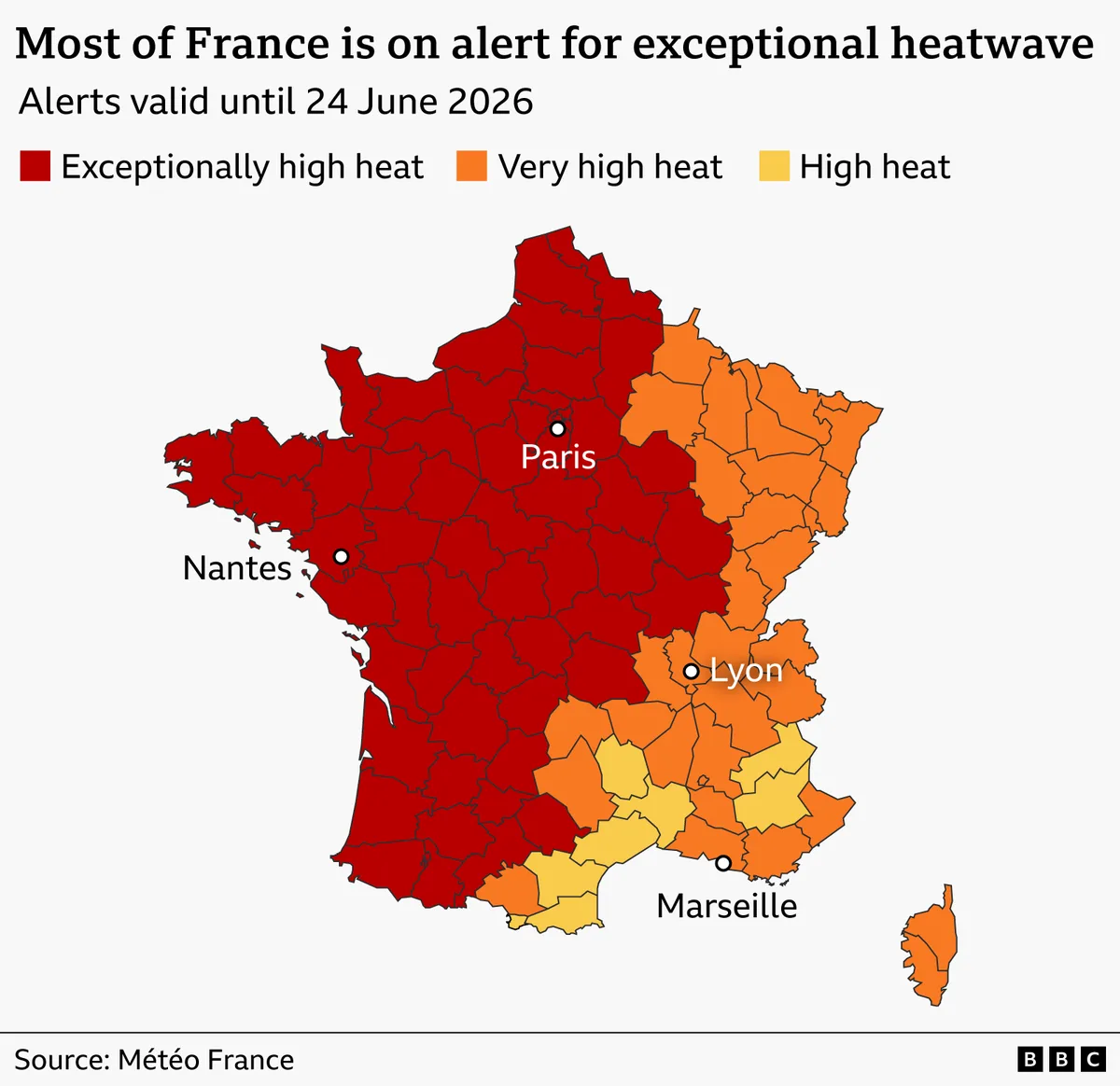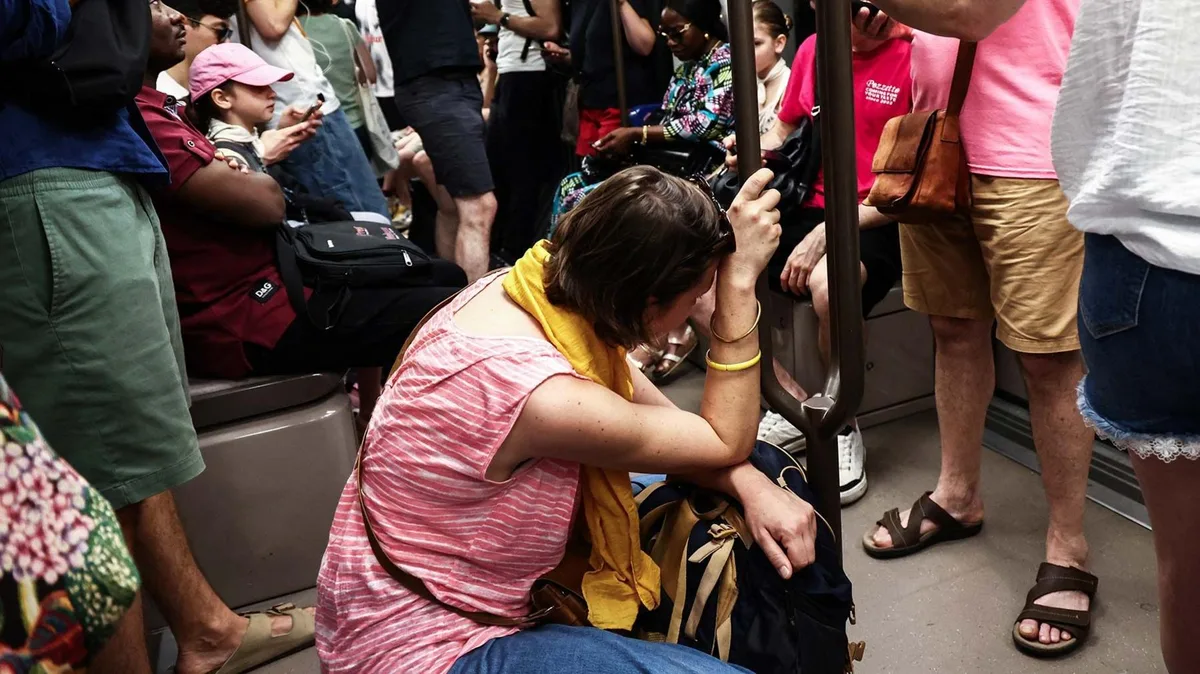
More than half of France’s regions, covering 49 to 58 departments, are under red heat alerts with temperatures predicted to exceed 40C, peaking at 44.3C in parts of the southwest including Bordeaux [1, 2, 3, 4]. France recorded its hottest June day on June 23, with an average temperature of 29.8C, setting new records for daytime and nighttime highs [3].
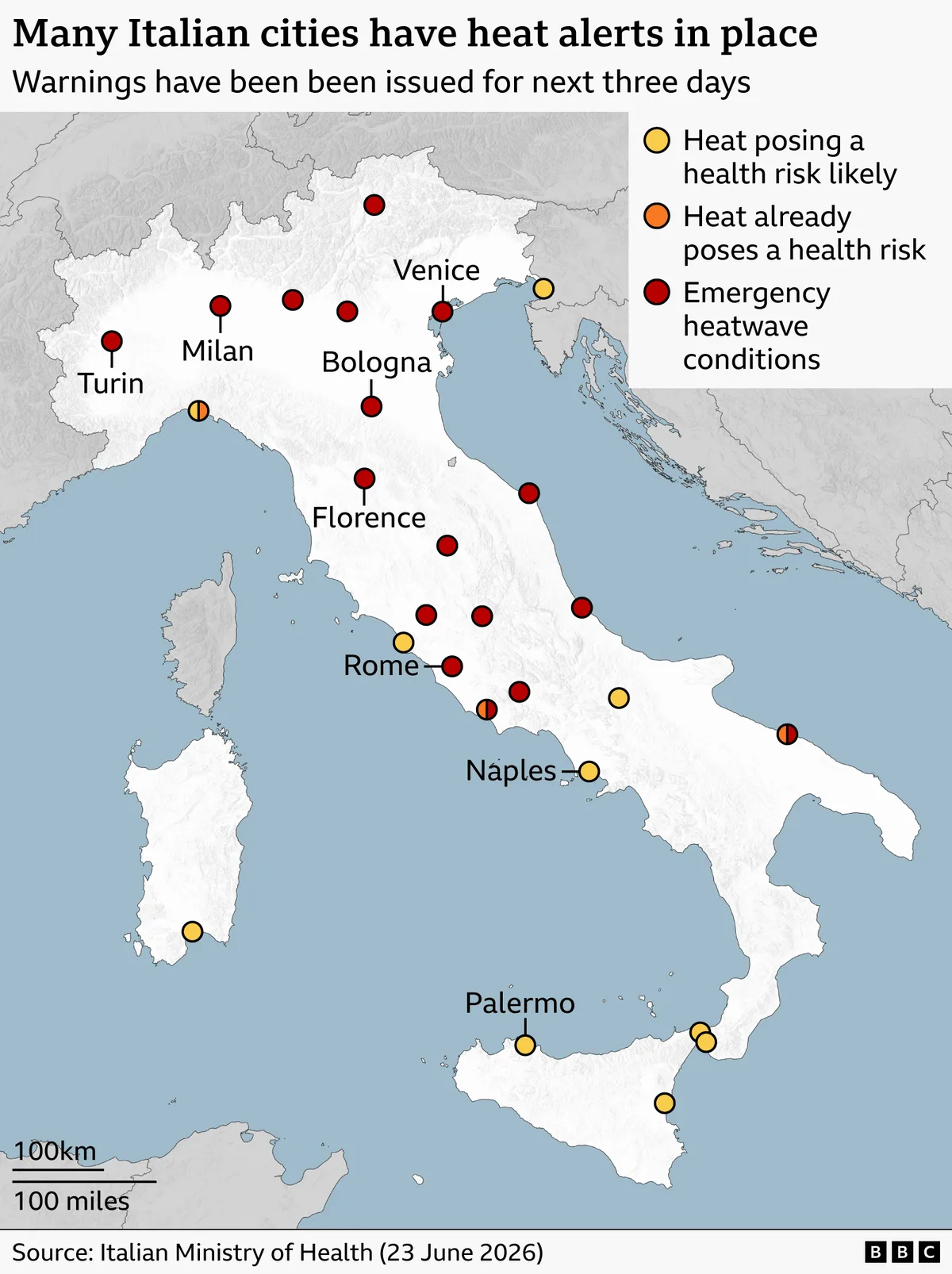
The extreme heat is driven by a strong high-pressure system known as an "African anticyclone" or "heat dome," funneling hot Saharan air northward and raising temperatures across western and central Europe [5, 2, 6, 7]. Countries affected include Spain, Italy, Germany, Belgium, the UK, and the Netherlands [1, 5, 2, 8, 3, 9, 6, 7]. Italy issued red alerts for 12 cities including Rome and Milan, while Spain faces temperatures up to 44C [2, 9, 6, 7].
The heatwave has caused multiple fatalities. In France's Gironde region, at least three deaths are directly attributed to heat. Two children were found dead in a hot car in Carpentras. Additionally, at least 40 drowning deaths in France have been reported since June 18 during the heatwave [1, 2, 10, 3]. French Health Minister Stéphanie Rist warned many "fellow citizens will suffer" and called on people to monitor relatives and neighbors closely [1].
Authorities have responded with widespread school closures and transport disruptions. About 845 schools have closed and 1,800 students were dismissed early in France [1]. The national rail operator SNCF canceled 71 intercity trains, citing risks from heat expansion damaging infrastructure. SNCF chief Jean Castex urged vulnerable passengers to postpone travel [1, 4, 6, 7]. Power outages affected tens of thousands of homes in western Brittany, with restorations expected by today or later [3].
Cities have activated public cooling measures. Paris is offering free cinema tickets to vulnerable groups and opening libraries and museums to provide relief. In Amsterdam, cooling centers were set up and buildings had windows chalked to reduce indoor heat [8].
French President Emmanuel Macron urged extreme vigilance. He said, "We are going through difficult days. Extreme vigilance from everyone is necessary. Take care of our oldest and most vulnerable people" [4]. Prime Minister Sebastien Lecornu held crisis talks on June 20 as the heatwave intensified [9]. SNCF’s Castex said the rail network was "strongly impacted" by high temperatures risking damage to power lines and expanding tracks [6].
The heatwave is forecast to last through midweek (June 24–25), with some relief expected Friday (June 26) in the form of thunderstorms and rain [1, 3, 4]. Meanwhile, people like Haily San Cesario, a 22-year-old engineer from Miami, reported adapting by wearing white and carrying an electric fan everywhere [6].