The US president signed an executive order on May 1, 2026, imposing new sanctions targeting key sectors of the Cuban economy including energy, defense, metals and mining, financial services, and security [1]. These sanctions also focus on Cuban officials accused of serious human rights abuses or corruption [1].
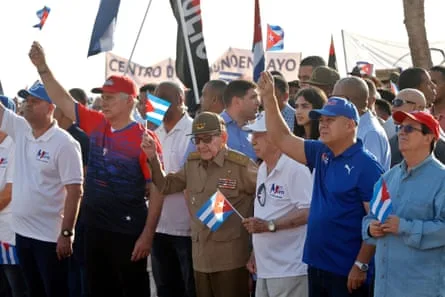
Cuba’s government sharply rejected the measures, condemning them as "collective punishment" of the Cuban people. Foreign Minister Bruno Rodriguez said, "We firmly reject the recent unilateral coercive measures adopted by the #UnitedStates government" [1].
The sanctions come amid worsening economic conditions in Cuba, amplified by a US-imposed fuel blockade that began in January 2026 and a significant drop in tourism [1]. Jeremy Paner, a former US Treasury sanctions investigator, noted the significance of the new measures, saying, "Oil and gas, mining companies and banks that have carefully segregated their Cuba operations from the United States are no longer protected." He called them the most significant targeting of non-US companies operating in Cuba since the embargo started [1].
In addition to sanctions, US rhetoric about potential military action against Cuba has intensified. President Donald Trump referenced the USS Abraham Lincoln aircraft carrier stationed near Cuban shores, saying, "On the way back from Iran, we’ll have one of our big – maybe the USS Abraham Lincoln aircraft carrier, the biggest in the world, we’ll have that come in, stop about 100 yards offshore and they’ll say, ‘Thank you very much. We give up.’" The distance from Cuba to Florida is approximately 145 kilometers [1].
Despite the increased sanctions and rhetoric, US officials engaged in diplomatic talks with Cuban representatives during visits in April 2026, showing continued dialogue amid rising tensions [1].
The sanctions follow a timeline of escalating US pressure: starting with the fuel blockade in January 2026, diplomatic talks in April, and culminating in the broad sanctions announced on May 1, 2026 [1].