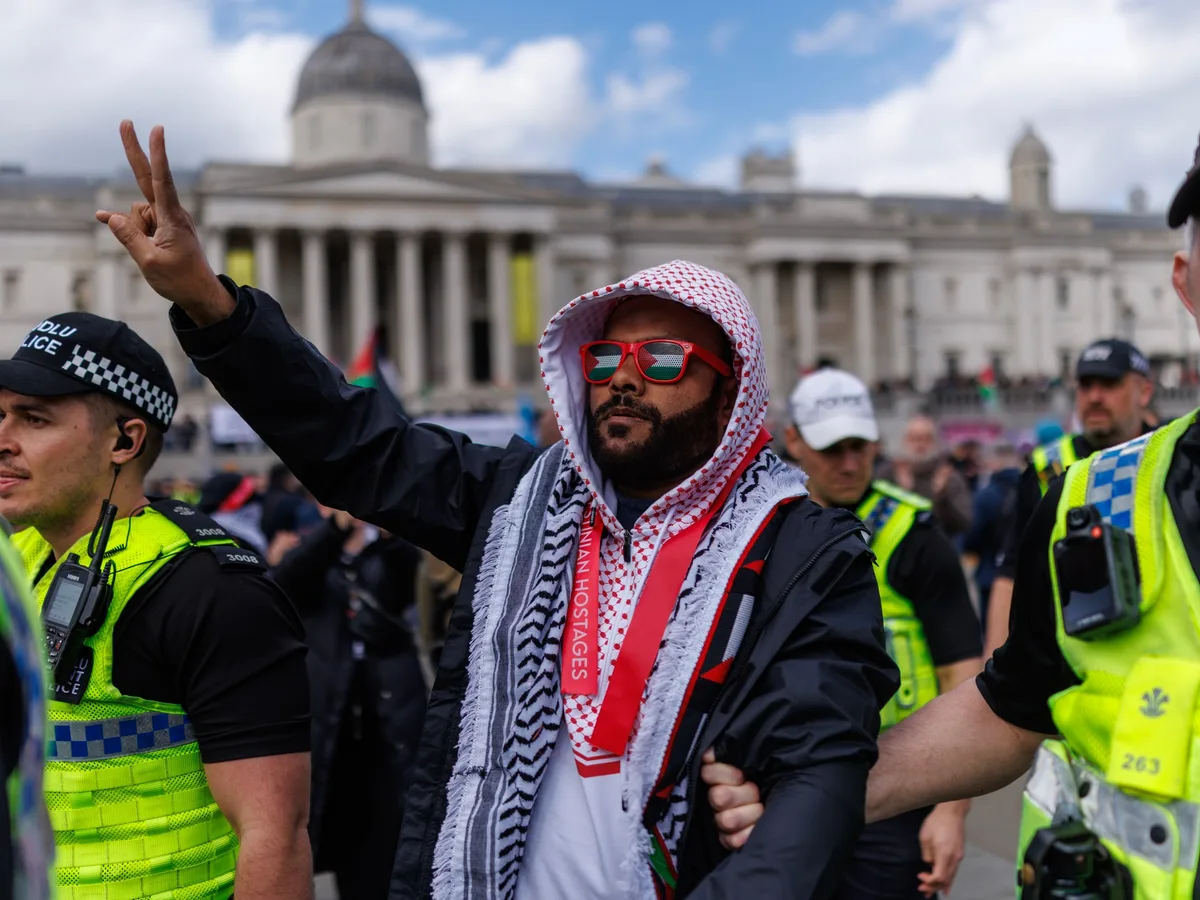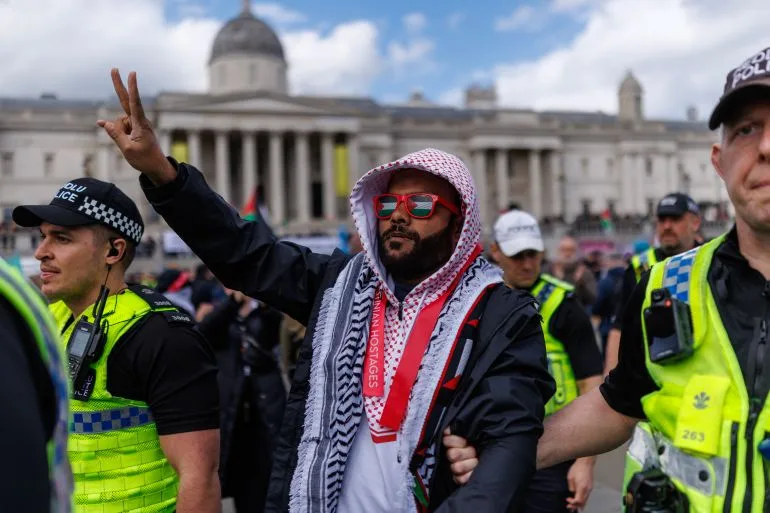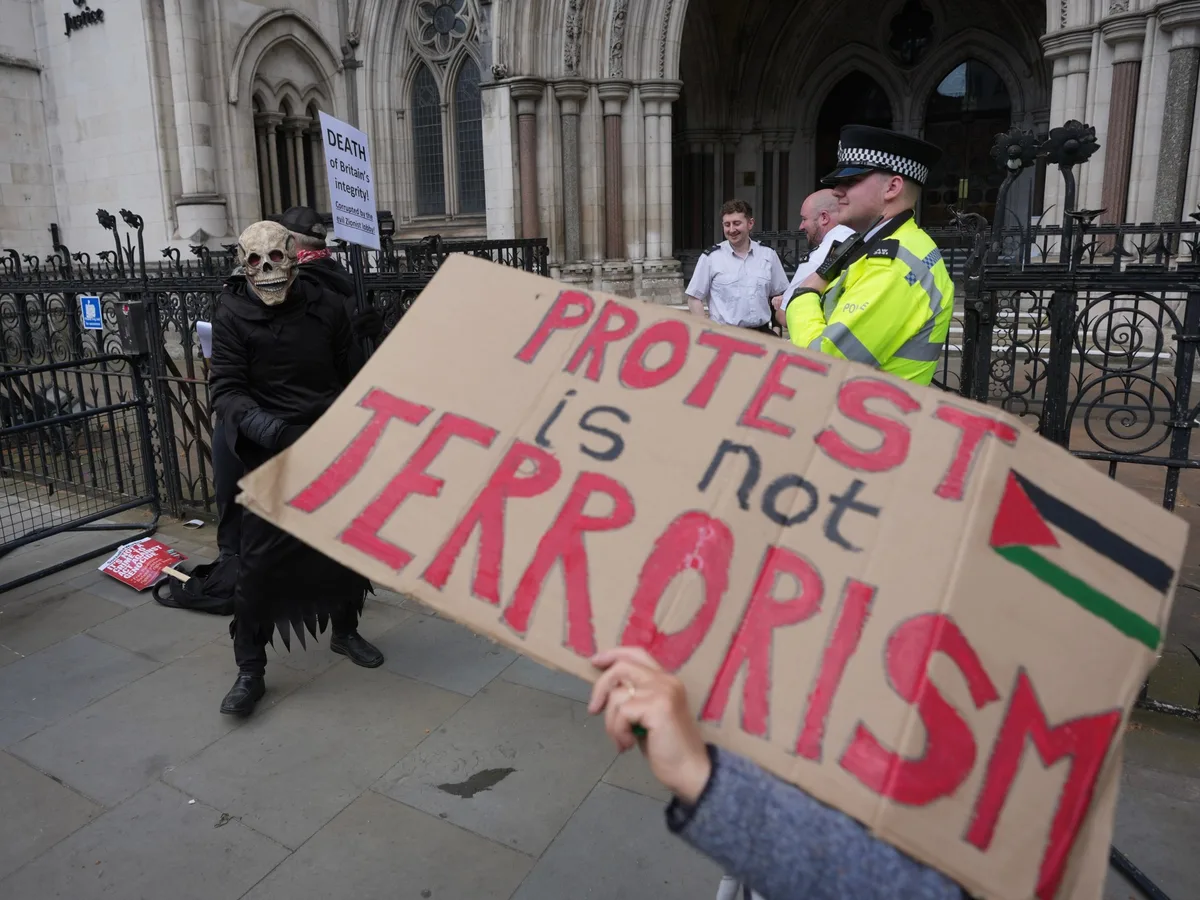
The UK Court of Appeal upheld the government's classification of Palestine Action as a terrorist organization on June 15, ruling the proscription lawful and proportionate under the Terrorism Act 2000 [1, 2, 3, 4, 5, 6]. Chief Justice Sue Carr said, "We concluded that the proscription decision struck a fair balance" and that Palestine Action "overtly promoted unlawful violence amounting to terrorism" [2]. She added, "It is a fundamental mistake to overlook the fact that Palestine Action overtly promoted unlawful violence amounting to terrorism" [2].
Palestine Action is a UK-based activist group founded in 2020 targeting firms involved in Israeli weapons manufacturing, such as Elbit Systems and Thales [1, 3, 6]. It has conducted direct actions including breaking into military and defense facilities and causing millions of pounds in damage. In 2022, the group caused over £1 million in damage at a Thales factory in Glasgow, and a similar amount at an Elbit Systems site near Bristol in 2024 [1]. On June 20, 2025, activists broke into the RAF Brize Norton base and spray-painted military aircraft with red paint [1, 6].
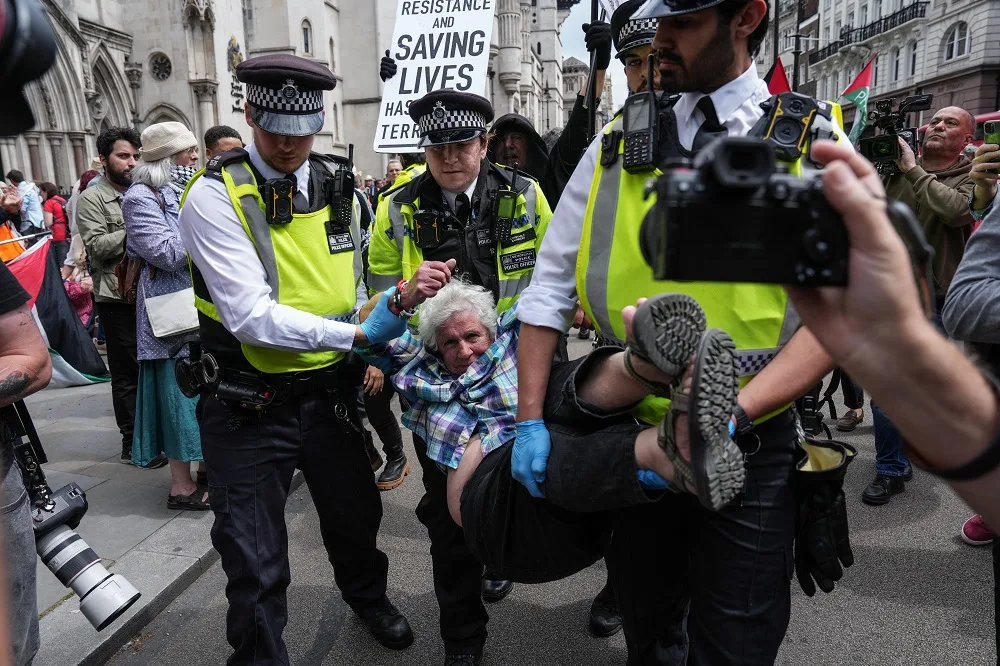
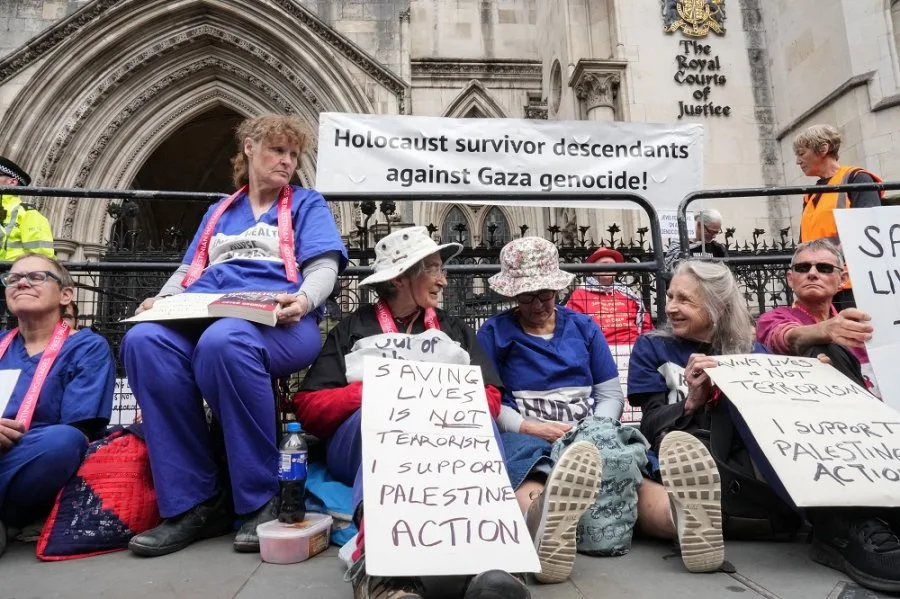
The UK government officially banned Palestine Action as a terrorist organization on July 5, 2025, making membership or support punishable by up to 14 years in prison [3, 4, 5, 6]. Since the ban, over 3,300 people have been arrested and more than 700 charged under terrorism legislation connected to Palestine Action activities [2, 3, 5, 6]. The group’s website was blocked to UK users following proscription [3]. The ban places Palestine Action alongside groups like Hamas and Hezbollah on the UK terror list [3, 5].
UK Interior Minister Shabana Mahmood welcomed the ruling, saying, "This ruling does not affect the legitimate lawful support for Palestine. Supporting Palestine is not the same as supporting a proscribed terrorist organization" [4].
Palestine Action co-founder Huda Ammori criticized the ban as "one of the most extreme attacks on free speech and the right to protest in modern British history" and vowed to appeal to the Supreme Court and the European Court of Human Rights [2].
In February 2026, the UK High Court had ruled the proscription unlawful, but the government appealed leading to the Court of Appeal’s June 15 reversal [1, 2, 3]. The ruling now marks the latest legal step in ongoing disputes over the group’s status and activities.