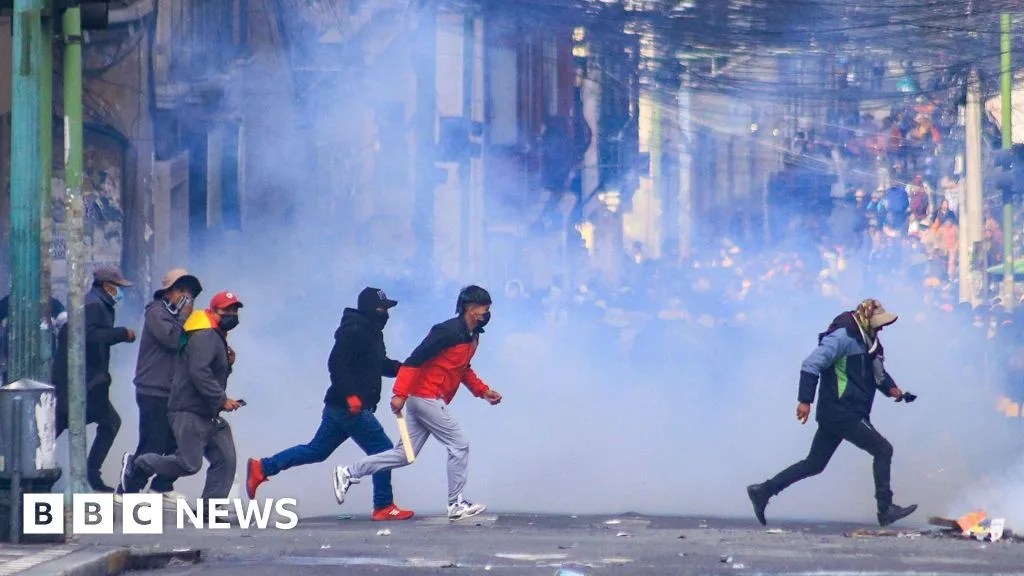
Thousands of protesters, including farmers, miners, teachers, indigenous groups, and unions, have demonstrated across Bolivia, especially in La Paz, demanding President Rodrigo Paz’s resignation over worsening economic conditions and austerity policies [1, 2, 3, 4, 5, 6, 7, 8, 9, 10]. Protesters have set up over 40 roadblocks nationwide as of May 20, causing shortages of fuel, food, and medical supplies, including oxygen for hospitals [2, 3, 4, 5, 7, 8, 9].
Security forces deployed 3,500 military and police personnel in an early-morning crackdown on May 16 to clear roadblocks near La Paz, arresting 57 protesters [5]. Clashes intensified between May 18 and 19, with riot police using tear gas against miners and other demonstrators; hundreds of arrests were reported [6, 7, 8, 9]. Police and military have used tear gas and arrested over 100 people during continuing crackdowns aimed at dismantling blockades around the capital [1, 5, 6, 7, 8, 9, 10].
At least four people have died in violence related to the protests, including one demonstrator killed in clashes and three others who died due to restricted emergency medical access caused by roadblocks [2, 3, 5]. Protest leaders like Mario Argollo, head of the largest union COB, face terrorism charges and arrest warrants for allegedly inciting unrest [1].
The unrest is linked to President Paz’s economic reforms, which include ending a 20-year-old fuel subsidy, attempts to privatize state-owned companies, and a broader economic crisis marked by 14% inflation in April and declining foreign currency reserves [2, 3, 4, 5, 7, 9, 10]. Bolivia’s debt stands at 95% of GDP, further deepening economic concerns [4]. Farmer Ivan Alarcon said, "We want him to resign because he's incompetent. Bolivia is going through a moment of chaos" [7].
President Paz announced a cabinet reshuffle on May 20 to try to ease tensions, stating, "We need to reorganise a cabinet that must be able to listen" [10]. He threatened that "those seeking to destroy democracy will go to jail" [3].
The political opposition includes supporters of former socialist President Evo Morales, who has expressed backing for the protests. The Paz government accuses Morales of fomenting unrest, charges Morales denies [3, 10].
The US government supports President Paz, characterizing the protests as an "attempted coup d’état" allegedly financed by criminal groups. US Deputy Secretary of State Christopher Landau said, "it is a coup financed by this perverse alliance between politics and organised crime across the region" [2]. US Secretary of State Marco Rubio declared, "The United States stands squarely in support of Bolivia’s legitimate constitutional government. We will not allow criminals and drug traffickers to overthrow democratically elected leaders in our hemisphere" [10]. Bolivia’s Foreign Ministry expelled Colombia’s ambassador, saying it was meant to "preserve the principles of sovereignty and non-interference in internal affairs" [2].
The protests and government responses remain ongoing as roadblocks and unrest continue across Bolivia.