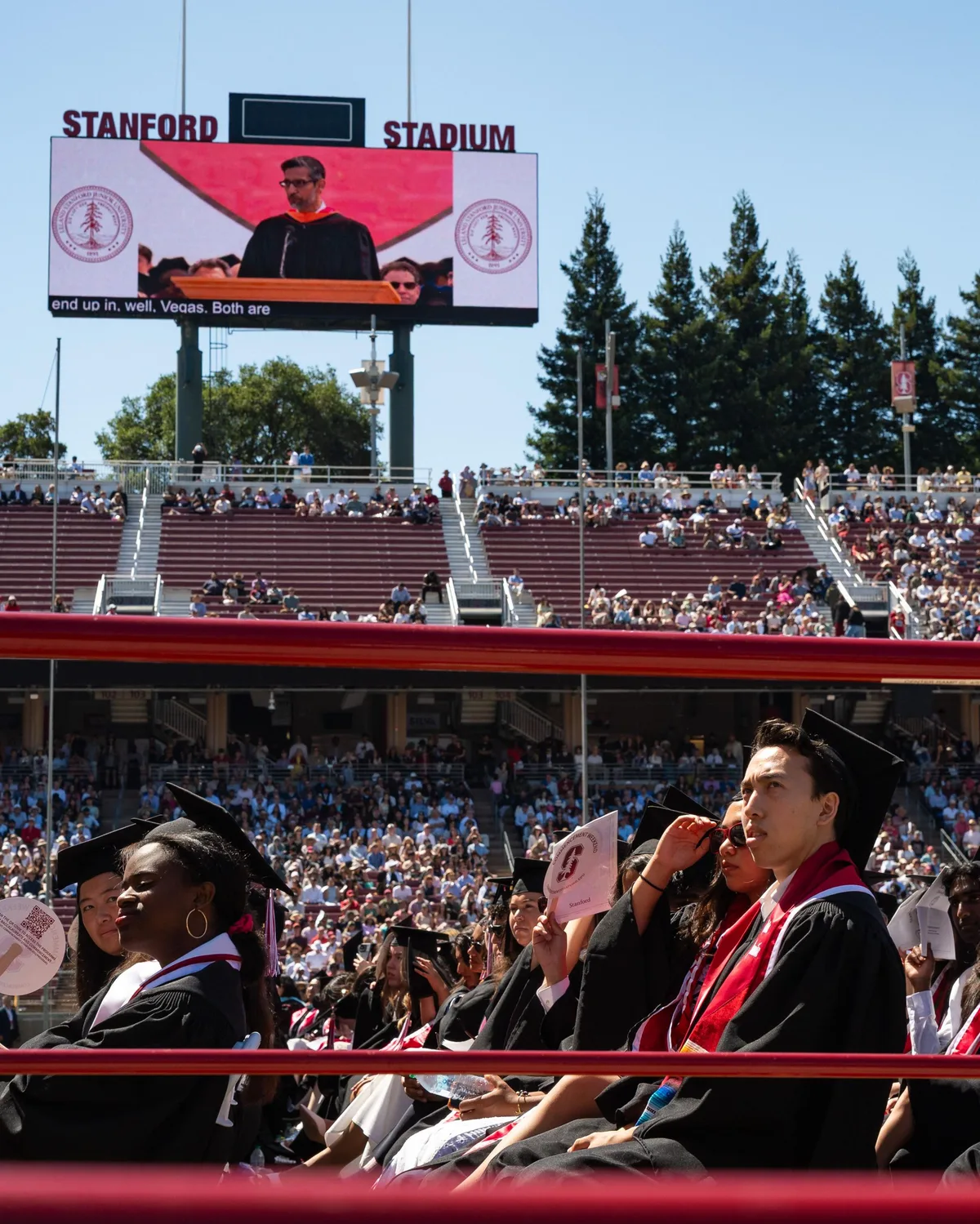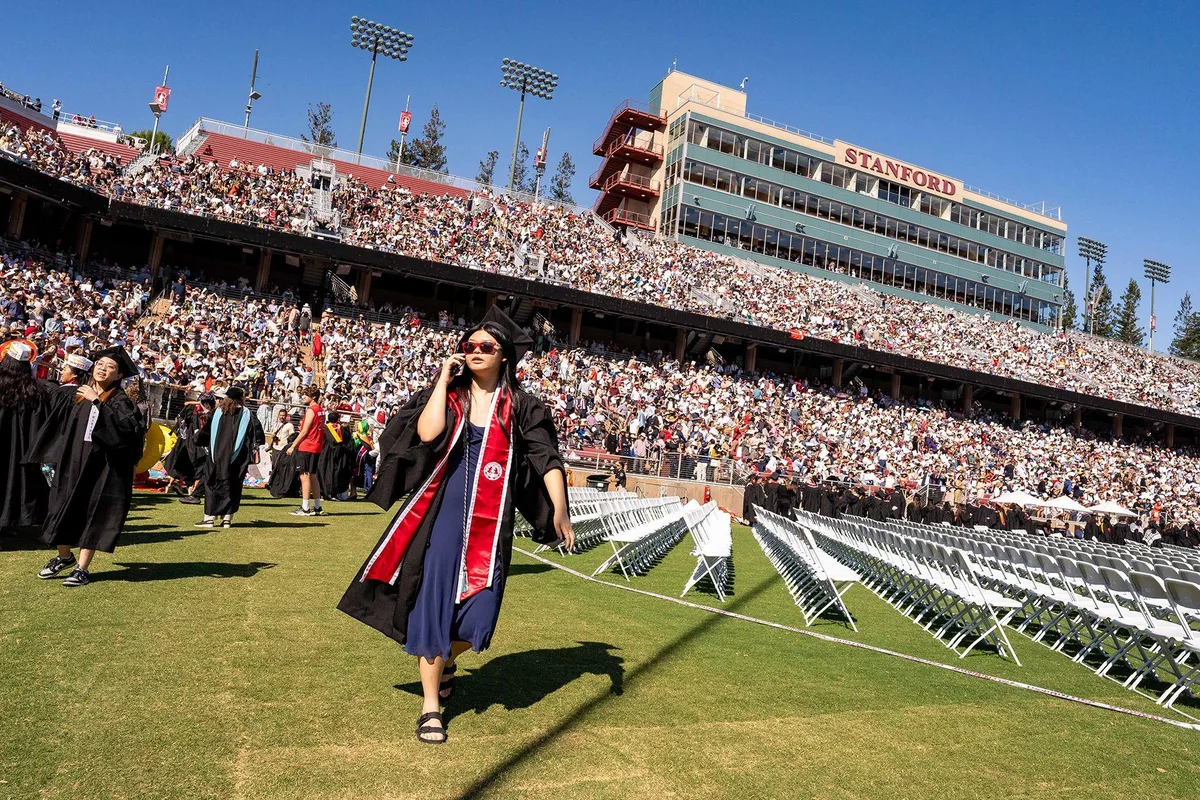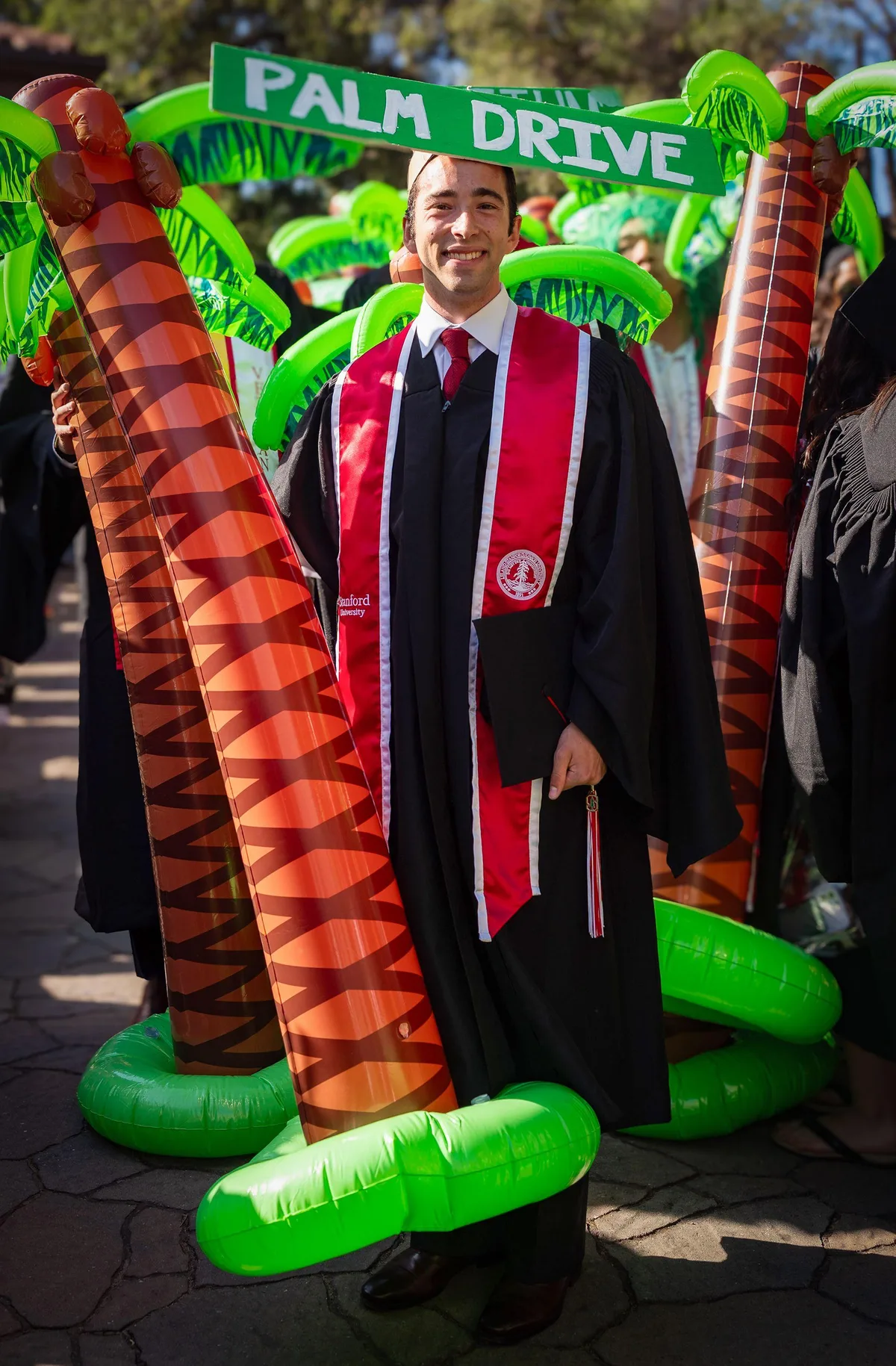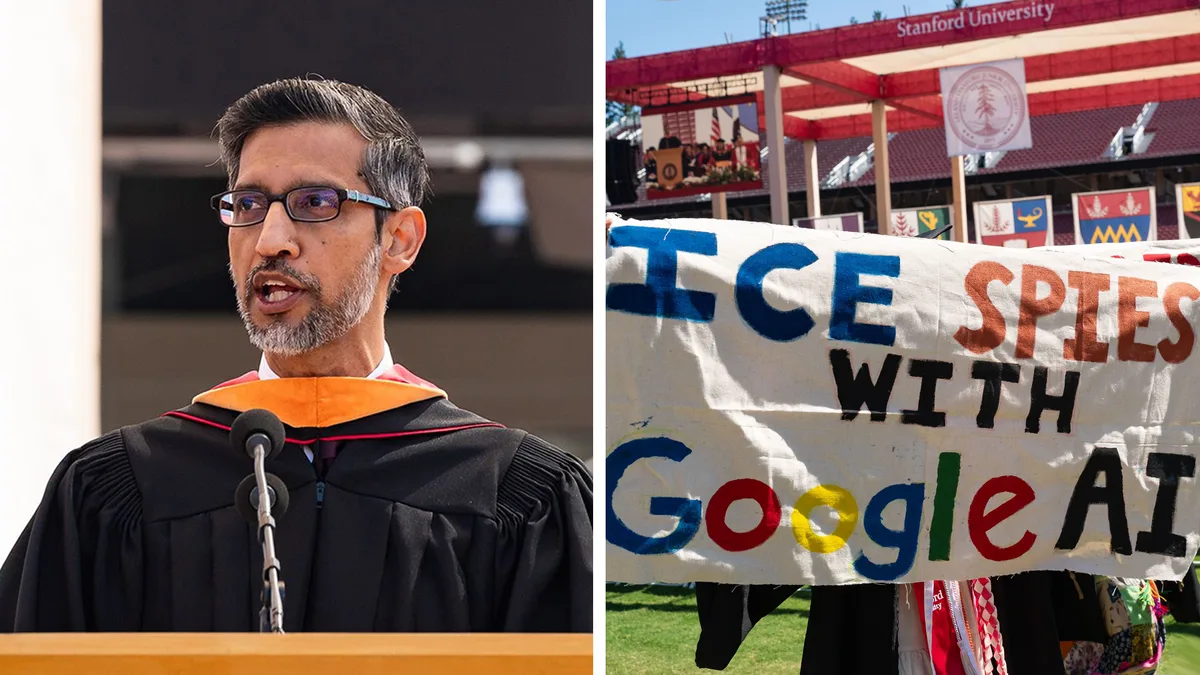
At Stanford University's 2023 commencement, some speeches mentioning artificial intelligence sparked strong reactions from graduates. Former Google CEO Eric Schmidt was booed, and Google CEO Sundar Pichai joked he had been advised to avoid AI topics during his speech. Several graduates walked out carrying protest signs reading "ICE spies with Google AI" and waving Palestinian flags as they left the event near Silicon Valley, a hub closely linked to AI and tech firms located about 25 kilometers from the campus [1, 2, 3].
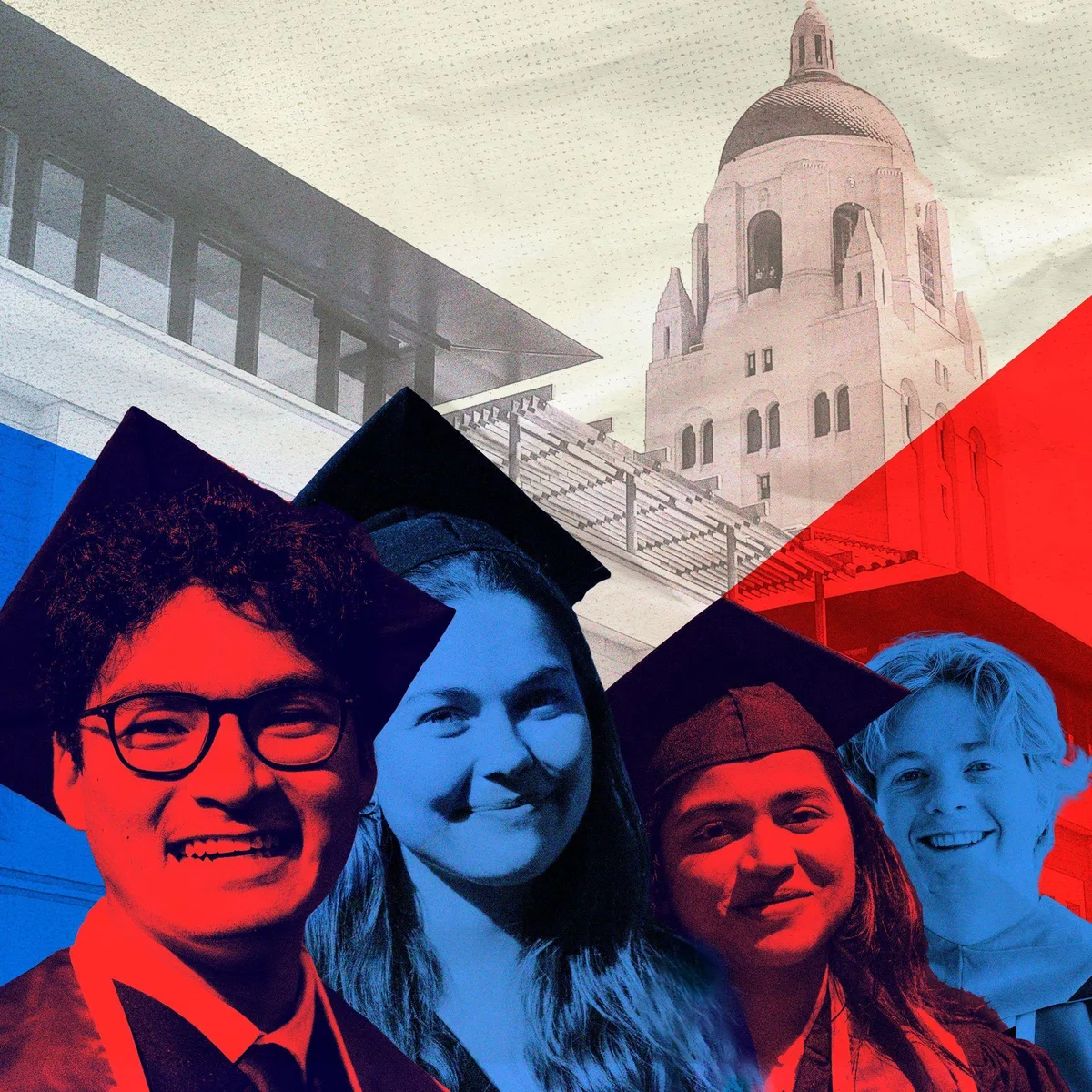
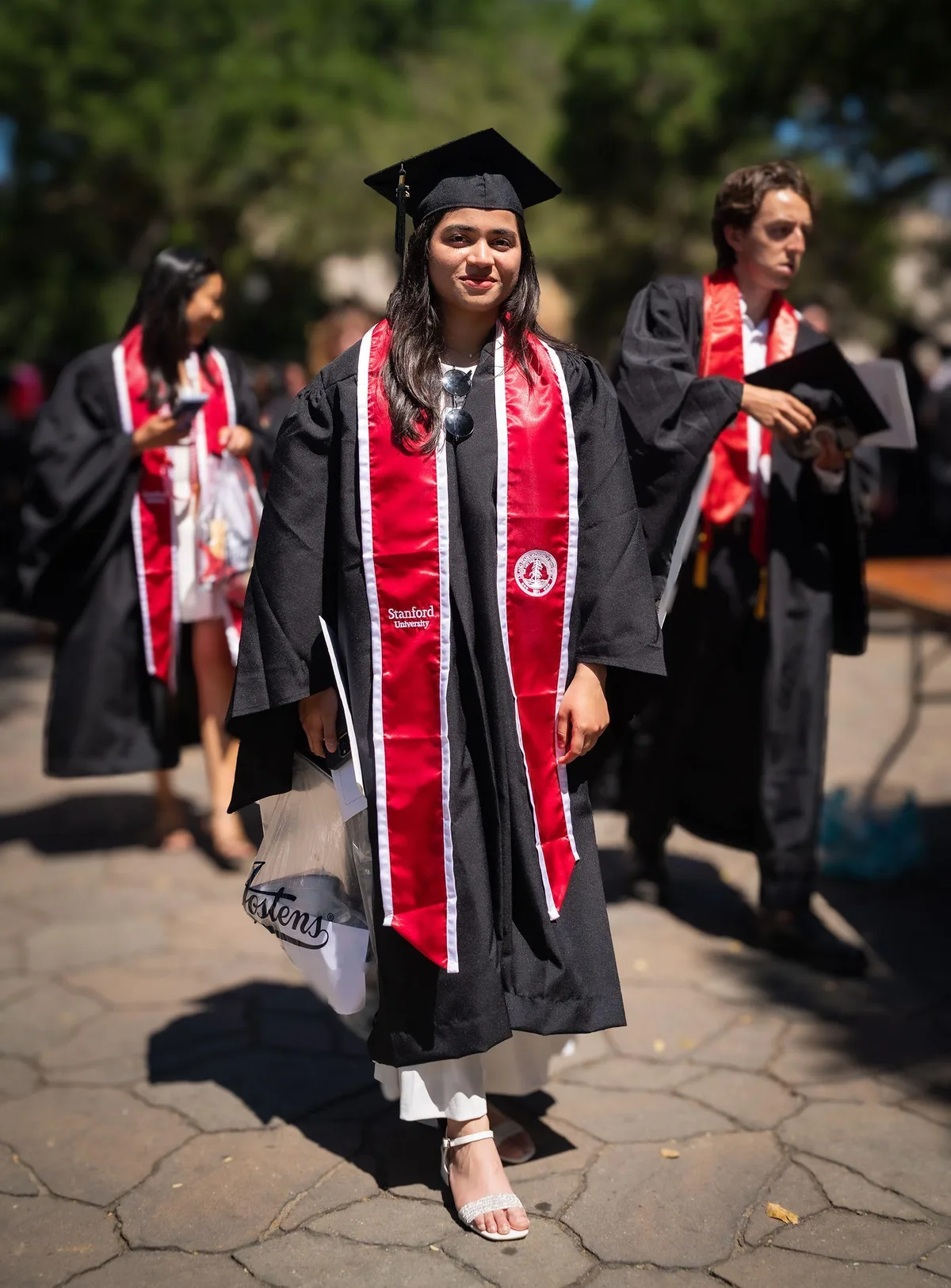
Graduates expressed a wide range of opinions on AI's present and future role. Computer science and AI major Ifdita Hasan said, "I feel optimistic about AI. I think AI gives us the opportunity to learn more about the universe. It's a tool that people should try to use and try to adapt to." She encouraged an optimistic approach, noting that societal shifts like this had happened before with the internet [1].
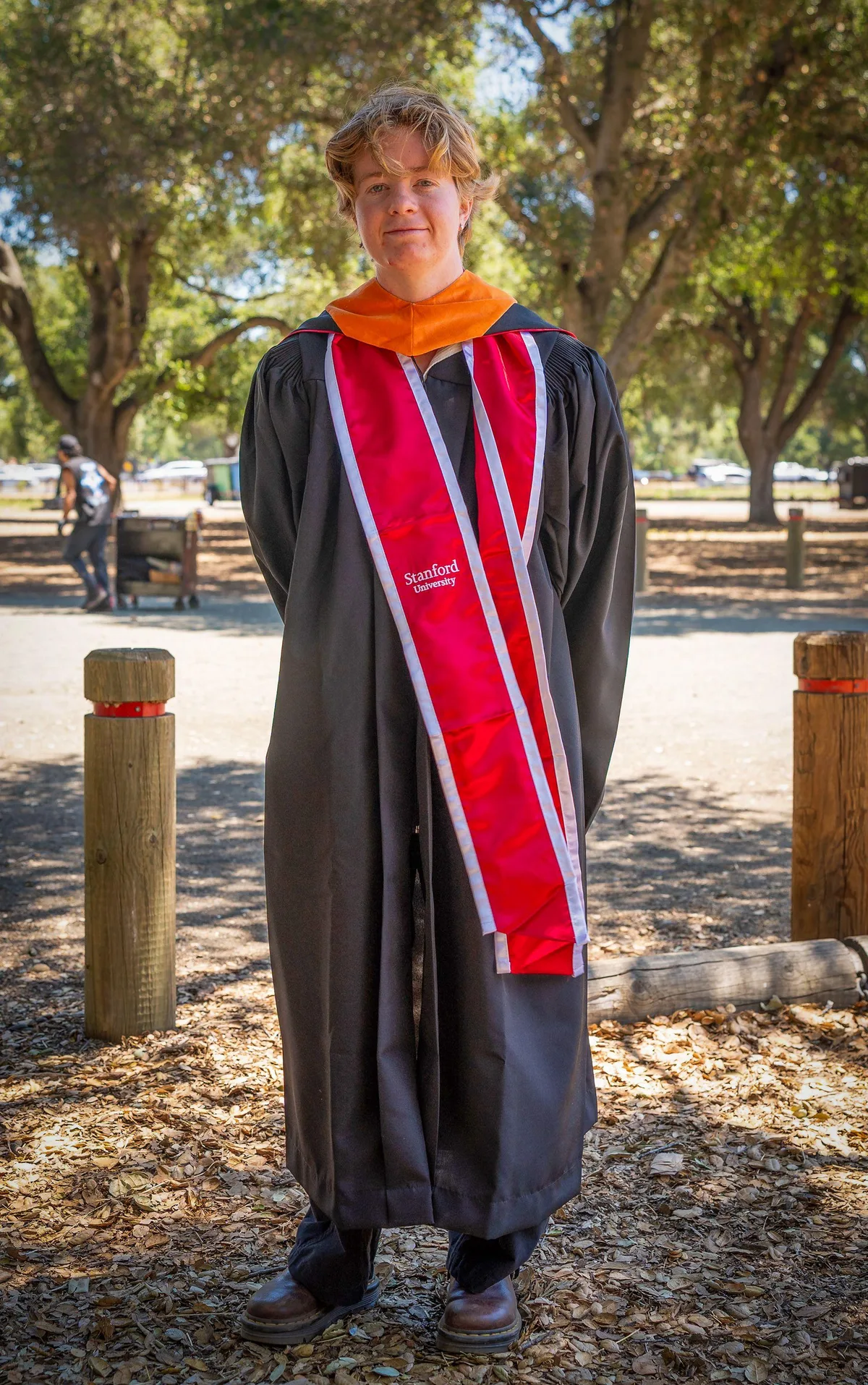
By contrast, earth systems student Atash Heil voiced concerns about AI's rapid influence. Heil said, "It's already had such a big impact in such a small time" and described an AI art exhibit as "scary, especially on my graduation day." Heil also expressed worries about ethics: "這項技術必須以合乎倫理的方式發展,但如今並沒有如此進行。" (This technology must develop ethically, but that is not happening now.) [1, 2]
Alongside ethical unease, many graduates fear AI's effect on job prospects. A November Stanford study found sharp drops in early-career opportunities in sectors affected by AI, such as software development. While Stanford does not publish detailed employment data, most interviewed graduates have jobs or plans for further education. Still, concerns about "cognitive offloading"—relying on AI to complete tasks—are rising. Lucy Zimmerman, a former computer science teaching assistant, observed a gap between homework likely done with AI help and exam performance, leading to renewed proctoring and oral exams. She said, "我認為這確實對人們的學習方式產生了影響。" (I think this really impacts how people learn.) She added, "我對未來世代感到擔憂,也包括我這一代。" (I worry about future generations, including my own.) Despite these concerns, Zimmerman looks forward to tech jobs near San Francisco and sees new graduates as part of AI's leading edge [2, 3].
Founded in 1891, Stanford is not Ivy League but widely regarded alongside elite schools like Harvard and Columbia. It played a pivotal role in Silicon Valley's rise and pioneered AI research. The term "artificial intelligence" was coined there by John McCarthy. Fei-Fei Li, often called the "AI godmother," currently teaches at Stanford [2, 3].
The next milestone is the continued integration of AI technologies into workforce and education, as Stanford and other institutions navigate challenges posed by rapid AI advancement. Graduates and faculty alike are watching how ethical concerns and job market disruptions evolve in the coming years [2, 3].