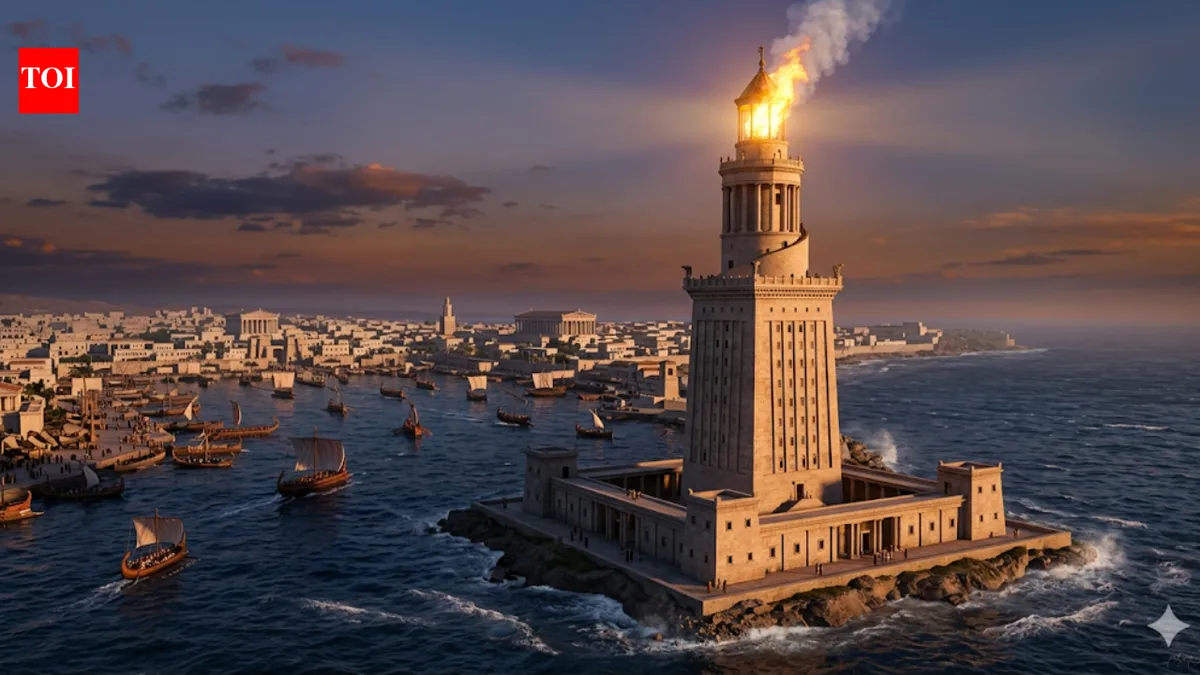
Scientists found 22 huge stone blocks underwater in Alexandria's eastern harbour that are believed to be parts of the Lighthouse of Alexandria, or the Pharos. [1]
The stones weigh around 70 to 80 tons each and include architectural fragments such as lintels, gateways, threshold stones and paving stones. [1] The discovery is being studied in the PHAROS project, which brings together scientists from CNRS and Dassault Systèmes. [1]
Researchers are using photogrammetry, computer reconstructions and stone analysis to study the remains and build a digital model of the lighthouse. Isabelle Hairy said the fragments should be analysed "as pieces of the puzzle, allowing for the digital reconstruction of the monument." [1]
The Lighthouse of Alexandria was built in the 3rd century BC during the reign of Ptolemy II Philadelphus and stood more than 100 metres high. It guided ships into Alexandria's harbour and became known as one of the Seven Wonders of the Ancient World. [1]
Several earthquakes from the 10th to the 14th century helped destroy the lighthouse and sent parts of the structure into the water. Researchers will continue analysing the submerged blocks as part of the PHAROS project. [1]