Pope Leo XIV visited Barcelona’s Sagrada Familia on June 10, 2026, to celebrate the centenary of architect Antoni Gaudí's death and to bless the newly completed central Jesus Christ tower [1, 2, 3, 4, 5, 6, 7, 8]. The tower was finished in February 2026, reaching 172.5 meters (566 feet), which makes the basilica the tallest church in the world [1, 2, 3, 5, 6, 7, 8]. The height was deliberately kept below the nearby Montjuic hill as Gaudí originally intended [2].
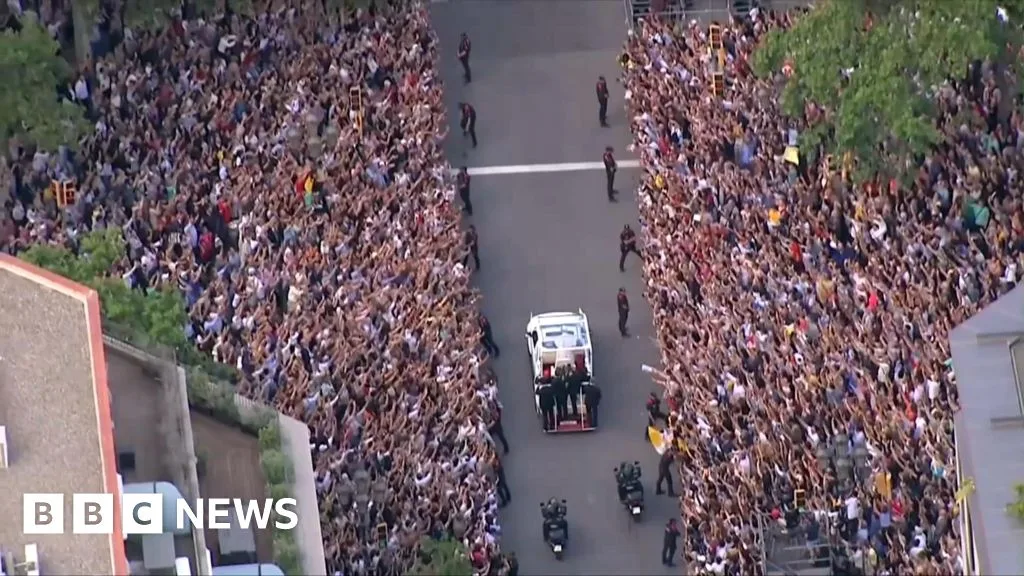
The pope’s mass and blessing ceremony drew thousands of attendees, including Spanish King Felipe VI, Queen Letizia, and Prime Minister Pedro Sánchez [1, 3, 4, 5, 6]. Around 12,000 people gathered in and around the basilica, according to some estimates [5]. During the mass, Pope Leo XIV spoke in Spanish, Catalan, and Latin, urging peace and condemning war and violence. He called Sagrada Familia a "continuing work symbolizing faith and hope," saying the basilica "is not yet finished because this reflects a pursuit, not a defect" [3, 4, 6].
Construction on Sagrada Familia began in 1882, and the complex is expected to be fully completed by around 2035-2036. Several parts remain, including four façades and other chapels [2, 5, 6, 7, 8]. The project faced setbacks from Spanish Civil War damage, financial issues, and the COVID-19 pandemic [3, 4, 7, 8]. Gaudí, who died in 1926 after being struck by a tram and initially mistaken for a beggar, was declared Venerable in 2025, advancing his cause for sainthood [2, 3, 4, 5, 8].
The Jesus Christ tower is the tallest of the basilica’s 18 towers, which represent biblical figures such as apostles and gospel writers. Three façades on the structure depict Jesus’s life, passion, and final judgment [3, 4, 7, 8]. The tower and basilica were illuminated with light shows, fireworks, and drone displays featuring Gaudí’s portrait after the ceremony [3, 4, 5, 6].
Experts noted that modern technology has played a key role in carrying on Gaudí’s complex architectural vision. Digital modeling, 3D printing, and industrial robots have helped ensure precision and continuity of the design [3, 4]. Gaudí specialist Corti said the unfinished state is part of Gaudí’s plan, and the pope’s visit serves as "a signpost on the path of builders" rather than an approval of completion [7].
The pope’s visit began June 6 in Madrid and included stops in Barcelona and the Canary Islands, where he was to focus on immigration issues through June 12 [2, 6]. Sagrada Familia attracted nearly 5 million visitors in 2025, contributing significantly to Barcelona’s economy [2, 8].