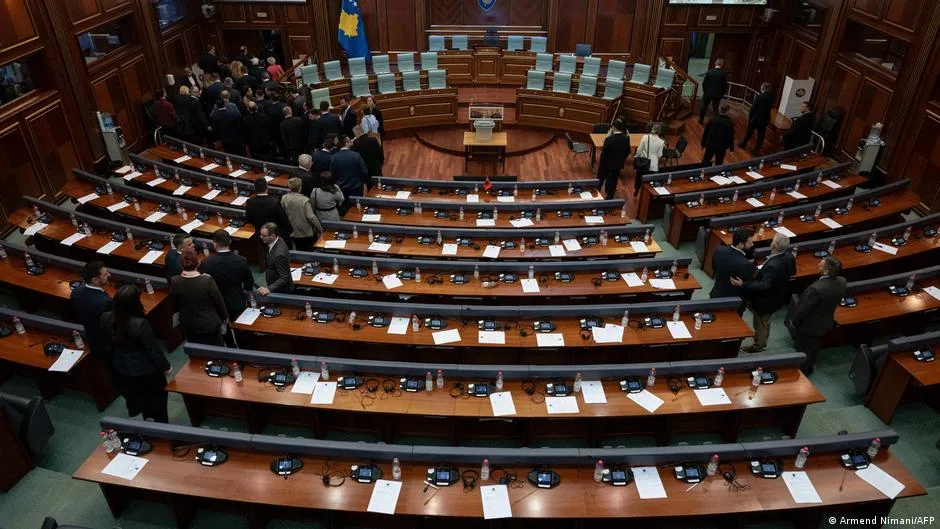
Kosovo will hold a snap parliamentary election in June after its parliament failed to elect a new president by the Constitutional Court's deadline, leading to the assembly's dissolution [1].
The political stalemate arose when Prime Minister Albin Kurti's party, Vetevendosje, did not secure enough votes to elect Vjosa Osmani for a second presidential term. Osmani had hoped to be re-elected but lost Kurti’s backing, who acknowledged he could only gather 66 votes—far short of the required 80 to out of 120 parliamentary votes needed for election [1]. Osmani said, "I then received a new assessment from Kurti that the Vetevendosje parliamentary group and he personally would no longer support me" [1].
On April 28, in an extraordinary parliamentary session, Kurti nominated Feride Rushiti, a doctor and human rights activist from civil society, as presidential candidate [1]. Opposition parties boycotted the vote, preventing her election and deepening the impasse. The Constitutional Court's deadline for electing a president passed that day, triggering the automatic dissolution of parliament [1].
Kurti's government, which was formed in February 2026 and currently holds around 5% vote share in the assembly, is now operating in a caretaker capacity following the dissolution [1]. Analysts describe the current situation as "a kind of ad hoc electoral alliance" crisis caused by a failure to find consensus on a presidential candidate amid deep divisions between the ruling party and opposition [1].
Vjosa Osmani’s presidential term ended on April 4. At that time, she declared her intention to seek re-election and praised Kurti, calling him "the best president of the 21st century," but relations soon deteriorated [1].
The upcoming June election will be Kosovo’s third since February 2026 as political uncertainty continues. Party leaders and voters will face another test to break the deadlock and restore full parliamentary functioning [1].