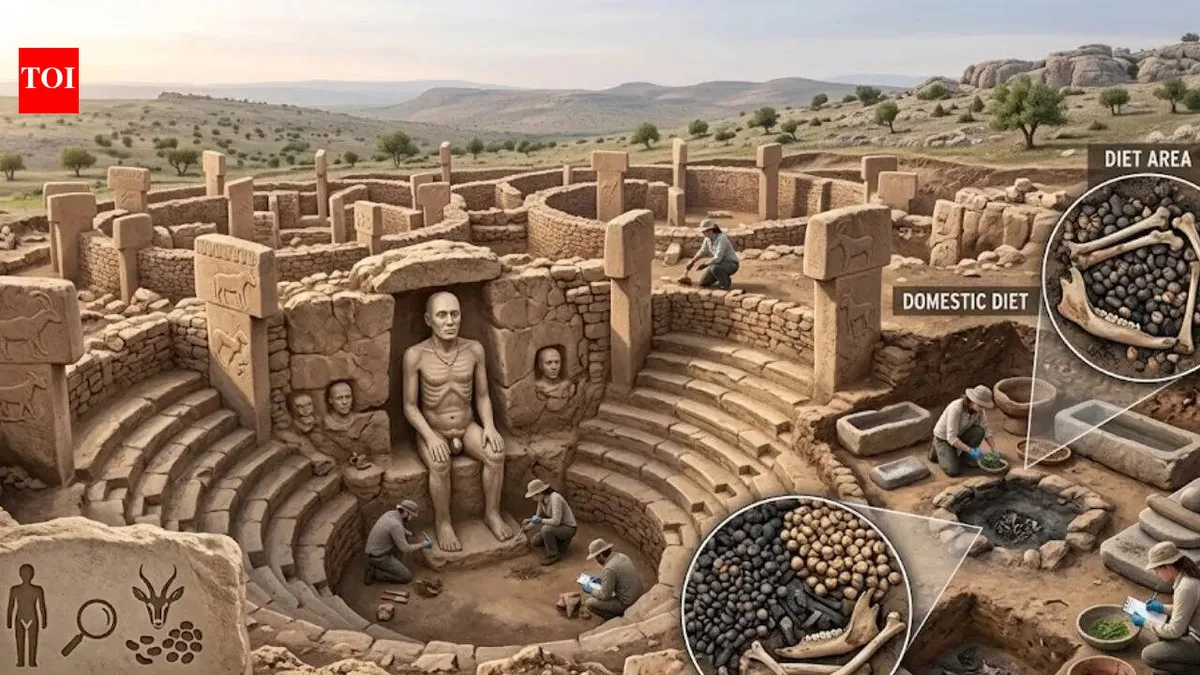
Recent excavations at Karahantepe in southeastern Türkiye uncovered over-life-sized human statues and detailed animal carvings at a site described as about 12,000 years old and part of the Taş Tepeler project. [1]
Researchers said the finds also point to a varied prehistoric diet. Evidence from the site includes wild legumes, gazelle, wild sheep, and wild cereals or pulses, suggesting people there ate a broad mix of plants and animals. [1]
The report said the diet points to semi-managed subsistence and “pre-domestication” cultivation rather than fully domesticated farming. It said the evidence challenges the traditional view that organized farming began before settled hunter-gatherer communities. [1]
Karahantepe is described as dating to around 12,000 years ago, with evidence of settled hunter-gatherer activity. The excavation adds to work at Taş Tepeler, a cluster of early sites in the same region. [1]