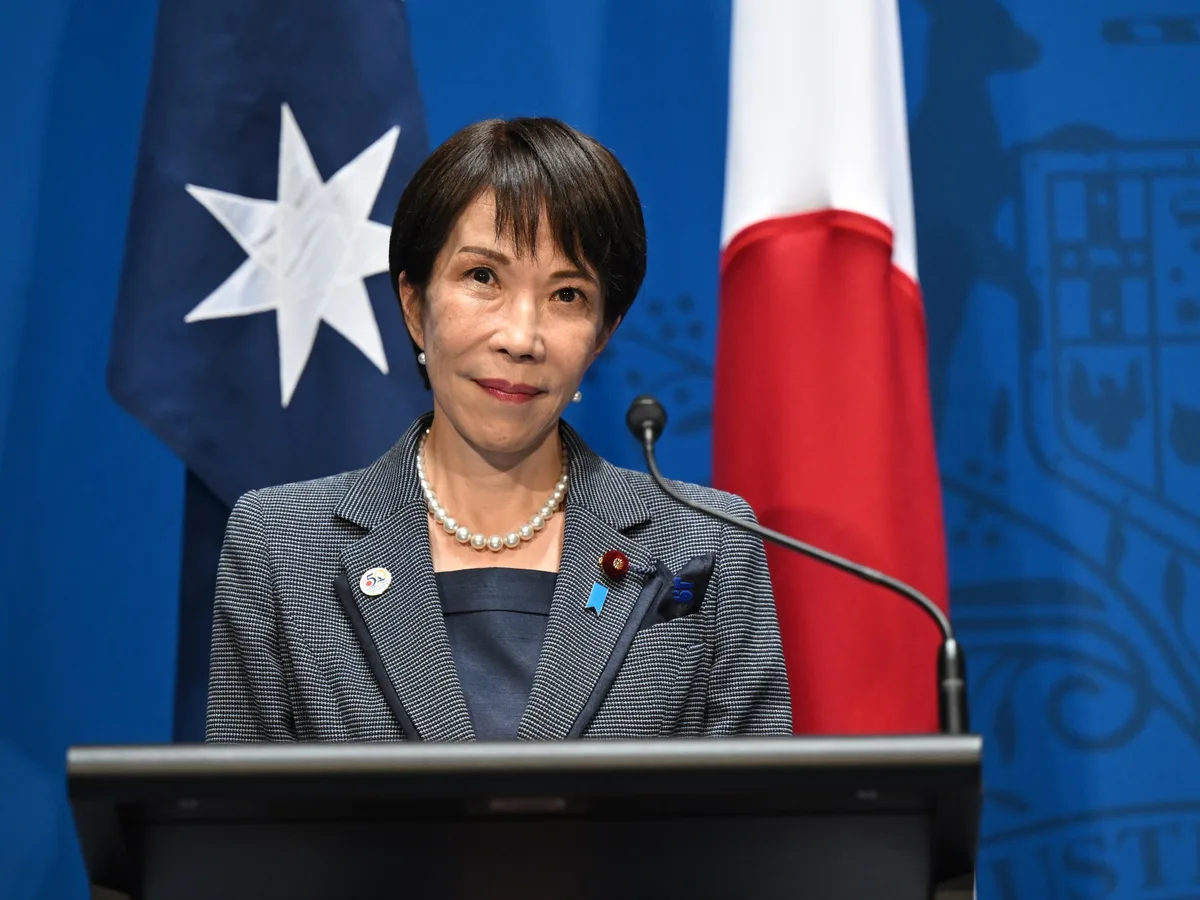
Japan's Prime Minister Sanae Takaichi said on Monday in Australia that the effective closure of the Strait of Hormuz by Iran since Feb. 28 is causing an “enormous impact” on the Indo-Pacific, as Japan and Australia pledged urgent cooperation on the energy crisis. [1]
The strait is a vital route for global energy shipments. About 20% of the world's oil and liquefied natural gas normally passes through it, and 80% of the oil that moves through the waterway is headed for Asia. [1]
Takaichi said, “The effective closure of the Strait of Hormuz has been inflicting enormous impact on the Indo-Pacific,” and added that Japan and Australia would “closely communicate with each other in responding with a sense of urgency.” [1]
Australia is a key supplier for Japan, providing about one-third of its energy needs and serving as Japan's largest liquefied natural gas market. Australian Prime Minister Anthony Albanese said he was also worried about fuel supply disruptions. “Like Japan, we are very concerned by disruptions to the supply of liquid fuels and refined petroleum products,” he said. [1]
The two governments also agreed to expand cooperation in critical minerals. Australia plans to invest up to 1.3 billion Australian dollars, or about $937 million, in projects with Japanese involvement. The minerals include gallium, nickel, graphite, rare earths and fluorite, which are used in semiconductors, EV batteries and defense systems. [1]
Japan and Australia have also stepped up military cooperation as both countries watch the regional security environment change. [1]
Takaichi visited Australia on May 4 and announced energy and strategic cooperation agreements. [1]