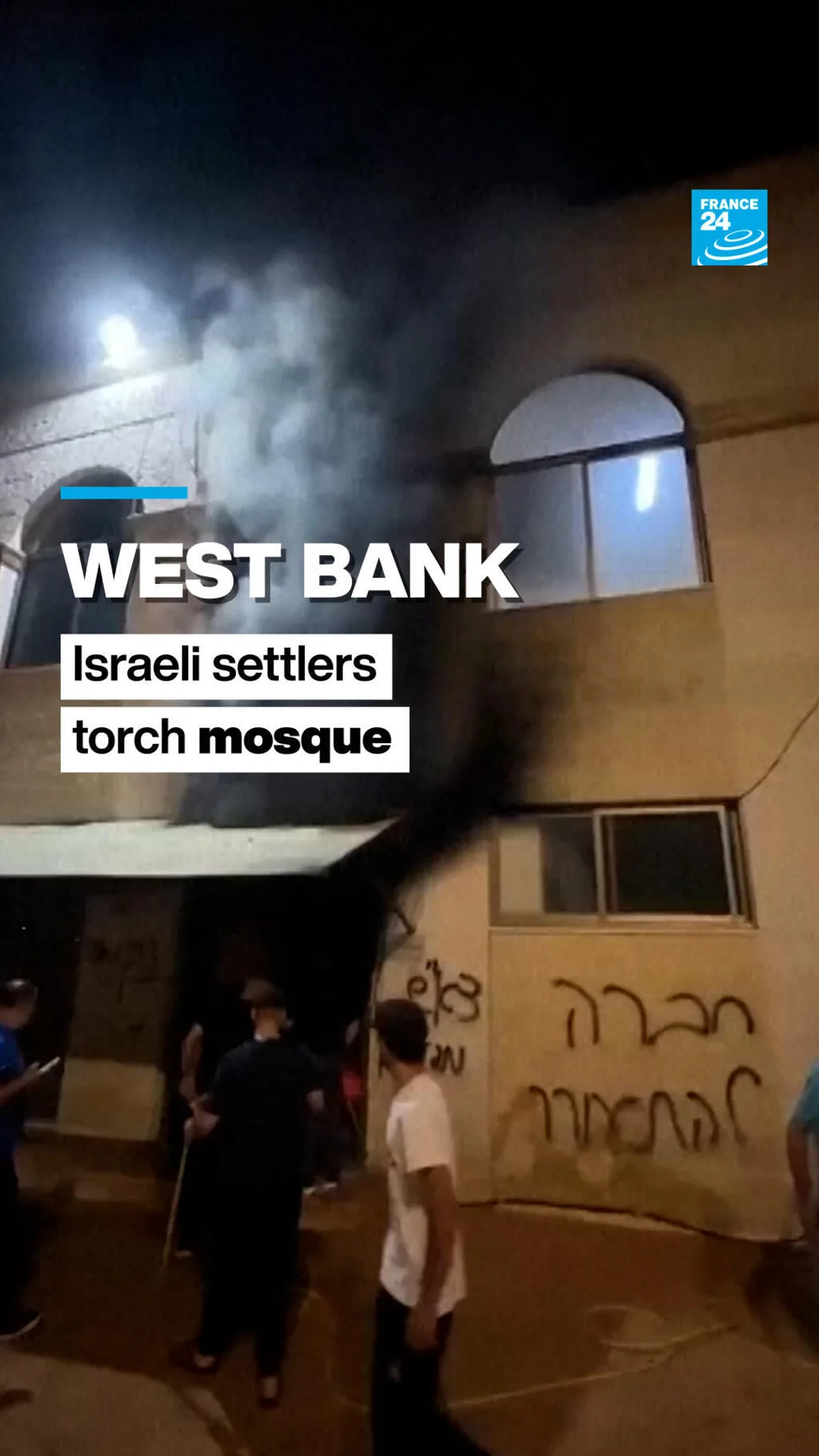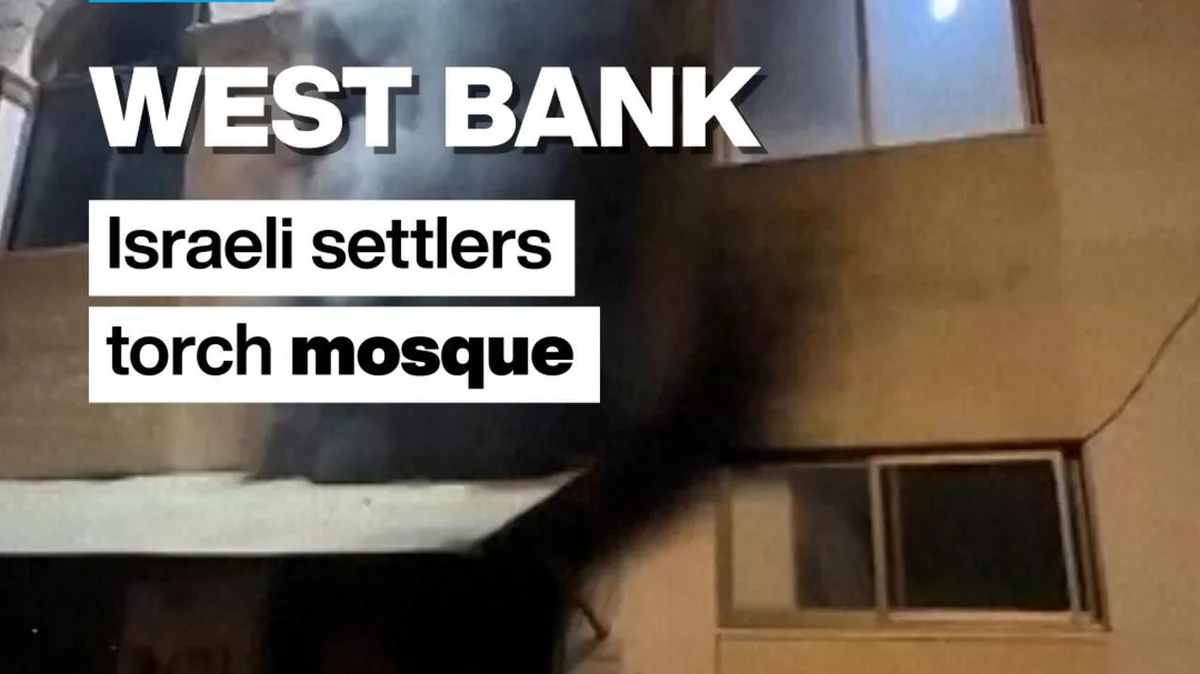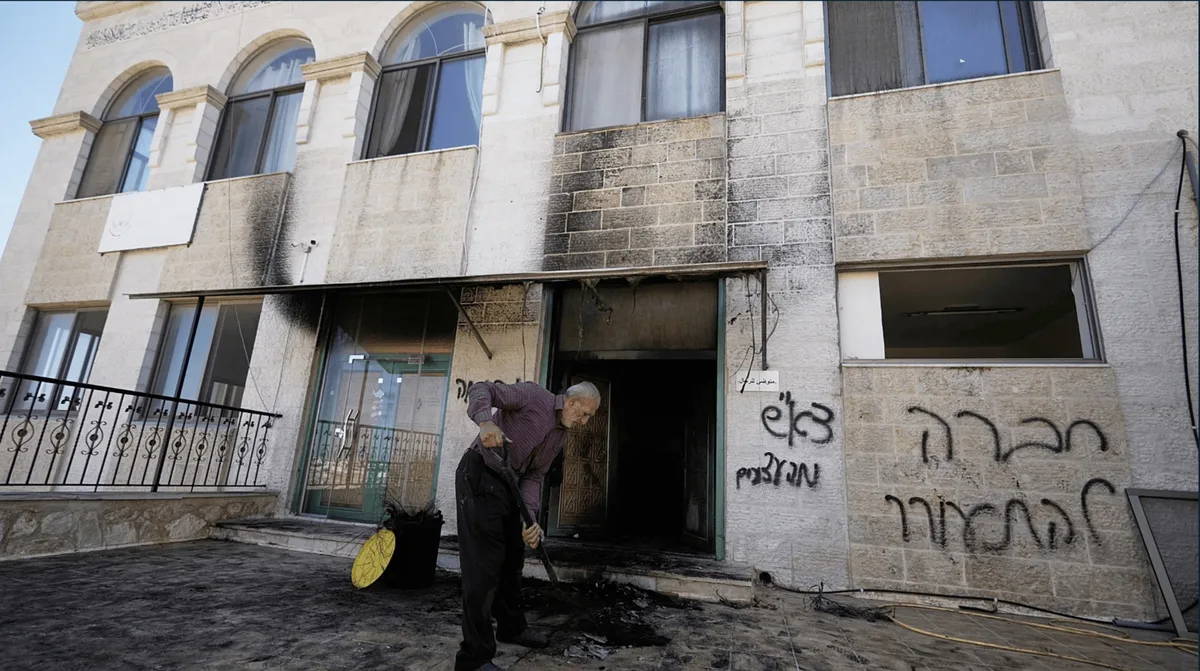
Israeli settlers set fire to at least two mosques in the occupied West Bank villages of Jiljilya and Al-Mazra’a Al-Nubani near Ramallah on June 17, 2026, damaging key prayer areas and vandalizing walls with hateful Hebrew slogans including “vengeance” and “hi from the Hilltop Youth” [1, 2, 3, 4]. At the Jiljilya mosque, the ablution room and women's prayer hall suffered smoke and flame damage to ceilings, walls, and floors [1, 2, 3].
Masked settlers also broke into the mosque interior and set fire to six nearby vehicles belonging to local residents [5]. In the neighboring town of Burqa, the al-Noor mosque was targeted by an arson attack soon after the Jiljilya incident [5].
The attackers sprayed racist slogans on mosque walls, inflaming tensions around sacred sites [1, 2, 3, 4]. Palestinian leaders condemned the attacks, calling them part of a pattern of settler violence and ethnic cleansing [5, 2, 4]. Adel Maatan, muezzin of Burqa mosque, said, "We are steadfast here and will not leave. This is our land, inherited from our ancestors, and we will remain in it until the Day of Judgement" [5].
A 92-year-old Palestinian American, Yasser Saqer Rashid, described a harrowing encounter with masked settlers at al-Marah mosque in Deir Dibwan, who attempted to burn him alive. "I was shocked by a settler holding a petrol bomb, pointing it at my face and clothes near the window," he said [5].
The Palestinian Supreme Fatwa Council condemned the attacks on June 18, calling them a serious escalation targeting Islamic holy sites and urged the international community to intervene [4]. Since the Gaza war began in 2023, violence has escalated in the West Bank, with Israeli forces often accompanying settler attacks [5, 3]. Palestinian casualties since October 8, 2023, include 1,169 killed, 12,666 injured, 23,000 arrested, and 33,000 displaced [3, 4].
The recent mosque attacks mark a sharp spike in violence around Ramallah’s surrounding villages. Local officials vow to seek justice for the arsons and to protect their communities and religious sites [5, 2, 4].