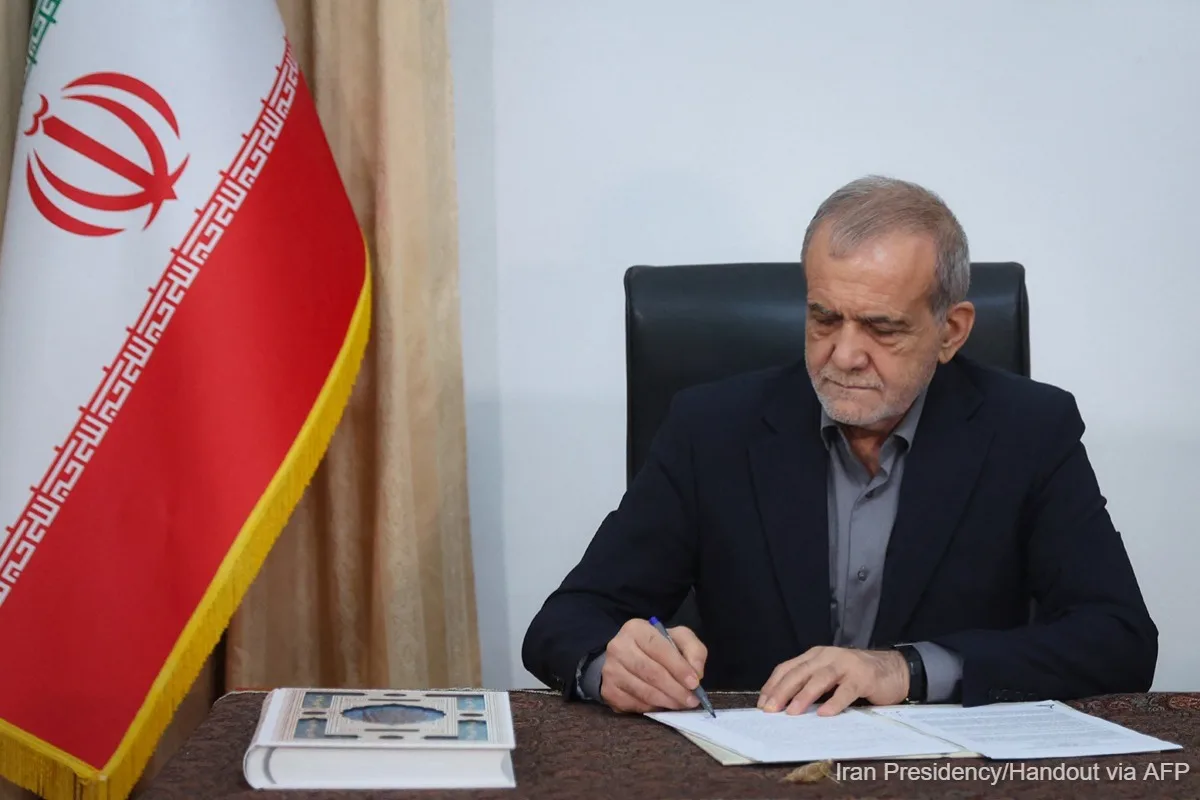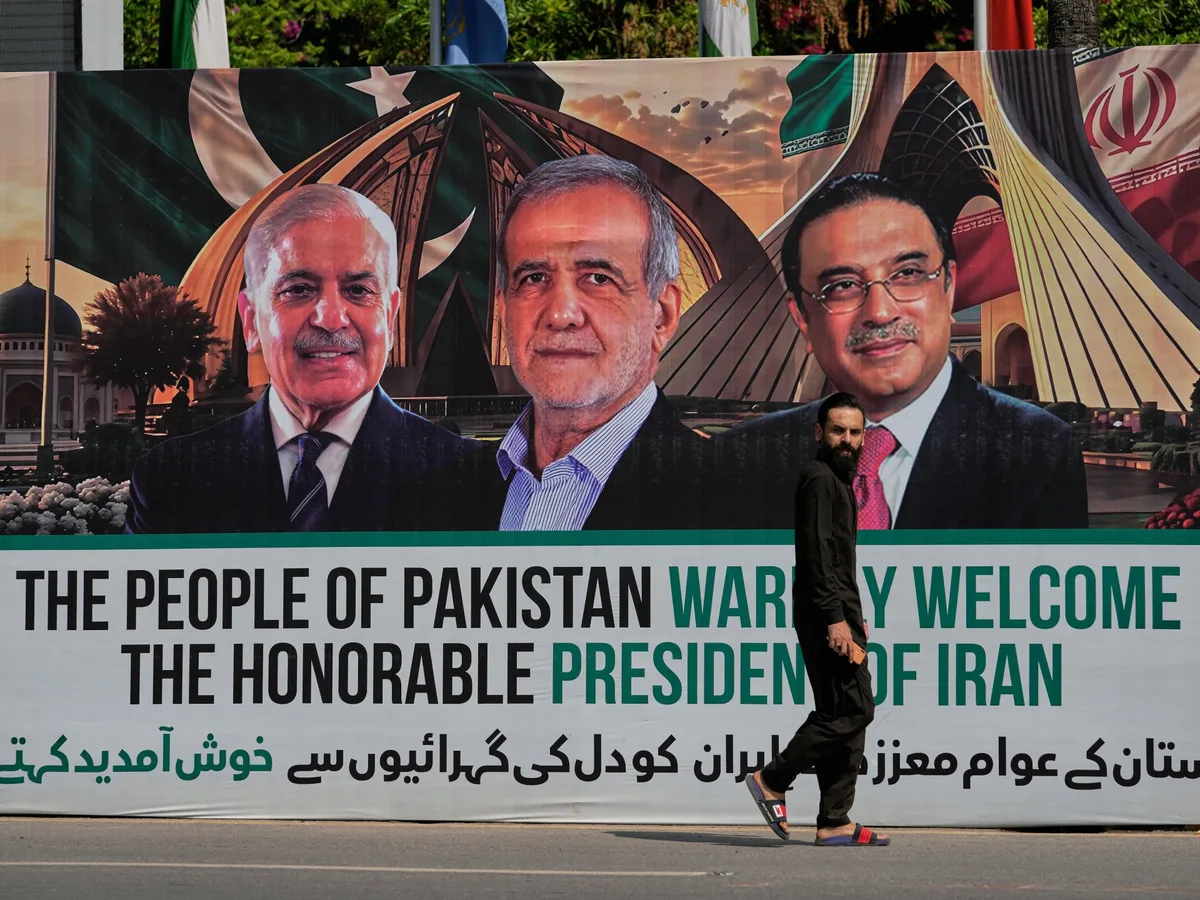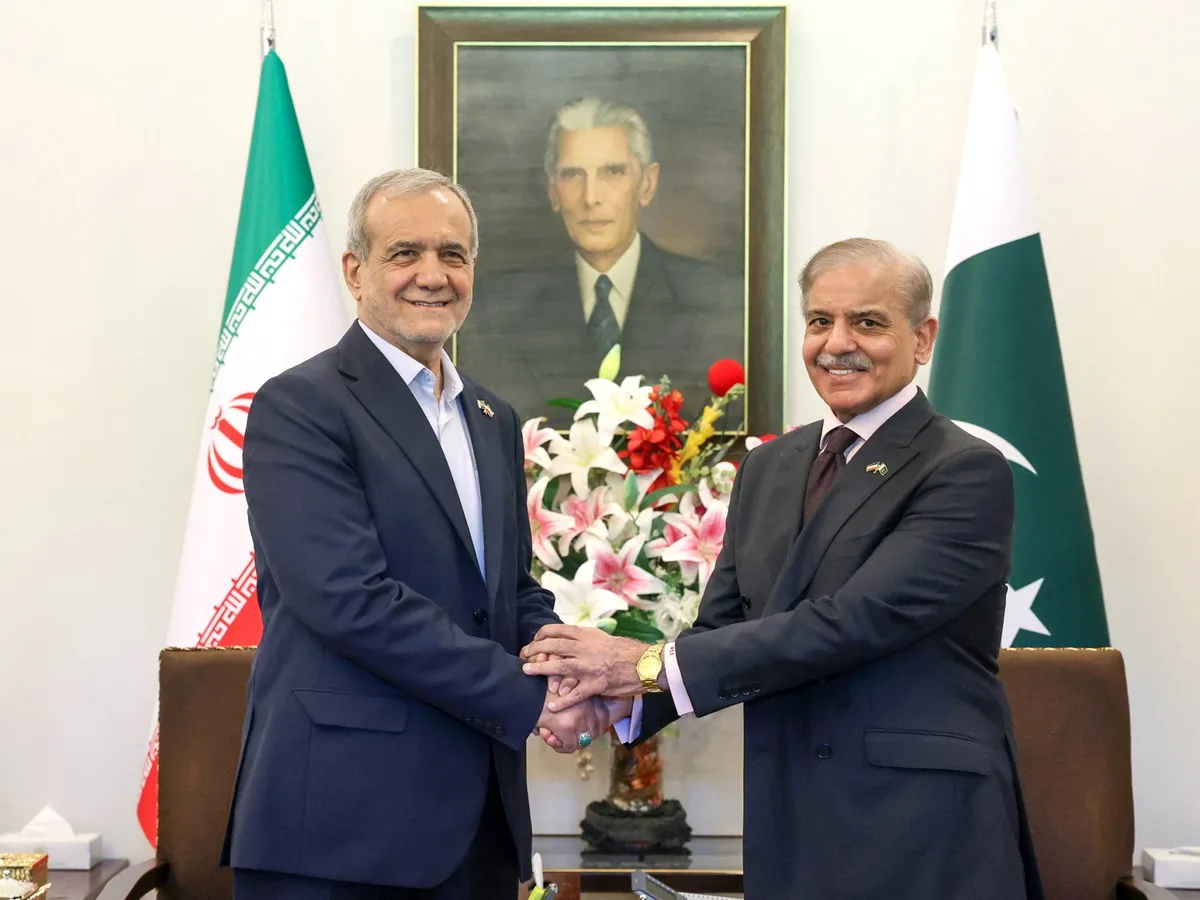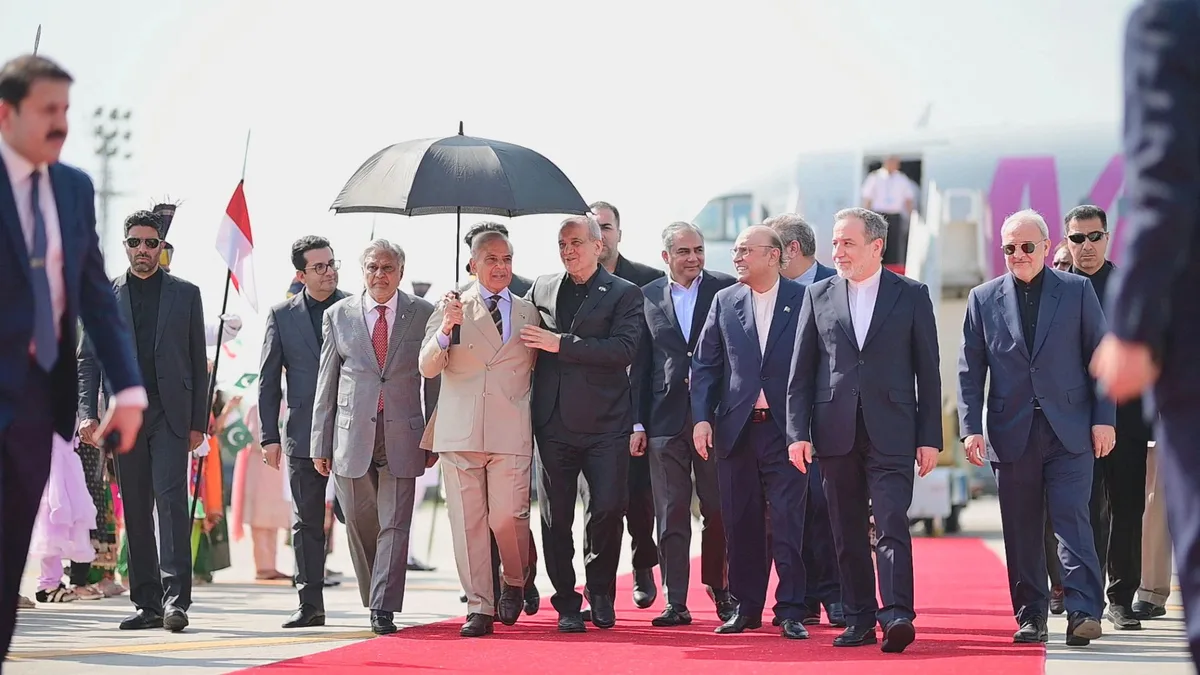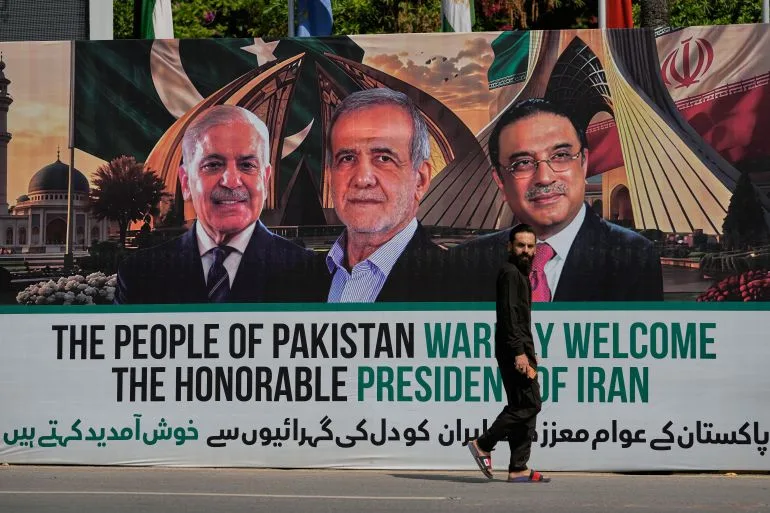
Iranian President Masoud Pezeshkian arrived in Islamabad on June 23, 2026, for a one-day state visit, his first overseas trip since the US and Israel launched a war against Iran on February 28, 2026 [1, 2, 3]. Pezeshkian had previously visited Pakistan in August 2025 shortly after the 12-day Iran-Israel war [3, 4].
During the visit, Pezeshkian met Pakistani President Asif Ali Zardari, Prime Minister Shehbaz Sharif, Foreign Minister Ishaq Dar, Senate Chairman Yousaf Raza Gilani, National Assembly Speaker Ayaz Sadiq, and Pakistan Army Chief General Asim Munir [1, 2, 3]. The meetings focused on expressing Iran's gratitude for Pakistan’s mediation in US-Iran talks and discussing bilateral cooperation in trade, energy, border security, regional connectivity, and people-to-people exchanges [1, 2, 3].
These talks led to the Islamabad Memorandum of Understanding, signed electronically on June 18, 2026, by Pezeshkian and US President Donald Trump, launching a formal peace process between the two countries [3, 5, 6]. The mediation, also involving Qatar, resulted in a 60-day roadmap toward a final peace deal and a ceasefire that ended active hostilities on April 8, 2026 [2, 3, 4]. The US agreed to release $12 billion in frozen Iranian funds and temporarily eased sanctions on Iranian oil and petrochemicals until August 21, 2026 [3].
Pakistani Prime Minister Shehbaz Sharif clarified that Iran’s ballistic missile program was not part of the negotiations and would not be discussed, stating, "It was never on the table; it was never on the agenda. I want to make it clear. There cannot be double standards where some countries can have ballistic missiles and Iran shouldn’t have" [7]. Iranian President Pezeshkian highlighted the longstanding ties with Pakistan, saying, "The relations between Tehran and Islamabad have always been based on mutual respect, goodwill, and historical trust, and recent developments have once again demonstrated the strength of this valuable asset" [8].
Pakistani President Asif Ali Zardari said, "Pakistan has consistently opposed one-sided initiatives and has supported dialogue and diplomacy as the means to achieve a durable and sustainable solution to regional and global challenges" [9]. Security was tight in Islamabad with large areas blocked off and government offices ordered to work from home in red zones during the visit [1].
Military and political leaders from Iran and Pakistan agreed to strengthen regional security cooperation during Pezeshkian’s visit [6]. Sharif pledged Pakistan’s continued mediation efforts toward permanent regional peace and announced plans to visit Tehran next week [7]. The approximately 900-kilometer border shared by Iran and Pakistan also figures prominently in discussions on cross-border stability and cooperation [1].