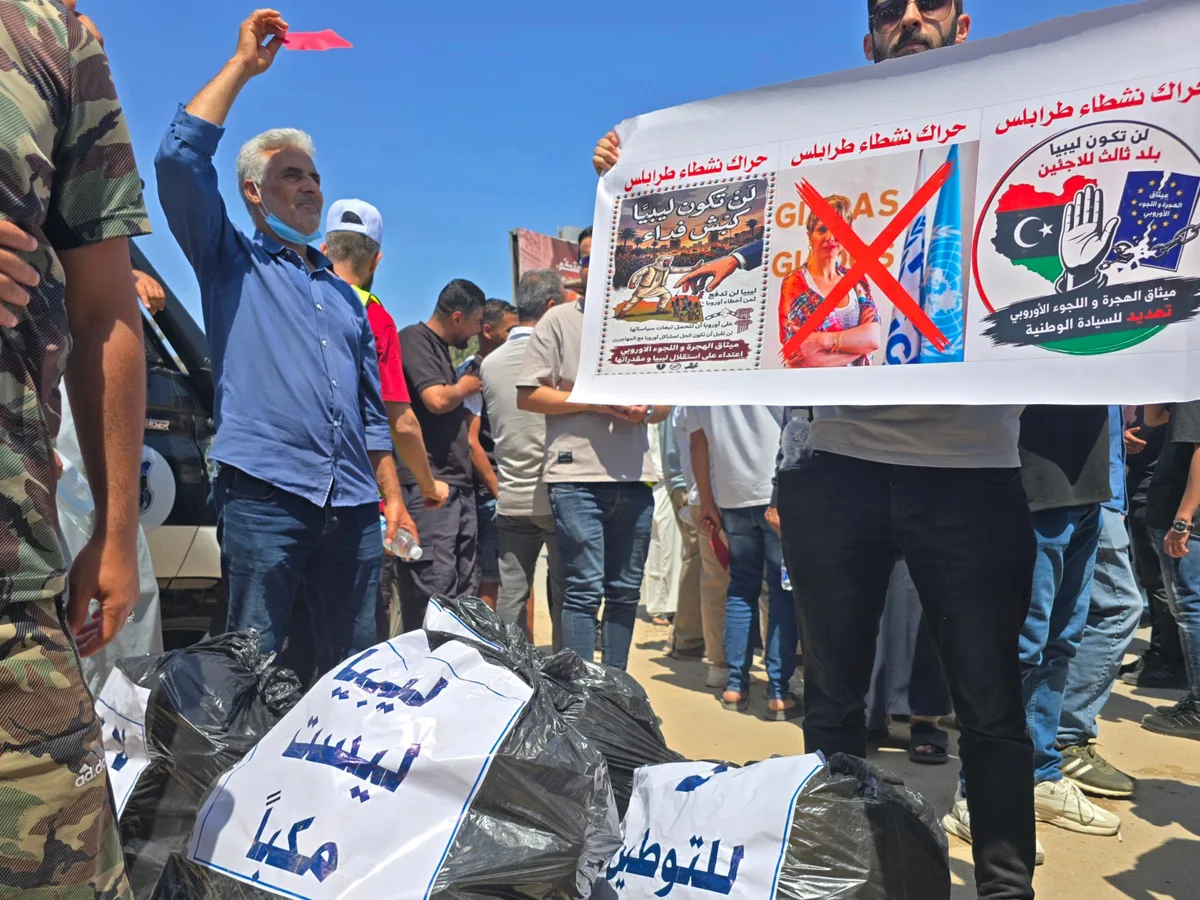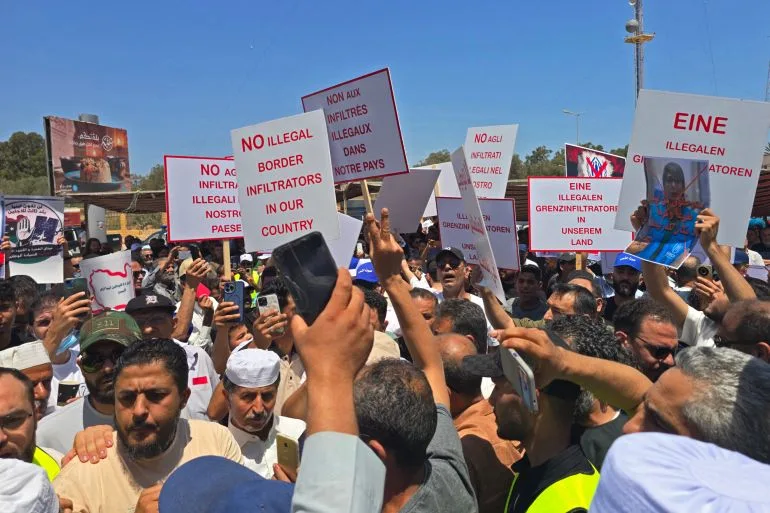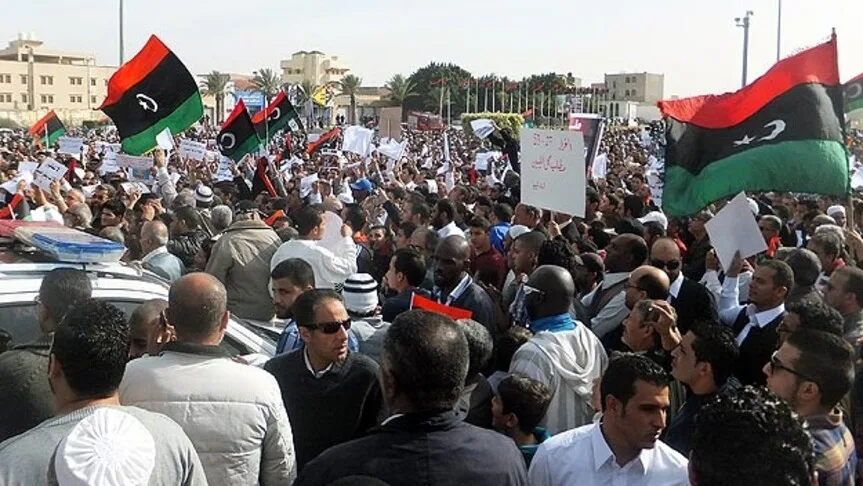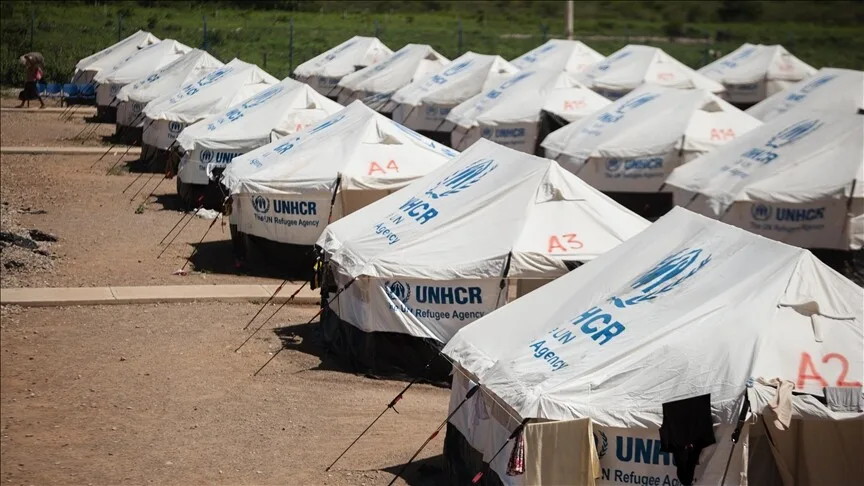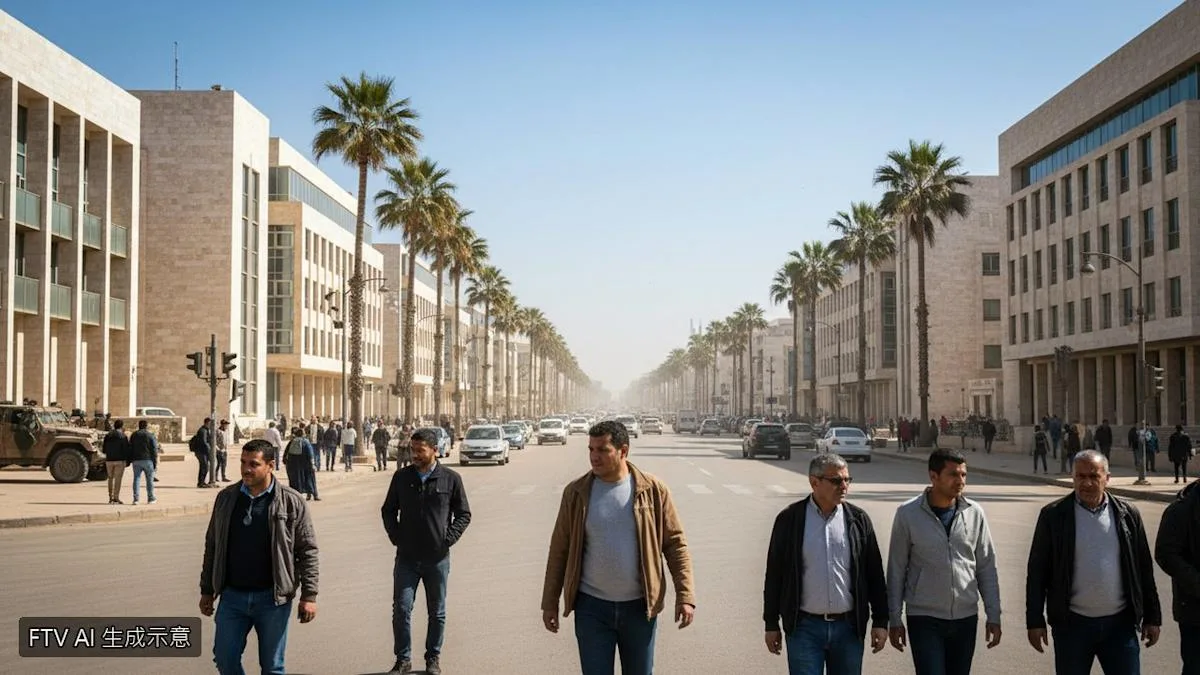
Hundreds of Libyan demonstrators blocked the United Nations refugee agency (UNHCR) office in Tripoli on June 4, protesting against migrants seeking work or passage to Europe [1, 2, 3, 4, 5, 6]. Protesters accused the UNHCR and the UN Support Mission in Libya (UNSMIL) of attempting to settle migrants in Libya, a claim the UN and UNSMIL strongly denied [1, 2, 3, 7, 5, 6]. Libya's acting foreign minister Taher al-Baour said, "There was no project to settle migrants in Libya. Libya is not capable of handling these numbers" [1].
The protesters stormed the UN mission's office in Tripoli’s Janzour area and blocked the UNHCR office entrance in the Sarraj district with sand and barriers, chanting slogans such as "Libya only for Libyans" and "Get out of Libya" [1, 3, 4, 5]. Ahmad al-Ghasa, a protester, stated, "These phenomena were not present in Libyan society before" as they voiced frustration with the presence of migrants [1].
UNSMIL and UNHCR clarified that none of their agencies run migrant resettlement programs within Libya. Instead, they focus on evacuating migrants to third countries or facilitating voluntary returns to their home countries [2, 3, 7, 6]. UNSMIL's statement read, "None of its agencies, including UNHCR, implement any resettlement programmes to Libya. Allegations to the contrary are categorically false" [7].
UN officials blamed social media for spreading misinformation that inflamed tensions and fueled the protests. UN spokesman Stephane Dujarric condemned the violence and stated, "We are deeply concerned by the violent protests that took place yesterday outside the UNHCR and UNSMIL headquarters in Tripoli. The U.N. strongly condemns any attack or threats against personnel or premises. We are concerned by the spread of misinformation and disinformation regarding the work of the United Nations in Libya" [2, 6].
Libya has become a major transit route for migrants fleeing conflict and poverty in sub-Saharan Africa. International organizations estimate over 900,000 migrants live in Libya as of mid-2024, many from war-torn Sudan [1, 7, 5]. Some Libyans blame migrants for worsening social and economic problems after 15 years of political instability and conflict following the 2011 NATO-backed uprising [1, 3, 6].
The protests came amid ongoing instability in Libya. UN and Libyan officials are expected to continue addressing migrant concerns and misinformation in the coming days.