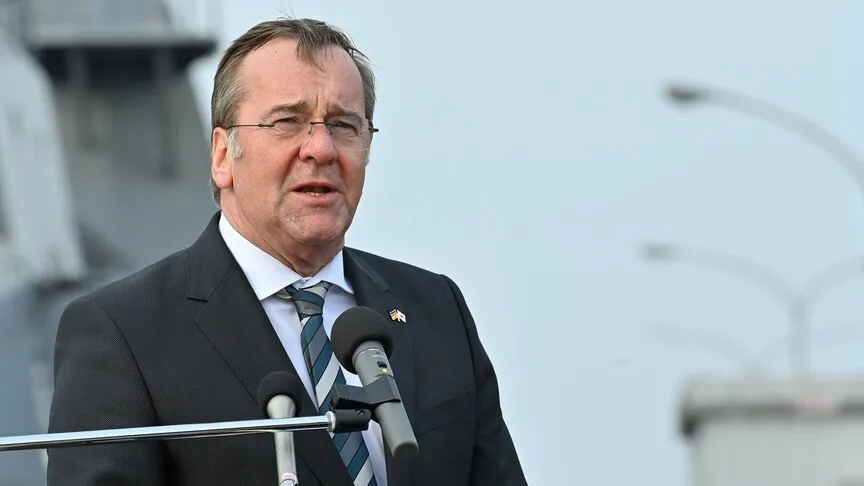
Germany has not yet received official details on the United States' plan to withdraw 5,000 troops from the country, Defense Minister Boris Pistorius said on May 4 during a visit to a military training base in Munster [1]. "It’s now supposed to be 5,000 soldiers — but we don’t yet have official confirmation of when, how, or on what scale this is supposed to happen," Pistorius told reporters [1].
The announcement was not surprising, Pistorius said, because he had long warned that the US would increasingly focus on the Indo-Pacific region and reduce its military presence in Europe [1]. The withdrawal represents a shift in US defense priorities away from Europe.
Pistorius also addressed concerns about a capability gap left by the paused deployment plan for long-range Tomahawk missiles in Germany. The missiles had been agreed two years earlier by Chancellor Olaf Scholz and US President Joe Biden as a temporary measure [1]. "The fact that this might not happen the way we previously assumed reopens this capability gap," he said. "There are ideas for this, but no solution yet" [1].
Chancellor Friedrich Merz recently criticized the US response to the Iran war, saying, "The Iranians are obviously stronger than expected, and the Americans clearly don’t have a truly convincing strategy in the negotiations either" [1]. Former US President Donald Trump responded publicly on social media, saying Merz "doesn’t know what he’s talking about" [1].
The situation marks an ongoing period of uncertainty over US troop levels in Germany and the country's future defense arrangements. Germany awaits further details on the timing and scope of the troop withdrawal.