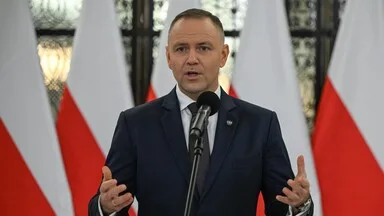
German Foreign Minister Johann Wadephul said on May 4 that the US plan to withdraw 5,000 troops from Germany will not reduce NATO’s conventional deterrence capability in Europe. "I have absolutely no doubt that there will be any reduction in NATO’s conventional deterrence capability in Europe. That will be offset one way or another in any case," Wadephul said, urging not to "overestimate individual measures" amid the troop reductions announced by the Pentagon in recent days [1].
The Pentagon confirmed the withdrawal of 5,000 US troops from Germany as part of a broader global defense posture review and indicated further reductions could follow [1]. Reports also surfaced that the US administration had shelved plans to deploy long-range Tomahawk cruise missiles in Germany. Wadephul described the missile deployment as a "temporary measure" intended only until Europe develops similar capabilities, reducing the need for US missiles on the continent [1].
The troop cuts and adjustment in missile deployment come amid heightened tensions and strategic recalculations within NATO. German Chancellor Friedrich Merz publicly criticized the US approach to the Iran war, saying "the Iranians are obviously stronger than expected, and the Americans clearly don’t have a truly convincing strategy in the negotiations either." Merz added that the US lacked an exit strategy and suggested the US was being humiliated by Iran [1].
Former US President Donald Trump quickly responded to Merz’s comments via social media, dismissing them by saying, "Merz doesn’t know what he’s talking about." The exchange highlighted strains in transatlantic relations as Germany seeks to balance its NATO commitments with shifting US military posture in Europe [1].
The troop withdrawal and missile deployment changes remain under discussion, with NATO allies monitoring how these moves affect collective defense. German officials stressed the resilience of NATO’s deterrence capability. Wadephul insisted the changes reflect strategic adjustments rather than a weakening of alliance defense, forecasting that measures will be offset within the alliance framework [1].