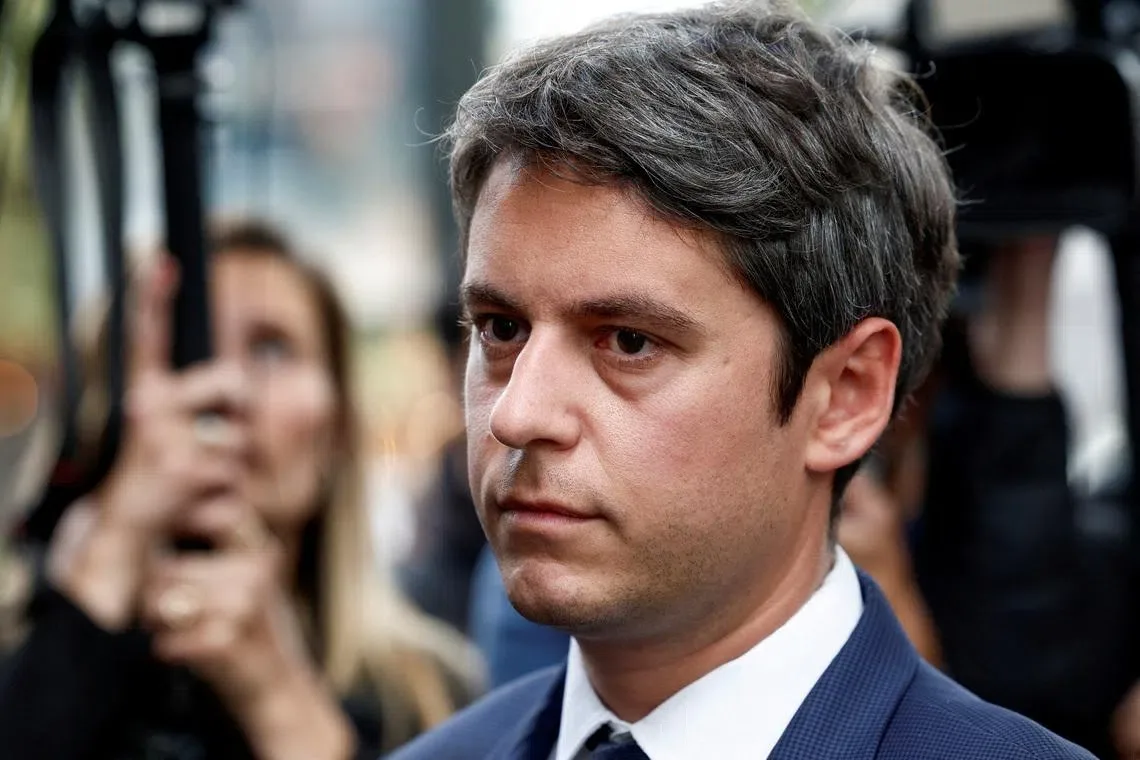
Gabriel Attal, former French Prime Minister and current secretary-general of the Renaissance party, officially launched his bid for the 2027 French presidential election on May 21, 2026, in Mur-de-Barrez, a small village in the Aveyron region of southern France [1, 2]. He chose the location to highlight Renaissance’s appeal beyond major cities.
The 37-year-old served seven months as prime minister before returning to party leadership and now seeks to build momentum for the presidency. Speaking at his announcement, Attal said, "I've had enough of French politics being about 50 shades of managing decline. So because I love France with a passion and love the French passionately, I'm a candidate for the presidency" [1].
Attal faces stiff competition for centrist voters, notably from former Prime Minister Edouard Philippe, who currently polls higher in first-round surveys. Attal’s support tops out at around 14% compared to Philippe’s maximum of 25%, positioning Philippe as the leading centrist challenger to the far-right National Rally [1].
The 2027 presidential race is fragmented. This division increases the risk that far-right or far-left candidates could advance to the second round. Emmanuel Macron cannot run again due to constitutional term limits, leaving the centrist field wide open [1, 2].
Far-right leader Marine Le Pen has said she will campaign for Jordan Bardella if legal decisions prevent her from running herself. Le Pen has also clarified she would not serve as Bardella’s prime minister if he became president [2]. A court ruling on Le Pen’s legal case, which may affect her candidacy, is expected on July 7, 2026 [2].
On the left, Jean-Luc Mélenchon is set to launch his campaign rally on June 7 in Saint-Denis near Paris [2].
The next key date in the race will be the court decision on July 7 concerning Le Pen’s eligibility to run, which may alter the balance in the presidential contest.