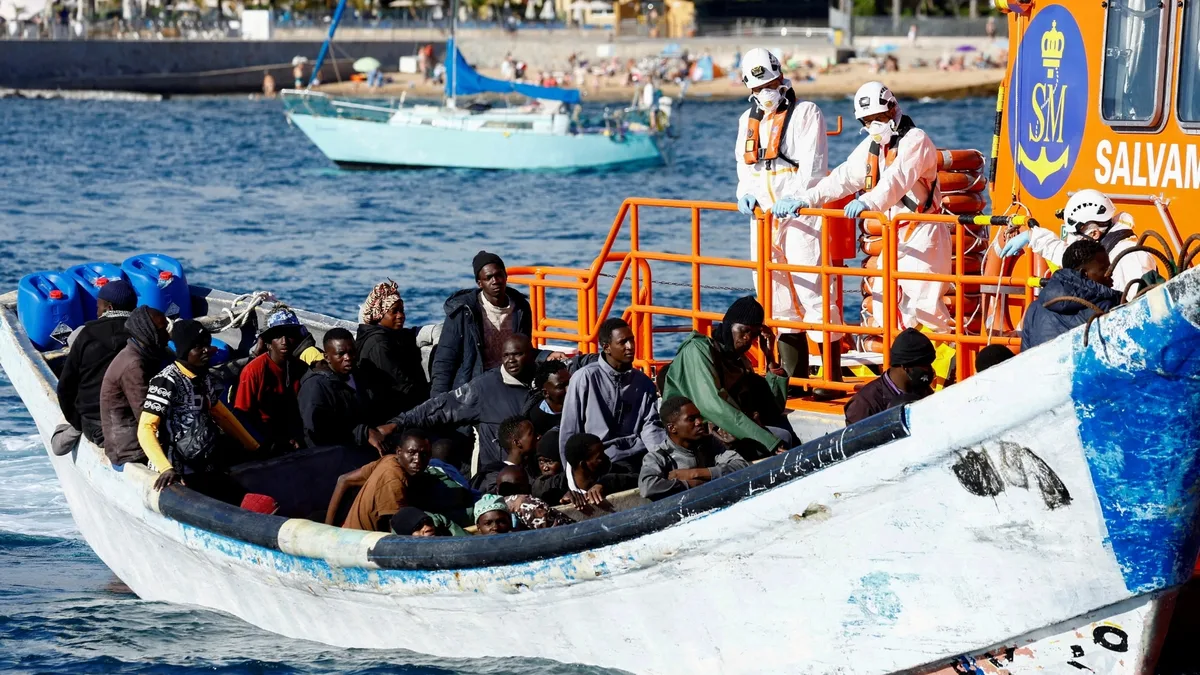
The EU Pact on Migration and Asylum officially took effect on June 12, 2026, two years after its adoption by member states in May 2024 [1, 2, 3, 4]. The new rules aim to tighten external border controls and speed up procedures for asylum seekers across the European Union.
Under the pact, irregular migrants entering the EU will face mandatory identity and security checks that can last up to seven days. Authorities will collect biometric data, including facial recognition and fingerprints, to be stored in EU databases during border screening [1, 2, 5, 6, 3, 7, 8].
Migrants from countries with asylum acceptance rates below 20%, such as Pakistan, Iran, Russia, Turkey, Venezuela, Nigeria, and the Democratic Republic of Congo, may be subject to a fast-track border procedure lasting up to 12 weeks, accelerating case processing near external borders [2, 5, 6, 7, 8]. Asylum seekers deemed security risks or unlikely to qualify for protection will face accelerated application reviews at the border [2, 5, 3, 7].
A solidarity mechanism requires EU member states to share responsibility for asylum seekers by accepting refugees, providing financial support, or supplying resources to frontline countries like Italy, Greece, and Malta. If states refuse solidarity obligations, they face compensation payments of 20,000 euros per rejected asylum seeker [1, 2, 6, 3, 7, 8].
European Commission President Ursula von der Leyen described the pact as a “fair and firm pact” delivering “more secure external borders, solidarity between member States and more efficient procedures for asylum and return” [1]. EU migration chief Magnus Brunner said, “For the first time we have a comprehensive European system” [2].
The pact also aims to end secondary movements of asylum seekers within the EU by requiring the first-entry country to handle cases, limiting transfers across member states [1, 6, 3, 7, 8]. It includes strengthened safeguards for fundamental rights, such as independent monitoring during screening and border procedures [3].
Rights groups have warned the reforms could lead to prolonged detention of asylum seekers, including children, during border screening [2, 5, 6, 7, 8]. German EU lawmaker Birgit Sippel said, “We have to realize that nearly no member state is ready to 100 percent. And that's even more disappointing because it's not that we started at zero” [1]. Implementation of the rules will be gradual, reflecting each country’s preparedness [1, 3, 7].
Experts remain skeptical about the impact of the reforms on improving returns. Gerald Knaus, founder of the European Stability Initiative, said, “Border procedures are not new measures, the real problem is implementing returns after rejection. It remains to be seen if the reform will change the current situation” [6]. EU Parliament data showed deportation enforcement rates of 24% in 2024 and 27% in 2025 [9].
The pact represents a comprehensive overhaul of the EU’s migration and asylum framework and will be enforced progressively as member states adapt to the new system [1, 3, 7].