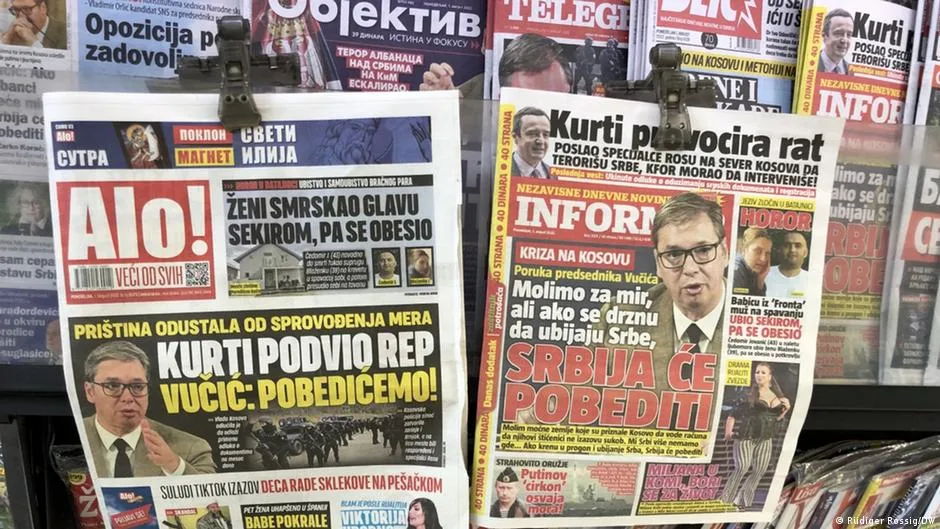
DW reports that Serbia's media landscape has faced growing pressure since the Serbian Progressive Party came to power in 2012, with less room for independent journalism and more use of state-backed propaganda tools. [1]
Journalist and media analyst Nedim Sejdinovic said the party's main goal after taking power was to place the entire media landscape under firm control. He said the effort was carried out "very systematically" and described the purchase of local outlets by people close to the ruling elite as one of the key methods used. [1]
The report says outlets that cooperate with the authorities receive financial and institutional support, while those that refuse face economic and political isolation. Sejdinovic said around 90% of media outlets are directly or indirectly linked to President Aleksandar Vucic's regime. [1]
One public funding channel is project co-financing. The article says about €120 million, or $140 million, has been spent on that over the past decade at the local, regional and state level, according to analyses by BIRN and the Center for Sustainable Communities cited in the report. [1]
State advertising is another, larger and less transparent source of public support, the report says, and private companies also sometimes stay away from advertising because of market pressure. [1]
The report traces the crackdown to 2012, when the Serbian Progressive Party came to power and began, it says, to seek systematic control over the media. [1]