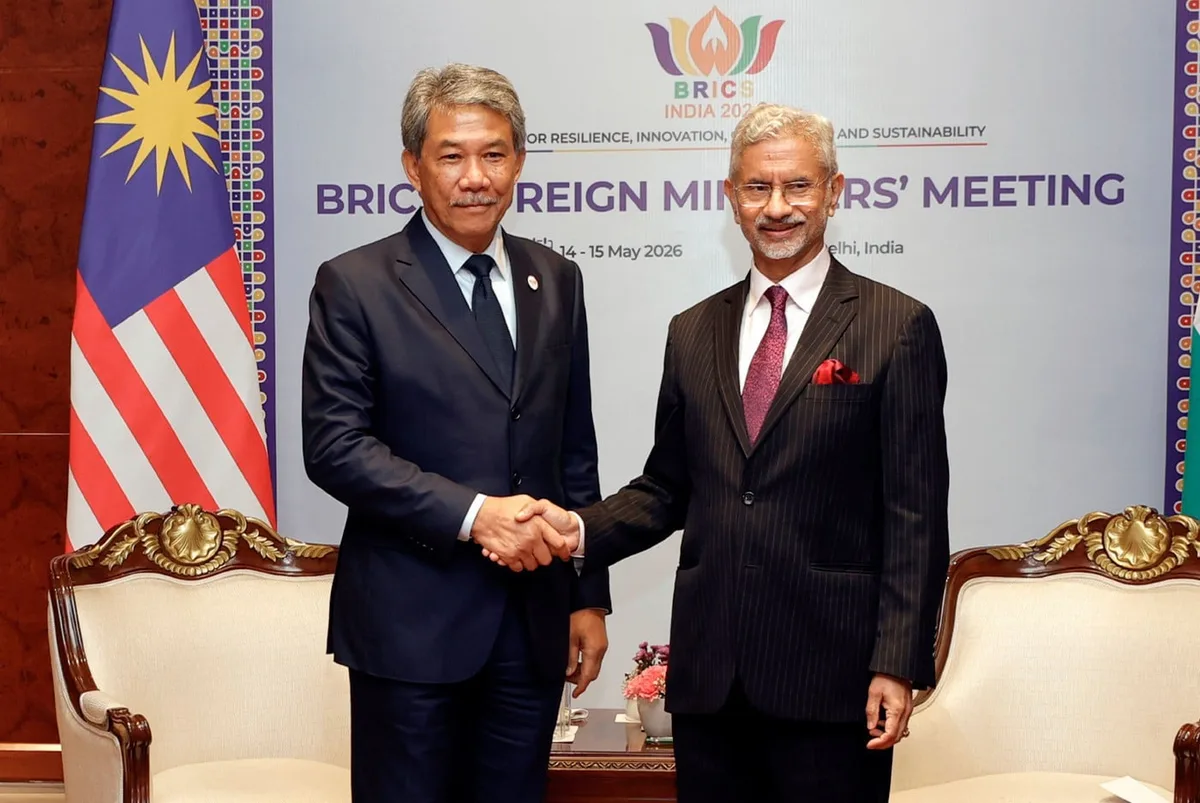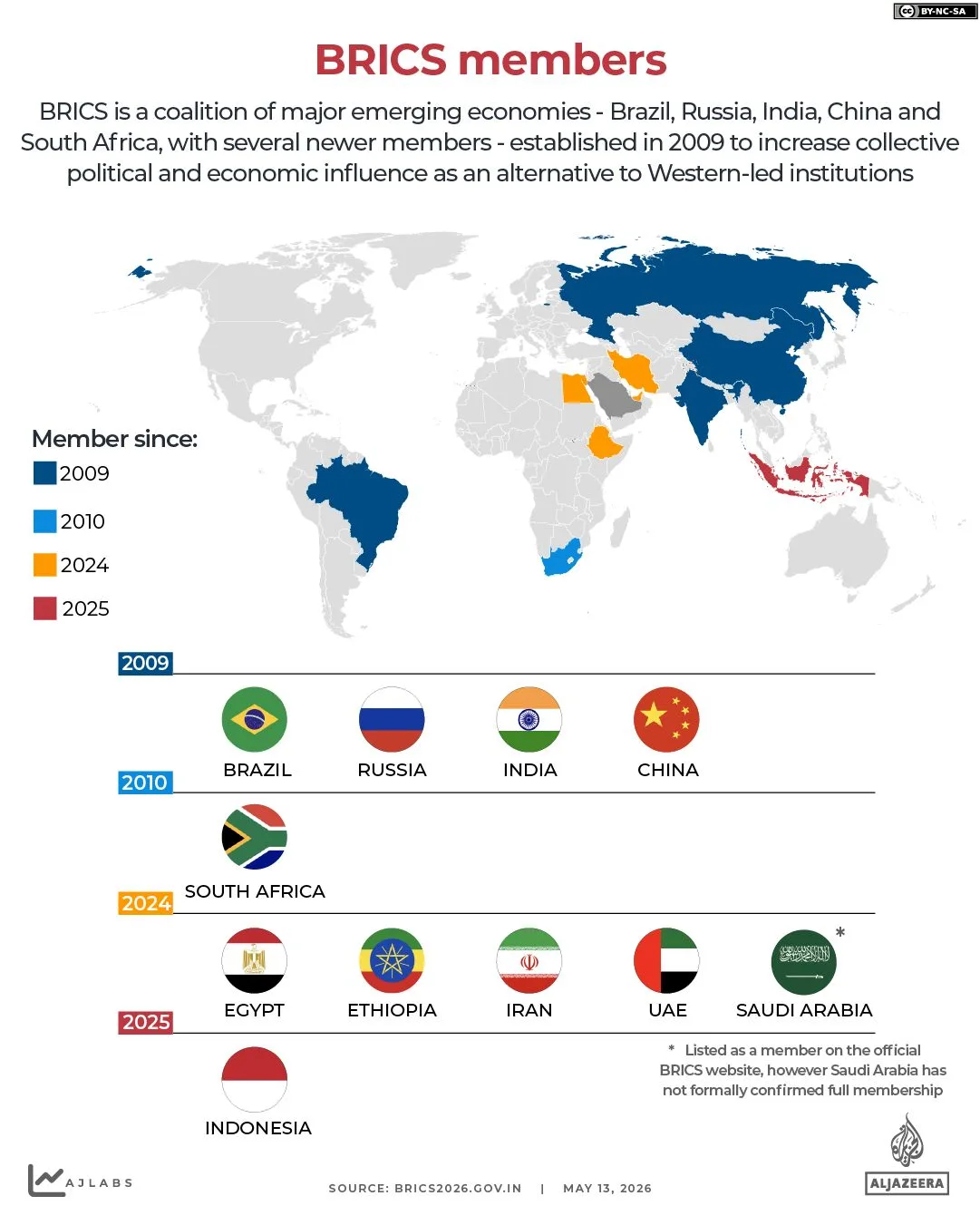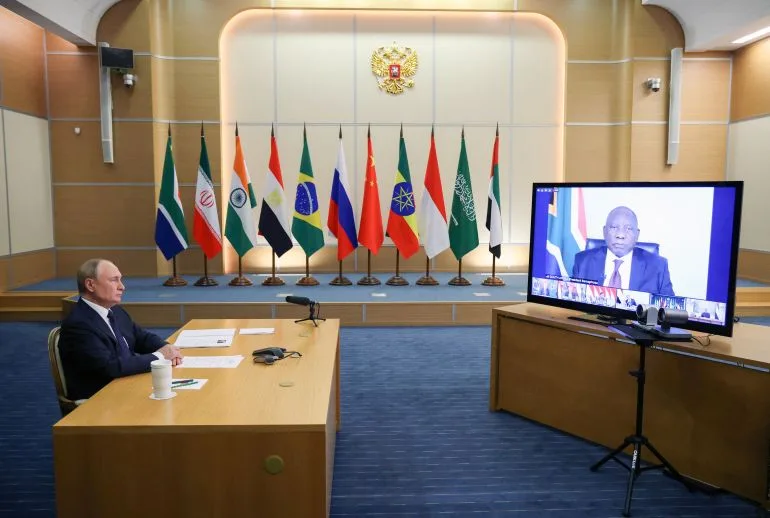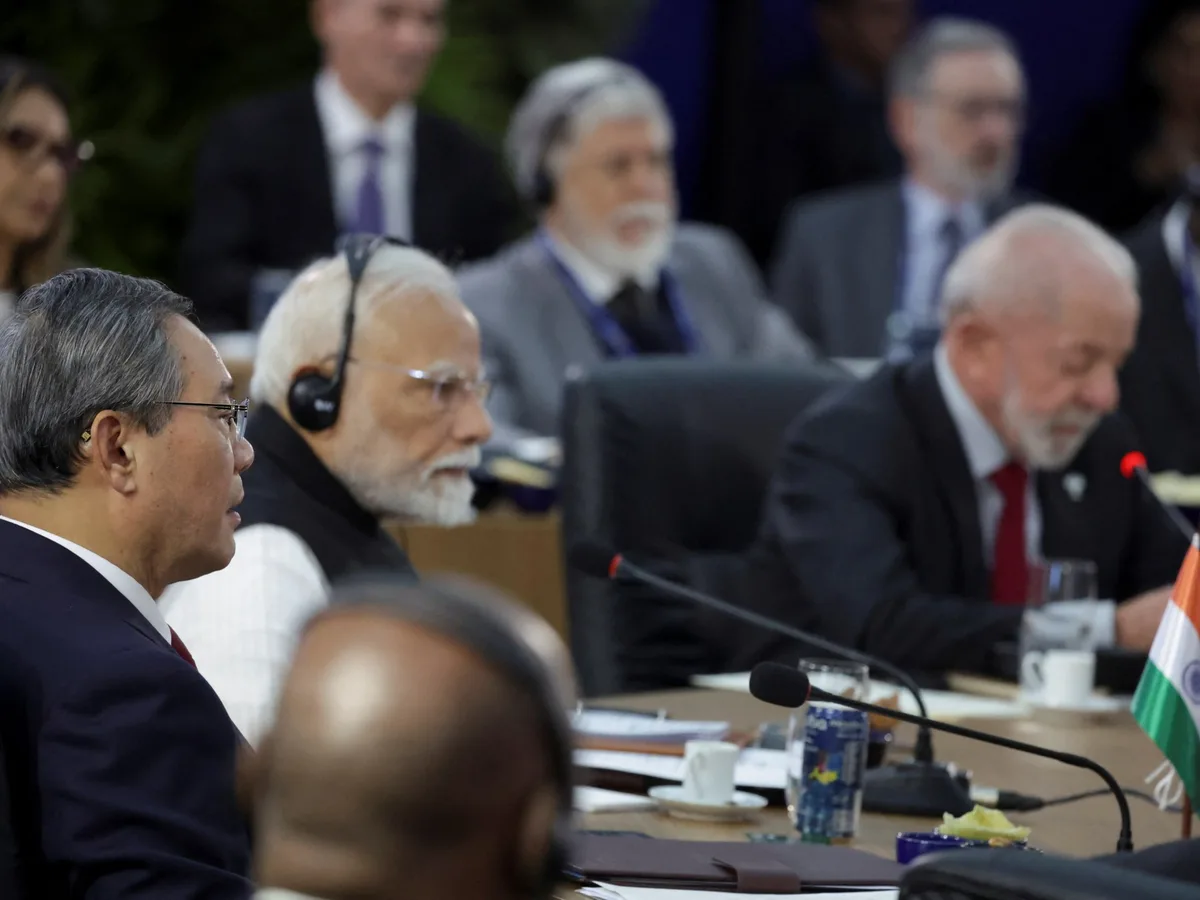
BRICS foreign ministers gathered in New Delhi, India on May 14-15, 2026, to prepare for the 18th BRICS summit scheduled in September in the same city [1, 2, 3, 4]. The meeting included foreign ministers and delegations from the 11-member expanded BRICS bloc: Brazil, Russia, India, China, South Africa, Egypt, Ethiopia, Iran, Saudi Arabia, United Arab Emirates, and Indonesia [1, 2, 3, 5].
India's External Affairs Minister Subrahmanyam Jaishankar chaired the two-day meeting, hosting ministers amid ongoing global tensions. The agenda focused on economic cooperation, geopolitical challenges, and topics such as resilience, innovation, cooperation, and sustainability [1, 3, 5, 6, 4]. Indian Prime Minister Narendra Modi met the foreign ministers on May 14 and pledged efforts to build a more inclusive world order and strengthen multilateral cooperation, saying, "Under India’s Chairmanship this year, we will work together to strengthen multilateralism, promote sustainable development, enhance economic resilience and build a more inclusive world order" [3, 6, 4].
China's Foreign Minister Wang Yi did not attend as Beijing hosted a concurrent state visit by US President Donald Trump [3, 5, 4]. Iran's Foreign Minister Abbas Araghchi was present despite the ongoing US-Israeli war with Iran that began February 28, 2026 and caused over 3,300 Iranian deaths and thousands displaced [2, 3, 5, 4, 7]. The war entered a fragile ceasefire brokered by Pakistan in April [7]. Araghchi and Jaishankar held detailed talks on May 15 covering the Middle East conflict, security of the Strait of Hormuz, and bilateral issues. Jaishankar said, "We discussed the situation in the Middle East and its implications. Also exchanged views on bilateral issues of mutual interest" [7].
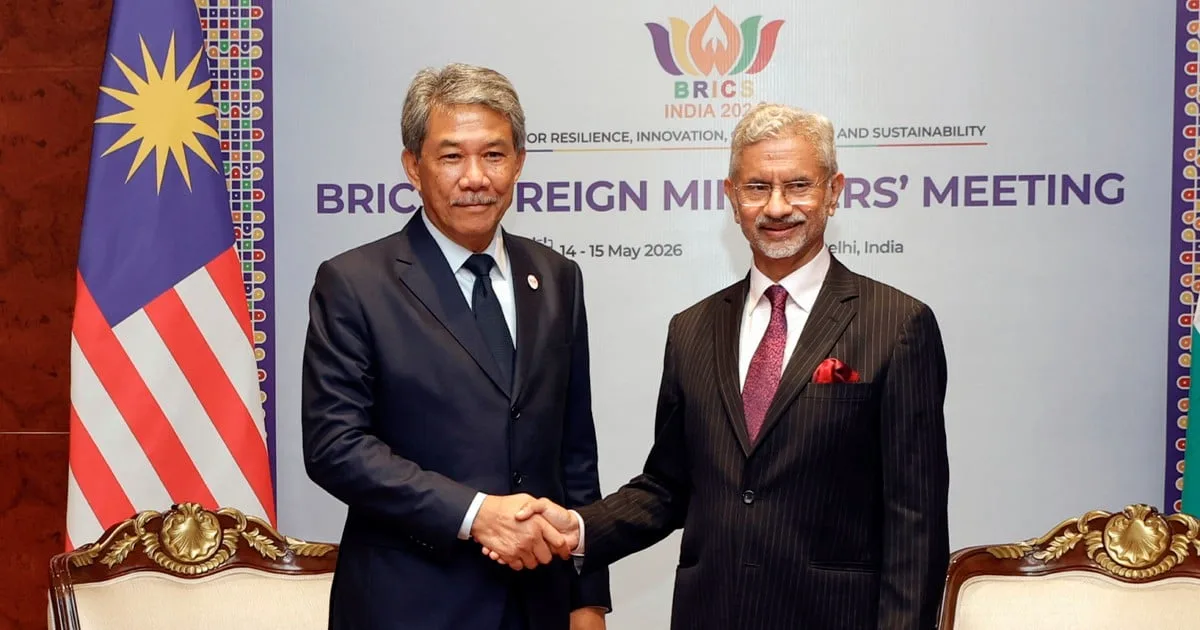
The war has severely affected regional stability. After the conflict began, Iran closed the Strait of Hormuz, a vital oil transit chokepoint, leading to a US blockade imposed on April 13 [7]. Russian Foreign Minister Sergey Lavrov held multiple bilateral meetings with Thai, Egyptian, Iranian, and Brazilian counterparts during the conference to discuss trade and Middle East tensions [8, 9]. On the sidelines, Malaysian Foreign Minister Mohamad Hasan conducted talks with Russian and Indian officials, stating, "Malaysia values its strong relationship with the Russian Federation and remains committed to strengthening cooperation across various sectors for mutual benefit" [10].
Jaishankar called for BRICS to play a stabilizing role, saying, "There is a growing expectation, particularly from emerging markets and developing countries, that BRICS will play a constructive and stabilizing role" and added, "Recent conflicts only underline the importance of dialogue and diplomacy. There is also a deeply shared interest in strengthening cooperation against terrorism" [5].
BRICS countries represent over 40% of the global population and more than 32% of global GDP. The group aims to create alternative financial mechanisms to reduce reliance on the US dollar and increase Global South representation in global institutions [3, 5, 6, 4].
The meeting is set to conclude with a joint statement addressing economic and geopolitical challenges. The upcoming 18th BRICS summit in September 2026 will continue discussions on cooperation and global governance issues.