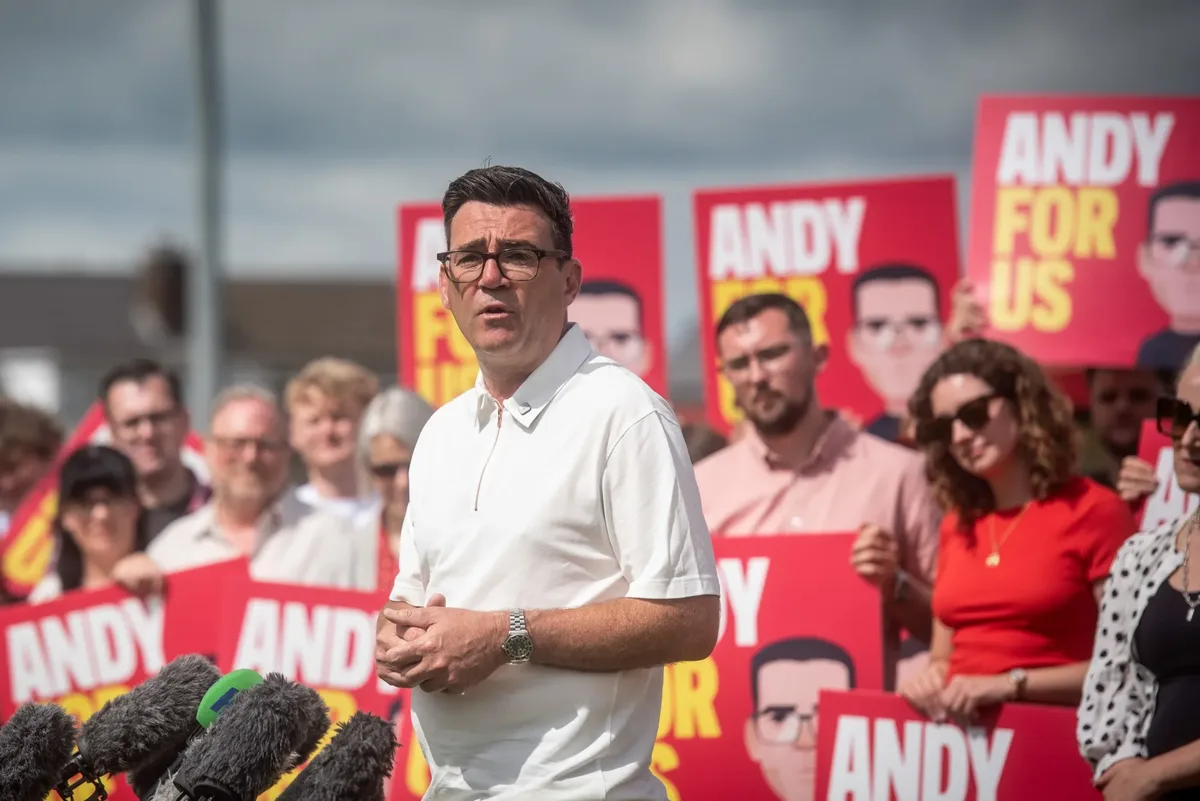
Andy Burnham secured victory in the Makerfield parliamentary by-election on June 19, 2026, receiving 24,927 votes, accounting for 54-55% of the total vote [1, 2, 3, 4, 5, 6, 7]. He won by 9,231 votes over Reform UK candidate Robert Kenyon, who gathered 15,696 votes [2, 3, 4, 7].
The voter turnout was 58.75%, notably higher than the 52.5% turnout in the 2024 general election for the seat [2, 6]. Labour figures hailed the result as a strong rebuke of division and despair. Labour culture secretary Lisa Nandy said, "That wasn’t just a win, that was an emphatic win … It was an astonishing share of the votes, and I think it shows that you can beat hate and division and anger and despair" [7].
Burnham, 56, is widely seen as Labour’s most popular politician and a leading contender to replace Prime Minister Keir Starmer, 63, who faces growing calls to resign following recent local election defeats and resignations from his ministers [3, 4, 8]. Labour rules require 20% of the parliamentary party — 81 MPs — to back a challenger and force a contest [8, 9]. Burnham’s win enables him to take part in or trigger a leadership election [1, 3, 4, 8, 9].
Burnham said after the victory: "There will be no second chance but it is a chance now from this result tonight to build a new politics based on unity and hope, turning away from the path that takes us to a divided politics of the kind we see in the United States" [2]. He also warned the Labour party: "This is a final chance to change. We must hear it, we must act upon it, and we must get it right" [3].
Burnham’s political vision, often termed "Manchesterism," promotes devolution and local control over housing, utilities, transport, and education, and he strongly supports nationalising key public services while criticizing four decades of neoliberal economic policies [3, 4, 10]. His tenure as Greater Manchester mayor has brought him popular support in northern England, though some investors remain wary of his fiscal stance regarding bond markets and public borrowing [11, 12, 10].
Labour MP Louise Haigh called for an orderly leadership transition, saying, "We have said that the party is in an existential crisis and things cannot continue" [7]. Former Labour deputy leader Tom Watson cautioned that a new leader would still face serious economic and political challenges [12].
Burnham is expected to be sworn into parliament next week [8, 9]. If he chooses to launch a formal leadership challenge, he would likely need to do so before parliament’s summer recess on July 16, 2026 [8, 9]. He could also delay the bid to campaign for his potential successor in the Greater Manchester mayoral election later in July [8, 9]. Other Labour politicians, such as Wes Streeting, might also push for a leadership contest [8, 9].