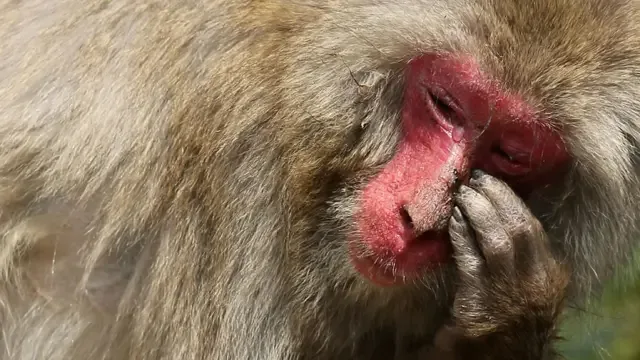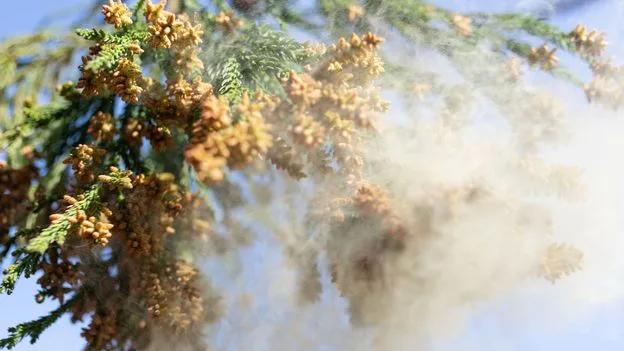
Japan began reforesting deforested mountainous areas with mainly Japanese cedar (sugi) and cypress (hinoki) in the 1950s to restore soils stripped by post-WWII fuel logging and reduce landslide risks near cities like Tokyo and Osaka [1, 2, 3]. These two tree species produce massive amounts of lightweight pollen that disperse broadly. About 43% of Japan’s population suffers from seasonal allergic rhinitis (hay fever), far exceeding rates in the UK (26%) and US (12–18%) [1, 2, 3].
The current artificial sugi and hinoki forests cover roughly 10 million hectares—about 20% of Japan’s land area [1, 3]. They have low biodiversity and release more pollen as the trees mature at around 30 years old [1, 3]. Economic losses from pollen-related sick days and decreased consumer activity reach an estimated $1.6 billion USD daily during peak season [1, 2, 3]. Kyushu University forestry researcher Noriko Sato said, "花粉過敏已成為日本的國家級健康問題,迫切需要解決。" (Pollen allergy has become a national health issue urgently needing solutions) [1].
In 2023, the Japanese government officially declared pollen allergy a social problem and targeted a 50% reduction in pollen levels within 30 years by cutting sugi forest area 20% and diversifying tree species [1, 3]. Nearly 1 million hectares of sugi forest have been marked for logging and replanting, including areas planted with low- or pollen-free sugi varieties rather than exclusively broadleaf forest [1, 3]. However, completing such a reduction—more than 2% of artificial forest area within 10 years—is a massive challenge requiring careful cutting and replanting to avoid erosion and climate setbacks [1, 3]. The Ministry of Agriculture, Forestry and Fisheries has yet to report how much progress has been made [1, 3].
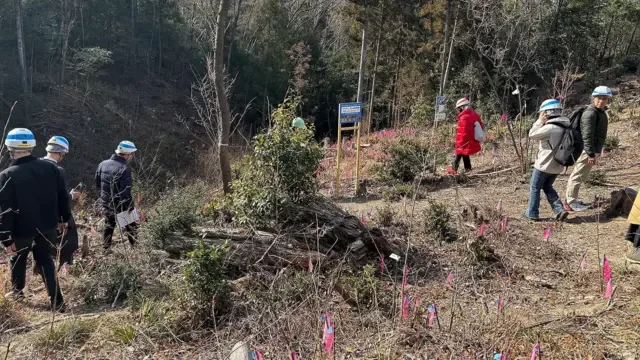
Local efforts complement national goals. Kobe city began a 15-year plan in 2020 to restore over 180 hectares of planted forest to natural broadleaf forest to boost biodiversity and reduce pollen exposure [1, 3]. Atsushi Okada, Kobe’s environment bureau chief, said, "Our wildlife monitoring shows animals and insects are returning, including badgers, softshell turtles, multiple frog species, and some rare insects, which is encouraging." [1]
Japan still retains about 80% of its artificial forests even if targets are reached, so it uses additional methods like pollen forecasting and selective logging to manage exposure [1, 3]. Cut timber is repurposed for heating, furniture, and charcoal in hopes the projects become financially sustainable without relying on public funds [1, 3].
Videos of dense pollen releases went viral in February 2026, boosting public awareness of the severity of Japan’s pollen crisis [1, 2, 3]. Continued efforts to log, replant, and restore mixed forests remain critical to reduce allergic impacts and safeguard environmental stability.