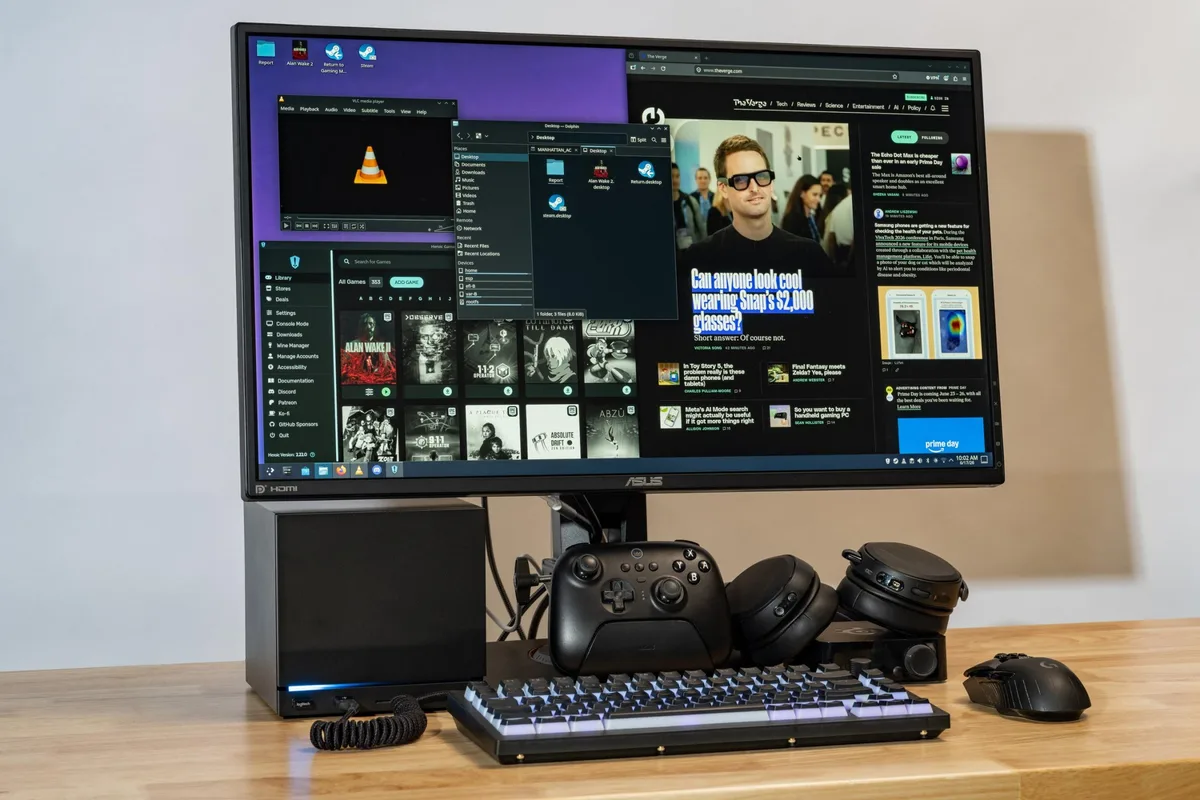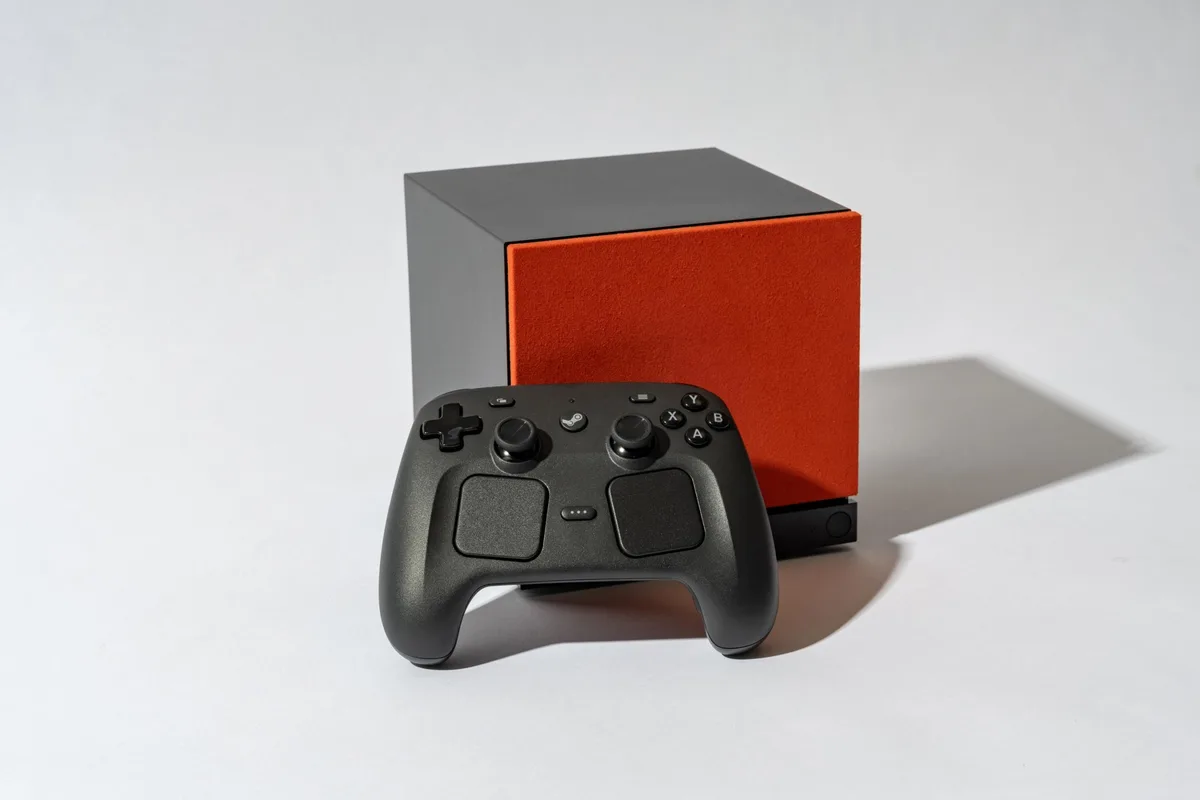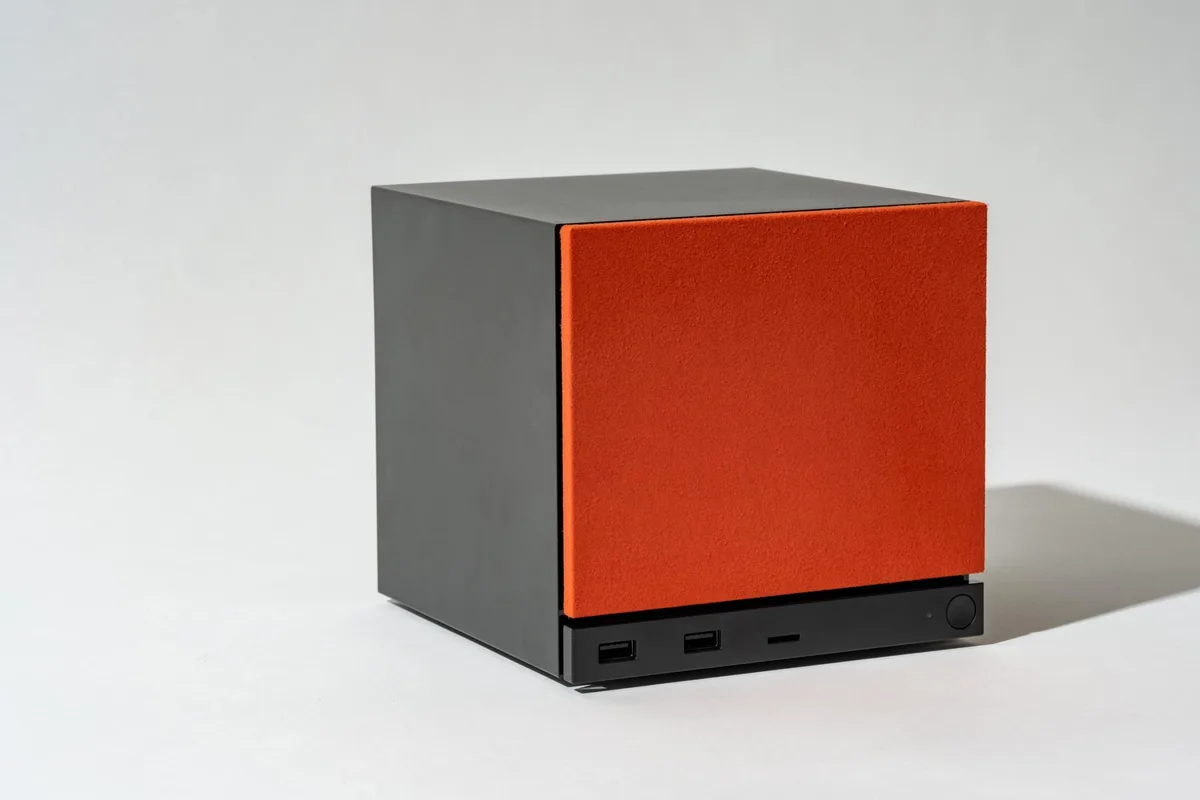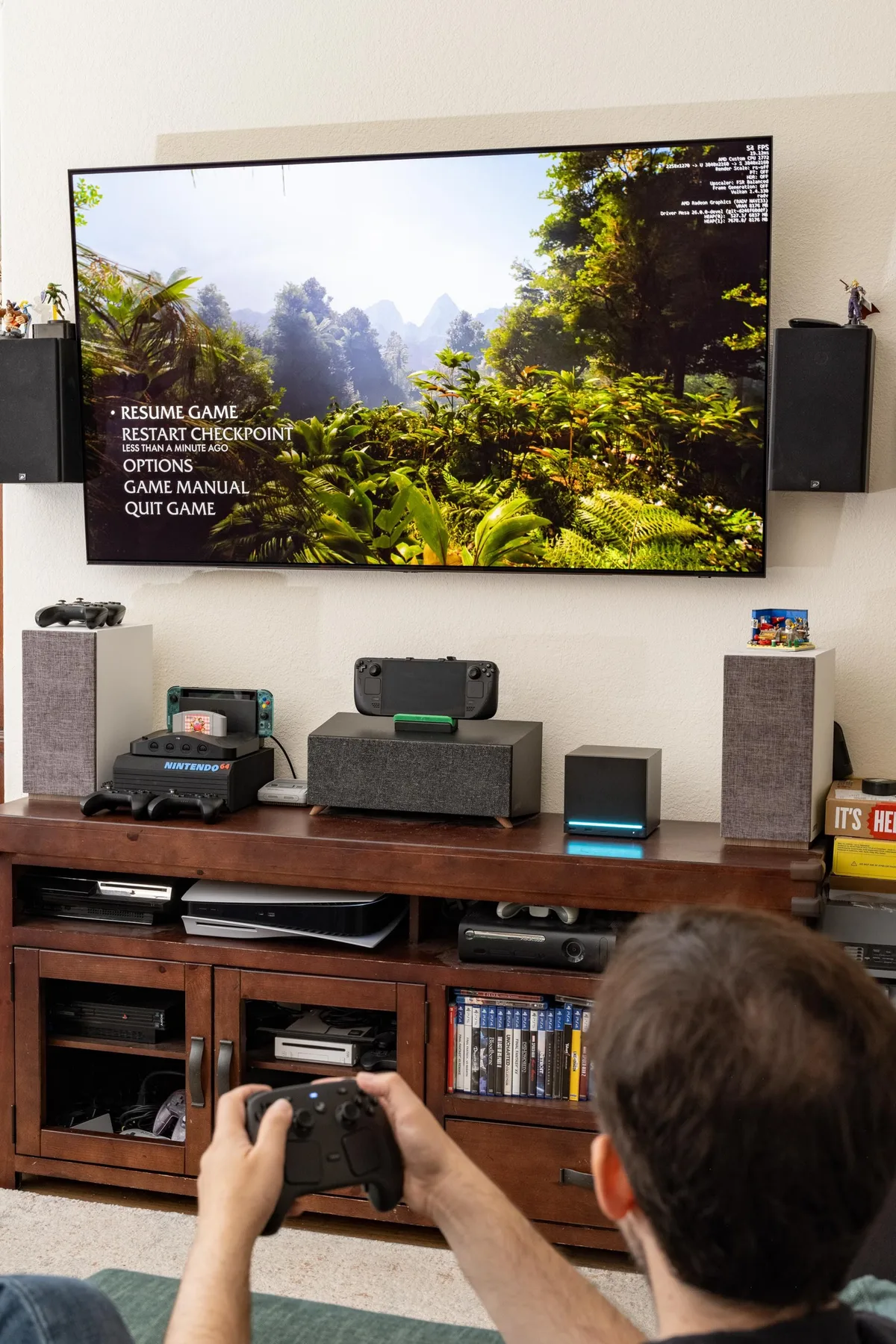
Valve launched the Steam Machine on June 15, offering a compact gaming PC designed for the living room starting at $1,049 without a controller [1, 2, 3]. The device runs SteamOS and is intended to bring PC gaming into the TV space, functioning similarly to a console but with access to Steam's extensive game library [4, 1, 2, 3, 5].
The Steam Machine features semi-custom AMD hardware, including a Zen 4 6-core CPU and an AMD RDNA3 GPU, optimized for this small form factor [1]. Valve engineered the system with custom components like a motherboard, power supply, and thermal module to maintain a quiet and cool operation suitable for living rooms [6, 7]. Valve engineer Yazan Aldehayyat said, "we're proudest of the form factor," noting it exceeded expectations in compactness and quietness during use [6].
The base Steam Machine ships with 16GB RAM and at least 512GB SSD storage, with a higher-end 2TB SSD model also available at increased cost [3, 5]. Valve does not subsidize the device, pricing it competitively with similarly configured small gaming PCs despite ongoing component shortages and increased memory costs [3, 6, 5, 7]. Aldehayyat acknowledged the challenge, telling reviewers to "Make it cheaper" to improve value [7].
Early reviews praised the device's size, quiet operation, and suitability as a living room PC, but criticized its high price and middling gaming performance compared to consoles like the PS5 and Xbox Series X [4, 2, 3, 8]. Benchmarks show the Steam Machine runs games at about 60 frames per second on medium settings but struggles with consistent 60fps performance when ray tracing is enabled, unlike more optimized consoles [8]. One reviewer called its performance "unacceptable at current hardware levels," while others saw it as a compelling, if expensive, alternative [2, 3, 8].
Valve allows users to install SteamOS 3.8 on their own PCs to replicate a Steam Machine-like experience. Official hardware currently uses AMD GPUs, but Valve plans to add Nvidia GPU support [1, 7].
Valve engineers also confirmed Steam Deck 2 development is ongoing but delayed, awaiting a generational leap in hardware efficiency. The learning from Steam Machine and Steam Controller feeds into this work. Engineer Pierre-Loup Griffais said, "We're definitely getting there" in development progress [9, 10, 11].
The Steam Machine is now available starting at $1,049, with bundles including a controller starting at $1,128 and higher-end models reaching $1,428 [2, 5].