Iranian crude oil exports to Asia have been cut off due to a U.S. Navy blockade of the Strait of Hormuz. The move has effectively stopped about 1.8 million barrels of Iranian crude oil from reaching Asian buyers each day [1].
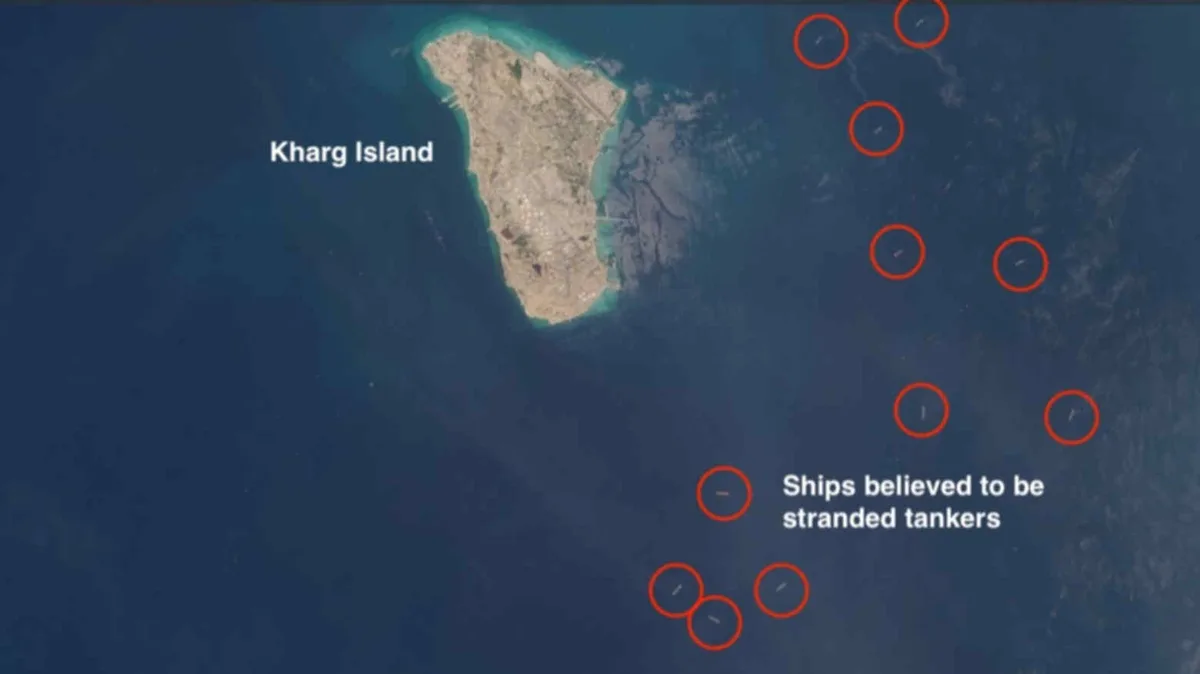
Satellite imagery from April 18 shows waters off Kharg Island, Iran’s main oil export terminal, highlighting the impact of the restrictions on shipping [1]. As a result, Tehran is scrambling to find storage space for the oil it continues to produce despite the blockade [1]. Analysts say Iran is forced to rely on decommissioned tankers as floating storage because onshore facilities are full or unavailable [1].
The blockade has severely restricted the flow of Iranian crude through a crucial global shipping lane. Iranian officials have not commented publicly on the storage shortage or outlined alternative export routes since the U.S. Navy tightened controls in the Strait. The U.S. Navy has not released further statements on the blockade.
This development adds to ongoing tensions over Iran’s oil exports and regional maritime security. Tehran’s ability to store crude may be short-lived if production continues at current levels without access to export markets.
No near-term resolution or timeline for lifting the blockade has been reported as of May 5.