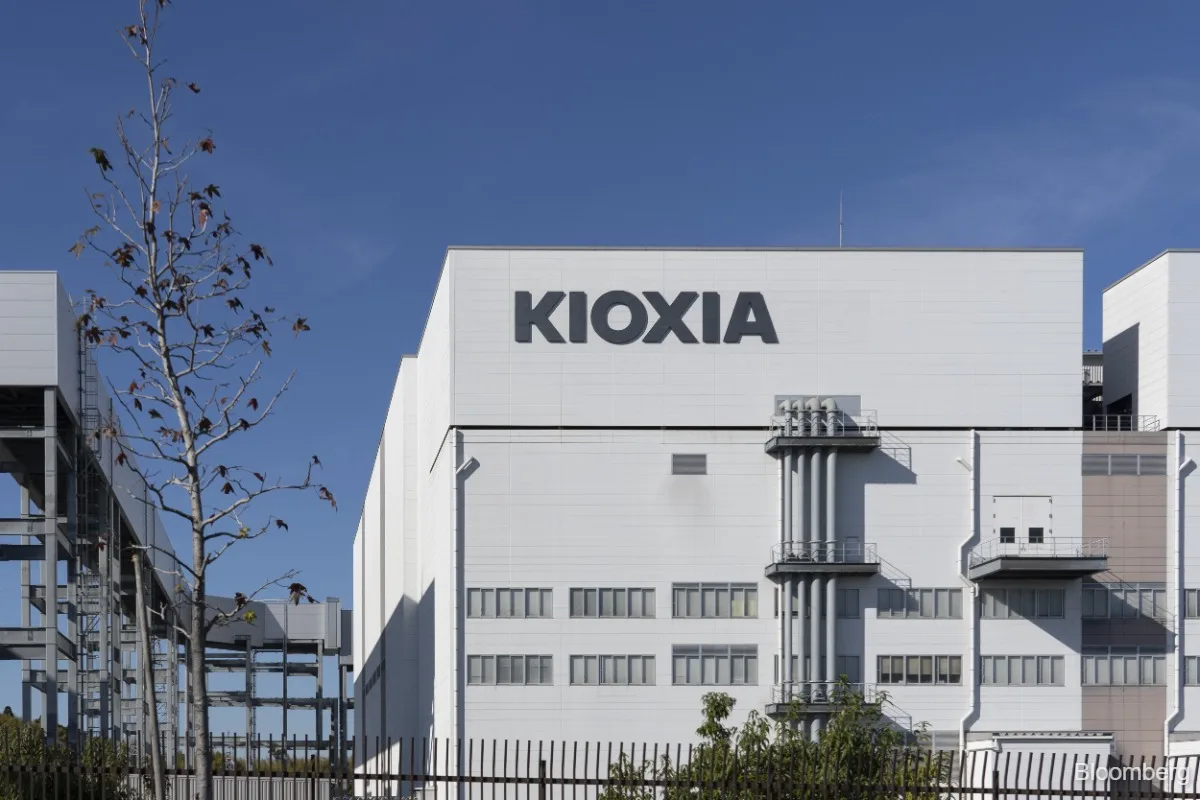
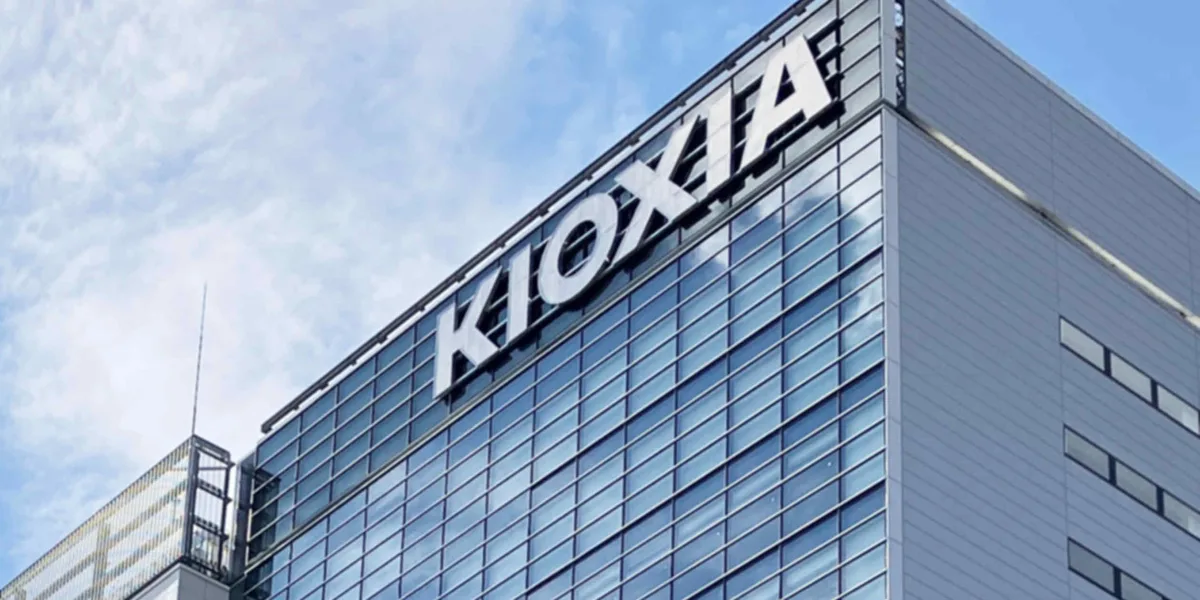
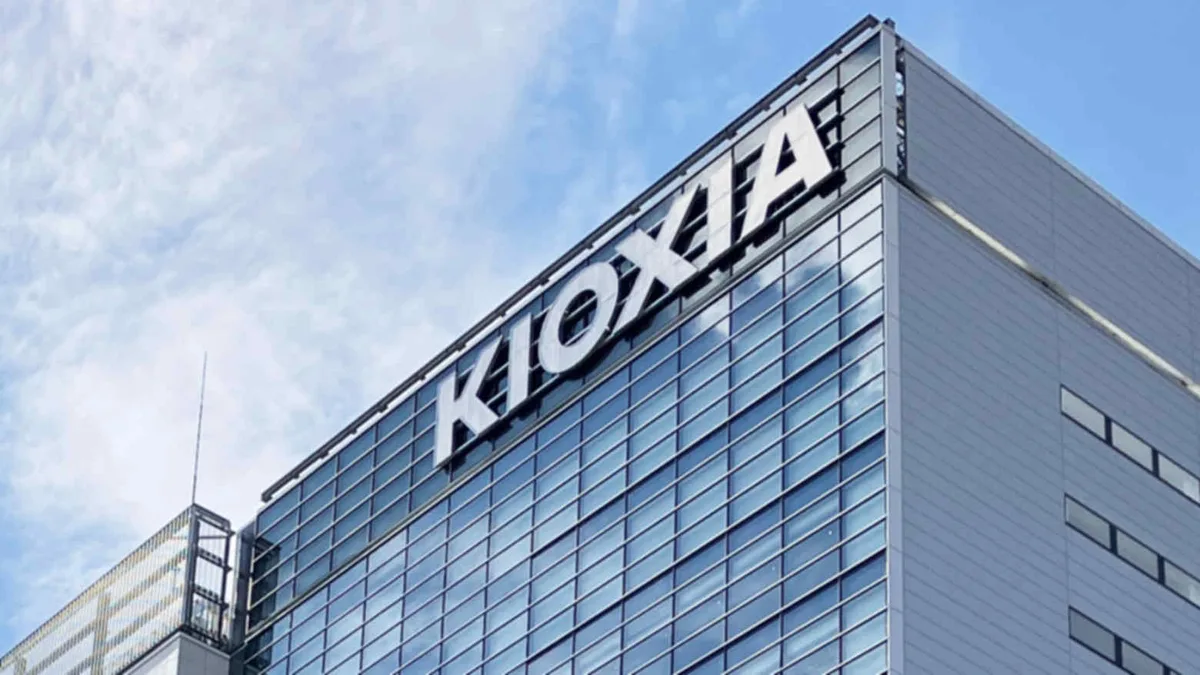
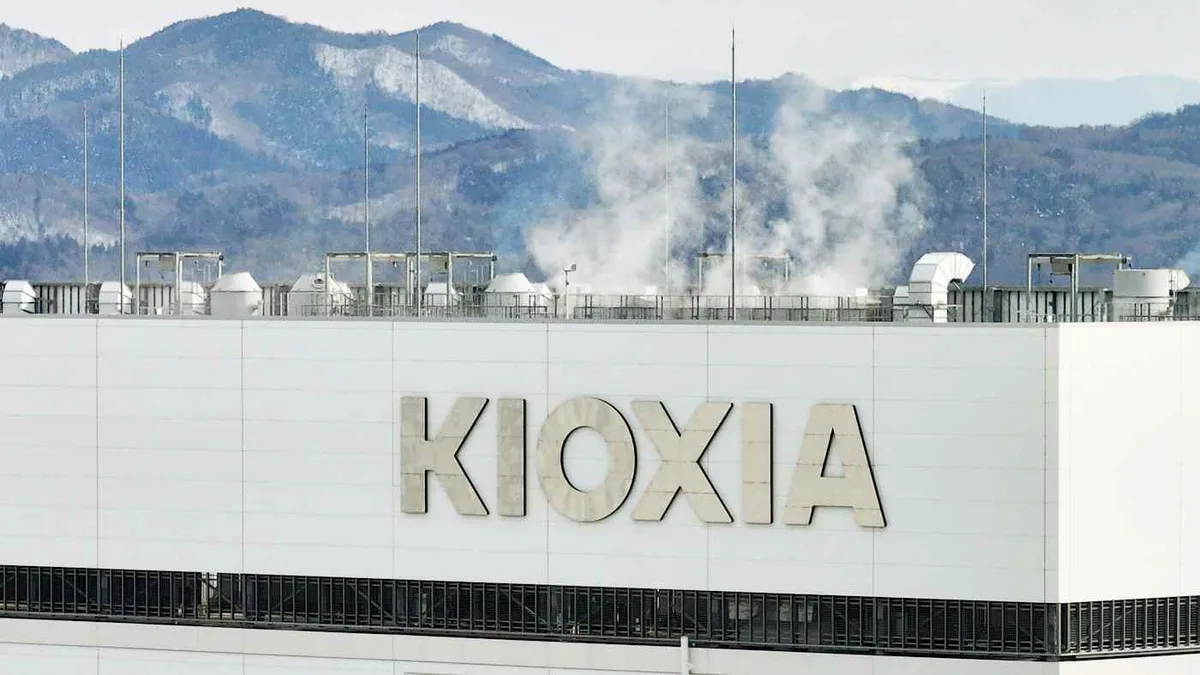
Japan’s Kioxia Holdings announced a forecast of a 48-fold jump in quarterly net profit, fueled by soaring demand for memory semiconductors from AI data centers that has pushed up prices and shipments [1]. The company expects an operating profit of ¥1.3 trillion (US$8.2 billion) for the quarter ending June 2026, nearly doubling its previous record earnings of ¥596.8 billion posted for the quarter ending March 2026 [2, 3].
Kioxia’s strong earnings have pushed its stock price up about 300% so far this year, reflecting investor optimism around AI-driven growth [2, 3]. The semiconductor maker specializes in NAND flash memory used in AI servers and data centers, where demand has surged as companies seek faster and larger data processing capacity [1, 2].
According to Kazuyoshi Saito, an analyst at Iwai Cosmo Securities, Kioxia’s NAND products feature production costs 20%-30% lower and data read/write speeds 10%-20% faster than some competitors, giving it a competitive edge in the fast-growing AI market [2]. However, Korean rivals such as Samsung and SK Hynix are competing by investing more in high bandwidth memory designed for AI processors [2].
Omdia analyst Akira Minamikawa cautioned that the current chip price surge driving the profit jump could be temporary. He said, "The surging price of chips is just driving everything crazy now. This can’t go on forever. We should treat this as temporary rather than permanent. But it’s probably safe to say the boom to remain in place in the current fiscal year" [2].
Kioxia also announced plans to list American depositary shares in the United States, aiming to expand its capital base and global investor exposure [2, 3].
The company’s March quarterly profit surpassed that of Toyota Motor Corp, making it one of Japan’s most profitable businesses [2, 3]. The next key financial milestone will be the end of the June quarter, when Kioxia is expected to report results reflecting the AI-driven surge in semiconductor demand.