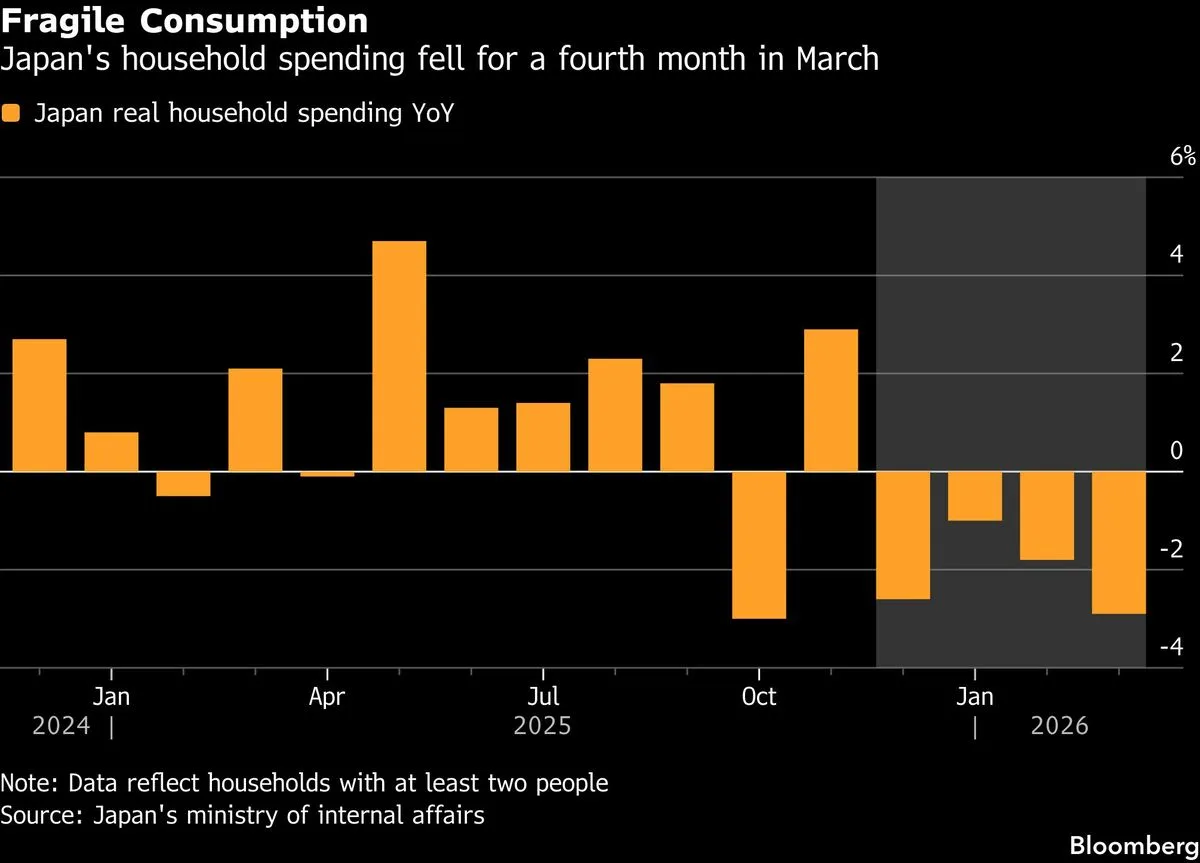
Japan’s inflation-adjusted household spending fell 2.9% year on year in March, a fourth consecutive monthly decline, as higher prices and energy costs from Middle East tensions kept pressure on consumers. [1, 2, 3]
Month on month, spending dropped 1.3% on a seasonally adjusted basis, missing economists’ forecast of a 1.3% annual decline. Transportation and communications were the biggest drag, falling 16.8% from a year earlier. [1, 2, 3]
Food spending fell 2.9%, alcohol spending dropped 19.8% and utilities and clothing also weighed on outlays. Medical care and housing posted higher spending. [1, 3]
Japan’s wage growth continued in March and exceeded inflation for a third straight month, but that did not translate into stronger household demand. Rengo, the country’s largest labor union group, has reported wage increases at major firms of around 5%. [1]
Household sentiment remained weak. Japan’s average propensity to consume fell to 82.7%, down 7.2 percentage points from a year earlier, while consumer spending intention rose. Economist Yongbin Li said Japanese households’ average consumption propensity fell sharply in March on both a yearly and monthly basis, adding that tension in the Middle East is increasing savings behavior among households. [2]
The reports on March household spending were published on May 12. [1, 2, 3]