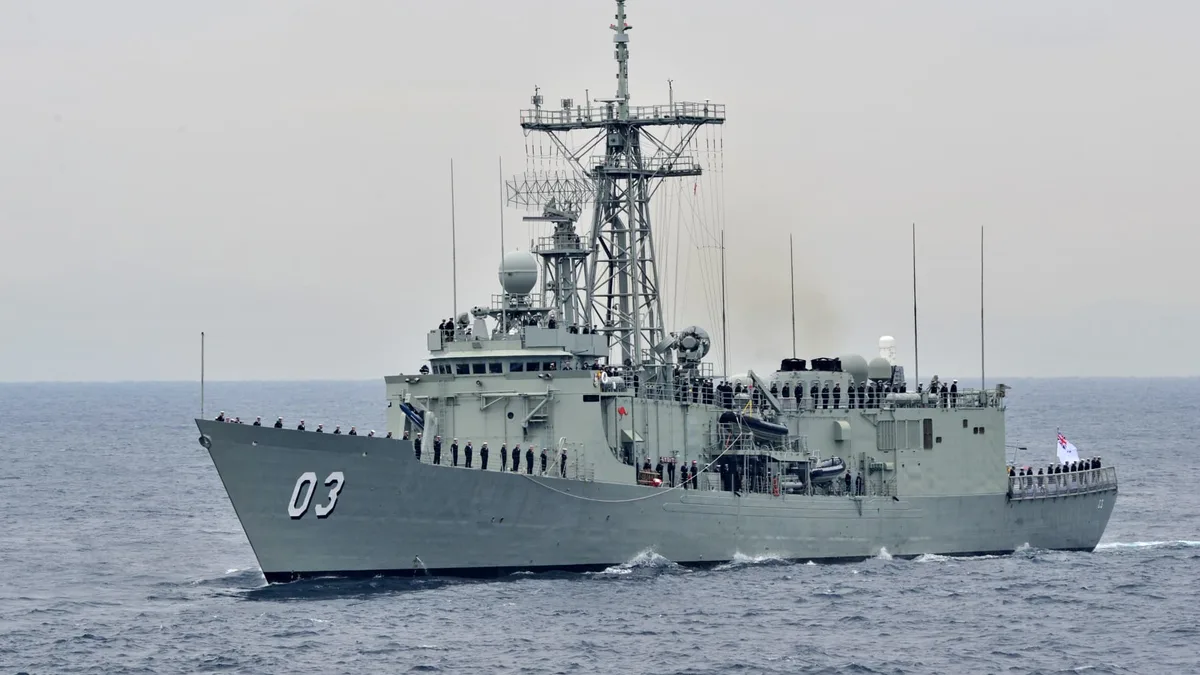
Germany announced on June 24, 2026, that it is canceling its contract to purchase six F126 anti-submarine frigates from Rheinmetall and will instead buy eight smaller Meko A-200 frigates from German builder TKMS [1, 2, 3, 4]. The decision follows significant delays, rising costs, and problems with Dutch shipbuilder Damen involved in the F126 program [3, 4].
German Defense Minister Boris Pistorius confirmed the cancellation, describing it as a response to the cost and schedule issues that had mounted since construction began on the first 166-meter vessel in late 2023 [3, 4]. The F126 program was one of Germany's largest naval procurement efforts since World War II, initially budgeted up to €10 billion [3].
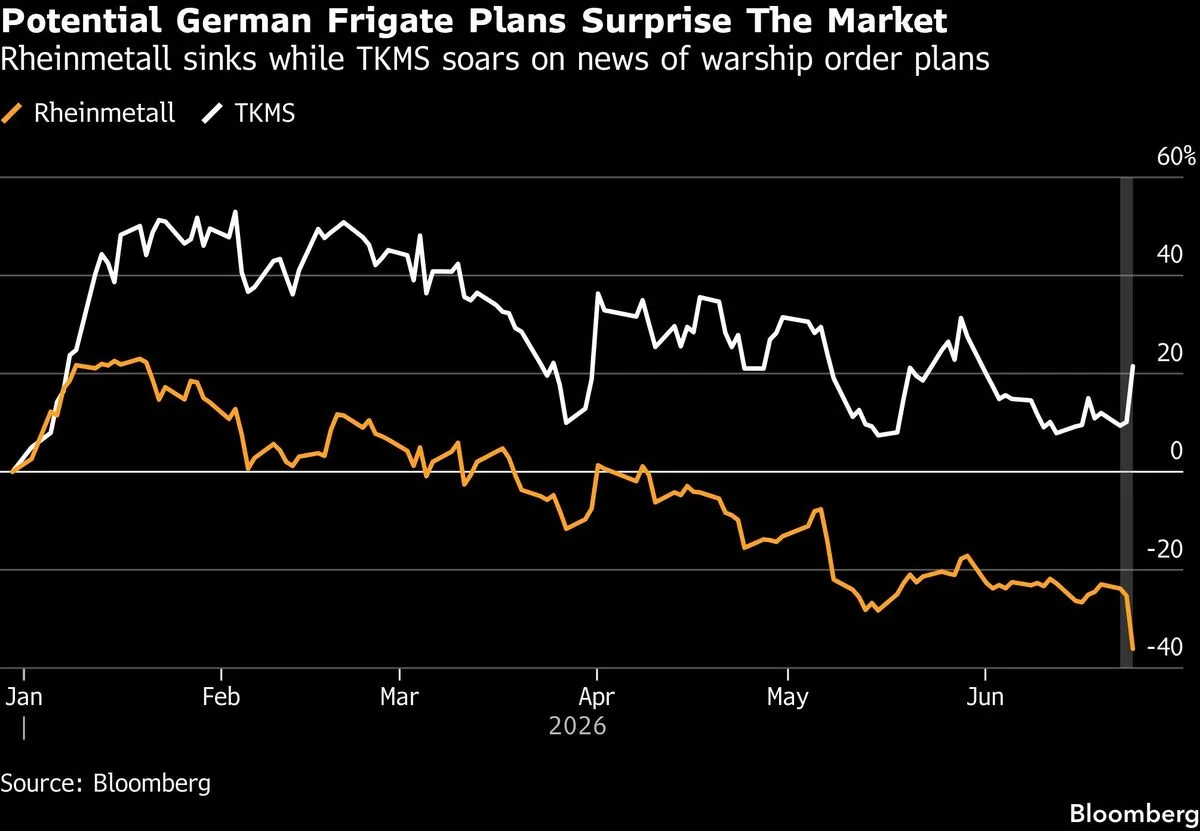
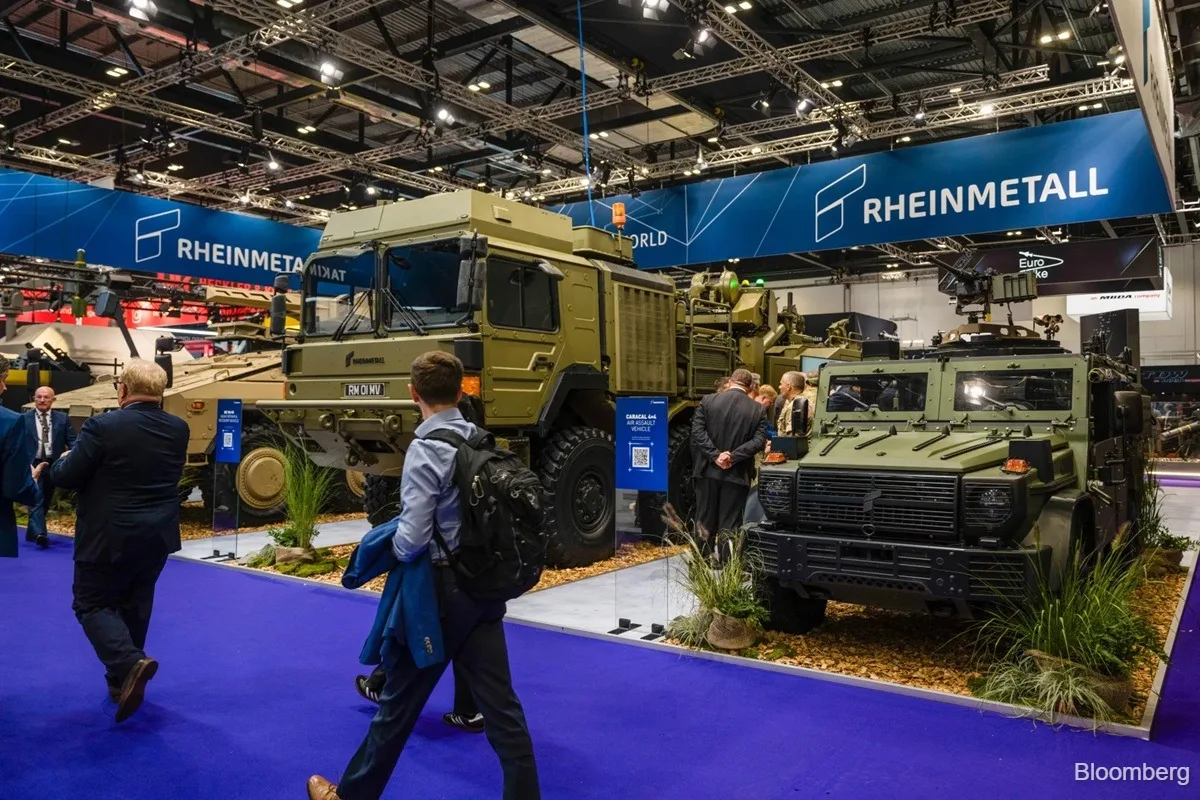
Rheinmetall faces potential writeoffs of around €2 billion from the canceled contract [1]. Its shares plunged sharply on June 24, dropping between 13% and nearly 19%, marking the company's worst daily decline in decades [1, 2, 3, 4]. Morgan Stanley analysts called the cancellation a "clear negative" and noted it came as a surprise given Rheinmetall’s previous confidence in securing the contract before summer break [1].
Shares of TKMS, which will now build the smaller frigates, rose 12% to 15% after the announcement [1, 3, 4]. Other European defense stocks including Hensoldt, Renk, Saab, Leonardo, Dassault, and BAE Systems also fell amid investor concerns over whether increased military spending will translate into orders [2, 3, 4].
Despite the setback in the defense sector, Germany's Ifo Business Climate Index showed slight improvement in June 2026, with Ifo President Clemens Fuest attributing this to rising hopes for a calmer global political environment [4]. "German companies were becoming less pessimistic about the outlook," he said [4].
The shift to TKMS’s Meko A-200 frigates reflects an effort to reduce risks after the troubled F126 experience. The next phase will focus on finalizing contracts and schedules with TKMS to begin production of the eight new vessels [3, 4].