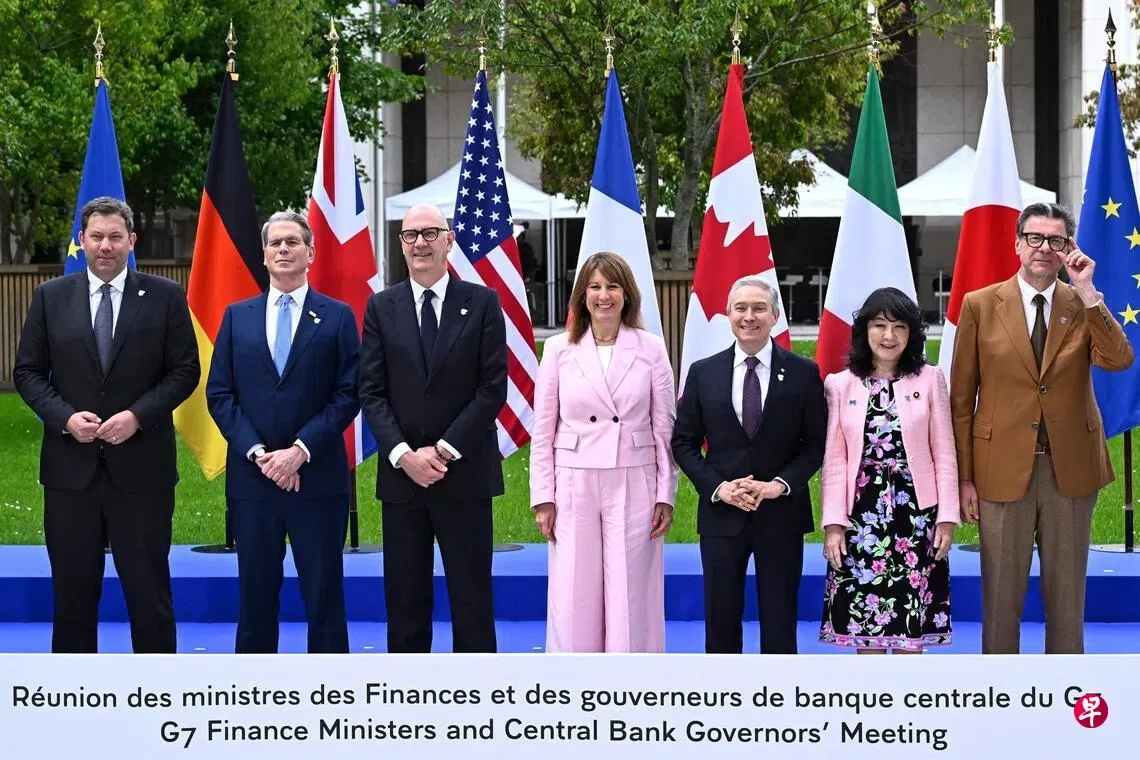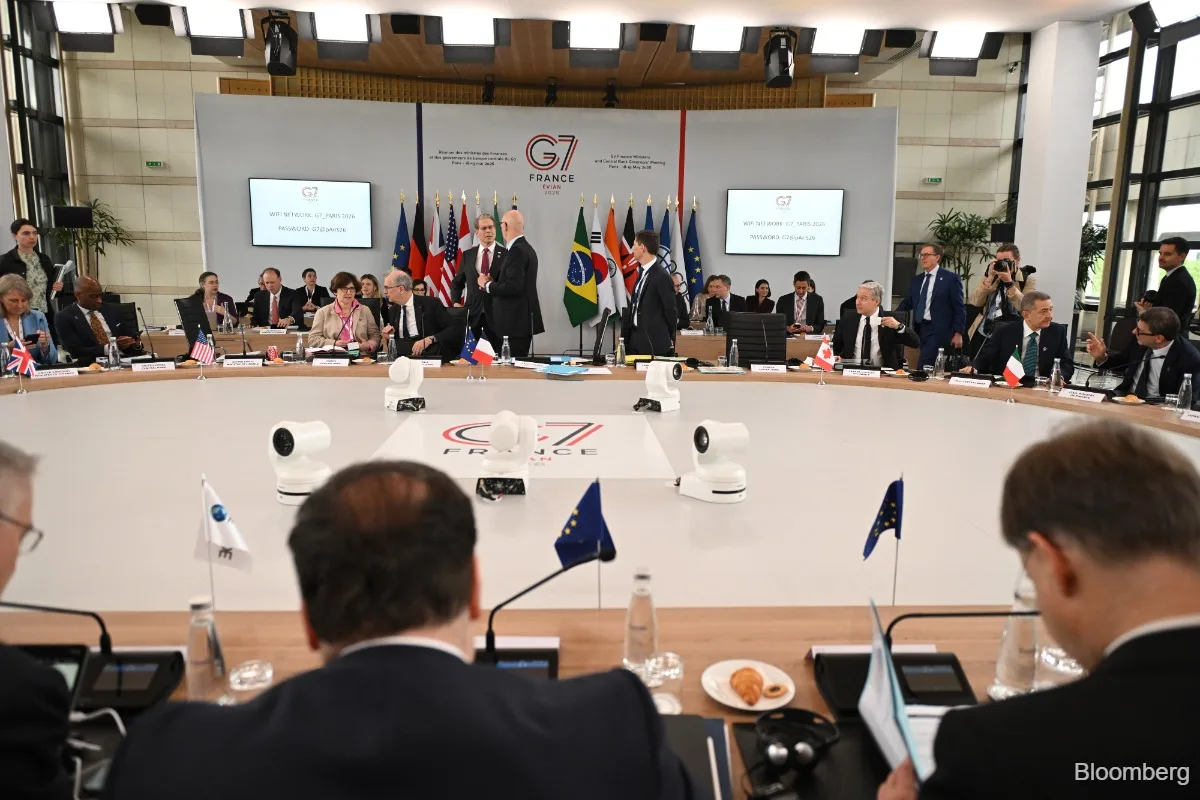
G7 finance ministers and central bankers gathered in Paris from May 18-19, 2026, to discuss rising global economic tensions linked to the war in Iran and related geopolitical instability [1, 2, 3, 4, 5]. The meeting aimed to tackle challenges including trade frictions, financial volatility, and disruptions in energy and commodity markets caused by Middle East conflicts.
The ministers focused on longstanding global economic imbalances driven by U.S. overconsumption, European underinvestment, and Chinese overcapacity. These factors have fueled trade conflicts and market instability across regions. French Finance Minister Roland Lescure said, "Past 10 years global economic development mode is clearly unsustainable," emphasizing the need for a sustainable growth model and multilateral cooperation amid some disagreements with the U.S. approach [1, 3, 6, 7, 4, 5, 8]. Lescure added, "I think today we are going to show that multilateralism is useful and that it works," though others noted tensions remain between the U.S. and G7 partners on Iran, Russia sanctions, and trade policies.
U.S. Treasury Secretary Scott Bessent urged stronger trade protections and sanctions aimed at curbing Iran's war funding. He stated, "We should strengthen trade protections to counter surge of Chinese cheap exports stemming from weak domestic demand and excess capacity" [1, 3, 7]. This stance contrasts with the view shared by Lescure and others that imbalances are multi-causal, not solely due to China's industrial policies.
The ministers discussed reducing dependency on Chinese supplies of critical minerals and rare earths essential for technologies such as electric vehicles and artificial intelligence [1, 6, 4, 5]. They also stressed the need to maintain price stability despite inflationary pressures caused by disrupted energy flows through the Strait of Hormuz, which G7 leaders underscored must be reopened to ensure free navigation for global energy shipments [1, 3, 4, 5].
Germany’s Finance Minister Lars Klingbeil described the G7 as the appropriate forum to work toward ending the war in Iran and stabilizing the region. He said, "This war is massively damaging economic development. That is why everything must be done to bring the war to a permanent end, to stabilise the region again, and to ensure free shipping lanes through the Strait of Hormuz" [1, 4, 9]. The economic fallout from the war has spiked volatility in global bond markets, with government bond yields across G7 nations, including U.S. 30-year bond yields, near the highest levels since 2007 [2, 6].
The talks also included finance ministers from Brazil, India, Kenya, and South Korea to build partnerships ahead of the upcoming G7 summit scheduled for June 15-17, 2026, in Evian, France [1, 5]. The communique issued on May 19 stressed fiscal restraint and cooperation amid ongoing Middle East tensions and fragile economic conditions [2, 10].