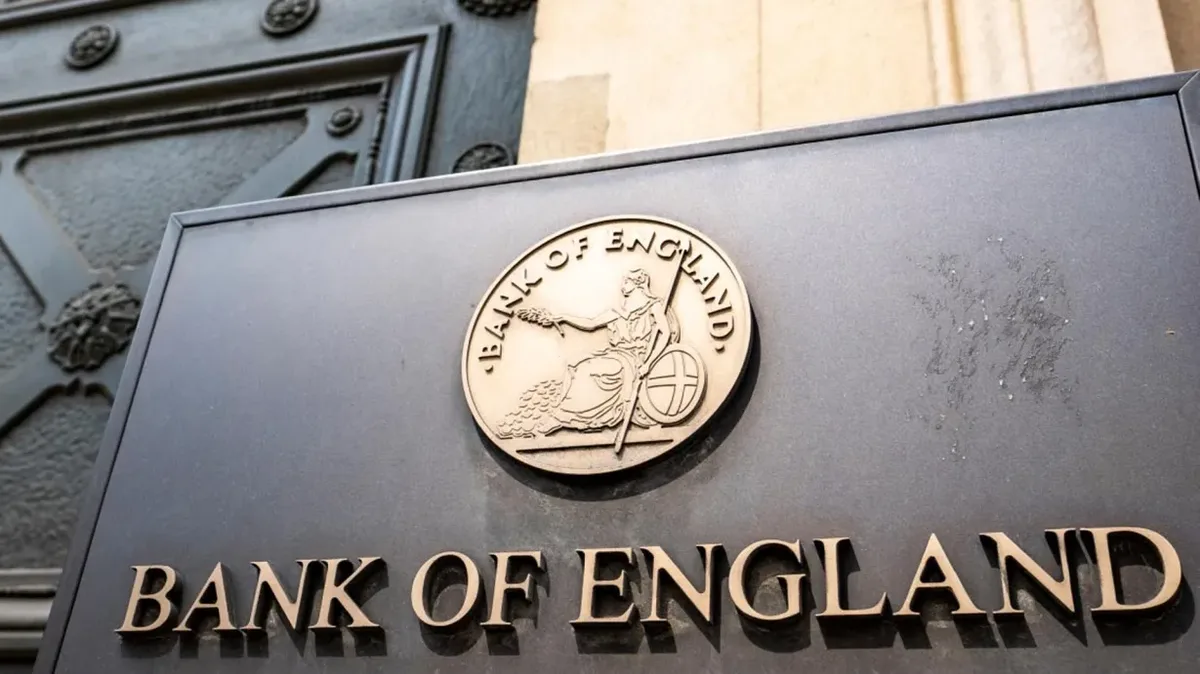
The Bank of England’s Monetary Policy Committee voted 7-2 on June 17, 2026, to hold its benchmark interest rate at 3.75% [1, 2, 3]. Two members, Chief Economist Huw Pill and external member Megan Greene, dissented, voting to raise rates by 25 basis points to 4%, citing persistent inflation risks [1, 2, 3].
Governor Andrew Bailey said recent falls in oil prices were encouraging but cautioned that energy markets remained unpredictable. "Oil prices have fallen in recent days and that’s encouraging. The situation remains unpredictable and there is clearly a risk that energy prices remain elevated for an extended duration," he said [2].
The easing in oil prices followed a truce between the US and Iran in June, which helped calm fears of sharp global energy shocks after the Iran war disrupted supplies starting February 2026 [4, 5]. The conflict had blocked the Strait of Hormuz, raising energy costs and contributing to UK inflation pressures [6, 3]. Since the conflict began, the UK lost 64,000 jobs and private sector pay growth dropped to its weakest in five years, reflecting economic strains [2, 7].
UK inflation cooled to 2.8% in May 2026, below forecasts but still above the Bank of England’s 2% target [6, 3]. The central bank lowered its peak inflation forecast for the fourth quarter of 2026 to 3.25%, down from 3.6% projected in April [2, 7]. The committee emphasized caution, warning that high energy costs could cause second-round inflation effects if sustained [2, 7].
"Monetary policy cannot affect global energy prices; our job is to make sure that higher inflation does not persist and have long-lasting effects on the economy. We are monitoring the situation very closely," the Bank said [3]. Luke Bartholomew, deputy chief economist at Aberdeen, noted the two votes for a hike showed concern about underlying inflation pressures [2].
The Monetary Policy Committee must balance inflation risks against weak UK growth and labour market softness following the recent job losses [6, 2]. Currency markets reacted by pushing the pound down to about $1.3225, near its lowest since early April [2, 7]. Traders now price in one quarter-point rate hike this year with about a 30% chance of a second [2, 7].
The Federal Reserve kept US rates on hold at 3.5%-3.75%, while the European Central Bank has recently raised rates, highlighting diverging policies among major central banks [6, 4].
The Bank of England will next review monetary policy at its scheduled meeting in August 2026.