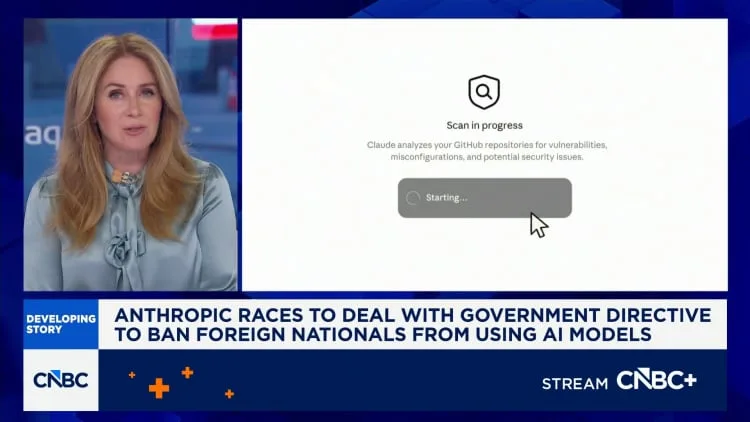
On June 12, 2026, the Trump administration directed Anthropic to deny all foreign nationals access to its newest AI models, Mythos 5 and Fable 5, citing national security concerns [1, 2, 3]. Anthropic received less than 90 minutes’ notice to cut off international access, affecting foreign employees among its roughly 3,000 staff [2, 3, 4].
The White House cited "national security authorities" for the export ban but did not publicly disclose specific vulnerabilities or threats related to the models [2, 3, 4]. Internal Anthropic communications showed confusion among employees over the rationale behind the directive [2]. Anthropic CEO Dario Amodei emphasized the need for frontier AI models to undergo rigorous technical testing and auditing, saying they should only be released if they meet high safety standards [3].
The ban disrupted Anthropic’s plans to subsidize the expensive models, which had been publicly available to paid subscribers for only about two weeks prior to the order [5].
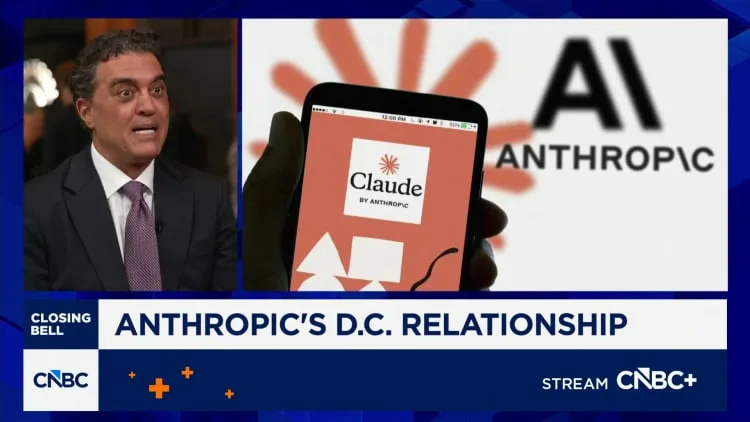
Anthropic executives met with Trump administration officials in Washington, D.C., from June 15-16 seeking to resolve the export controls but had not reached a breakthrough as of June 16 [2, 3]. The export controls impact foreign governments and companies reliant on U.S.-based AI models, sparking concern in Europe and Canada about overdependence on American AI technology [1, 6, 7].
French Prime Minister Sebastien Lecornu said, "France must have its own tools. We cannot rely on the goodwill of certain partners who, as we have seen in recent days, are capable of cutting off access to the Anthropic model" [1]. France announced plans on June 16 to deploy AI tools from domestic providers Mistral AI and Chapsvision to reduce reliance on US AI models like Anthropic’s [1, 6].
Canadian Prime Minister Mark Carney cautioned against dependence on a single AI provider: "The situation we're in collectively right now with Mythos and Fable is something that can happen with overreliance on certain models... It is never a good idea to have one option" [7].
Cybersecurity experts criticized the export ban for potentially weakening U.S. cyber defenses. Former Facebook security chief Alex Stamos said the ban set a precedent that "American models can't do defensive security research" [8].
Disagreements exist over the precise reasons for the ban. Initial messaging suggested risks of foreign companies accessing the models and a security vulnerability found in them [2]. The administration has declined to specify exact concerns, while Anthropic disputes the technical basis for the ban and calls it unfair and opaque [3].
Anthropic’s valuation is close to $1 trillion, highlighting the high stakes involved with the export controls [3]. The company must now navigate negotiations with the government amid international backlash and accelerate development of non-U.S. AI sources by allied countries.
Meetings between Anthropic executives and the Trump administration will continue as the company seeks clarity and attempts to lift or modify the export restrictions affecting global access to its AI models [2, 3].