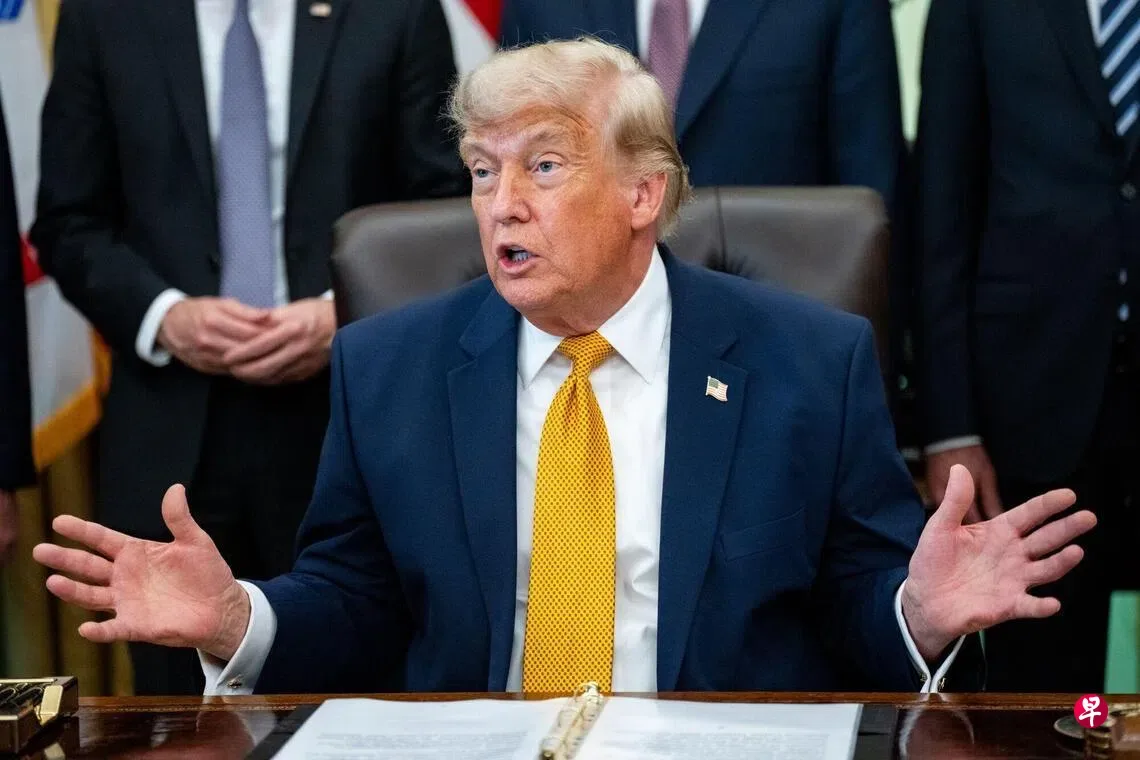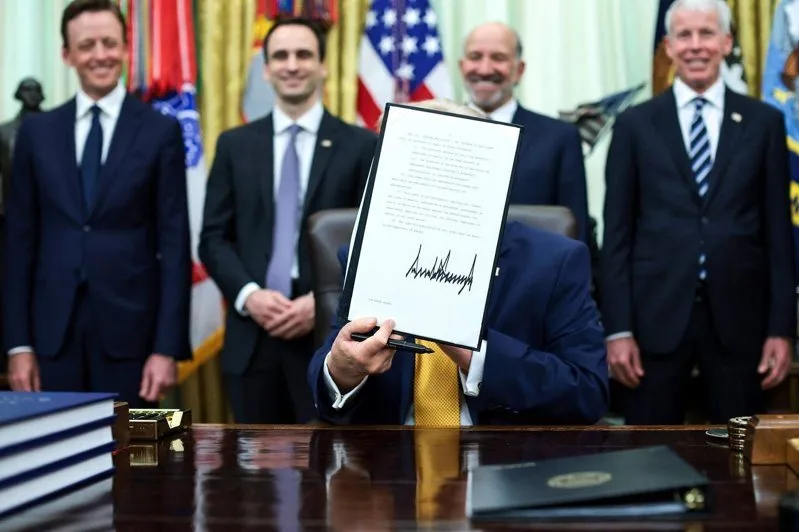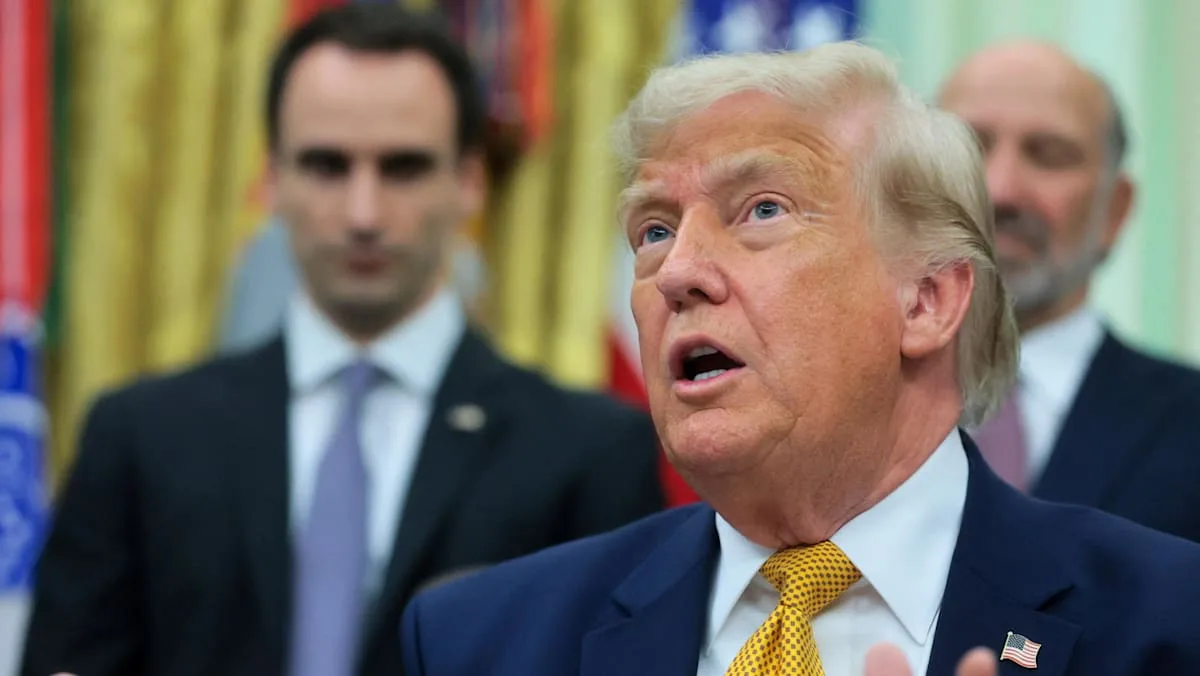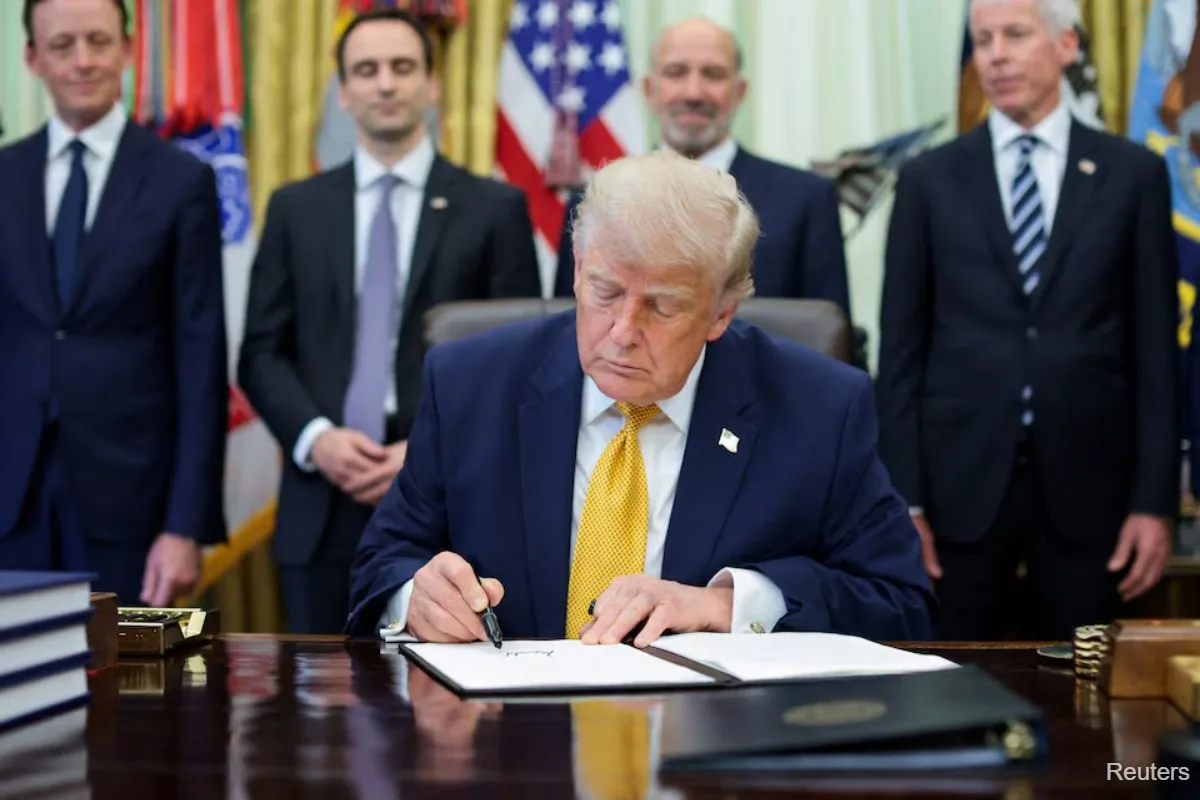
President Donald Trump signed two executive orders on June 22, 2026, directing the US government to accelerate the development of powerful quantum computers for scientific research by 2028 [1, 2, 3]. Trump emphasized quantum computing as a key pillar for the future economy and national security alongside AI and nuclear energy [4, 5].
One order requires key government computer systems to migrate to post-quantum cryptography by 2030 or 2031 to protect against cyberattacks enabled by future quantum computers [1, 3]. The orders also instruct federal agencies to develop plans to deploy quantum-enabled sensors and quantum networks within five years [1, 6].
The Pentagon must deploy quantum sensors by 2028 that can support aircraft navigation in GPS-denied environments and detect underground tunnels or missile silos via satellite [1, 2]. The government plans to partner with private companies and academia to develop these technologies, while major US quantum firms including IBM, Microsoft, and Google target building the first large-scale fault-tolerant quantum computers by 2029 [7, 8, 9].
Quantum computers use quantum bits or qubits in superposition, enabling much faster calculations than classical bits, but currently suffer high error rates and lack stability for practical use beyond research [7, 10]. A White House official said government-developed quantum computers may initially be less powerful than commercial versions developed privately [7, 9].
The US recently invested about US$2 billion across nine quantum computing companies, including an IBM venture, to boost industry progress [2, 4]. Michael Kratsios, former US CTO, said, "We believe this can happen by 2028," and highlighted the goal of "develop[ing] the first ever quantum computer powerful enough to initiate the era of quantum-enabled scientific discovery" [2, 4].
Kratsios added international cooperation on intellectual property protections and supply chain security will be strengthened to counter efforts by competitors and adversaries to undermine US economic and national security [1].
Federal agencies must submit plans within five years for deploying quantum sensors and networks as part of these efforts [1, 3]. The migration to post-quantum cryptography is targeted for completion by 2030 or 2031 [1].