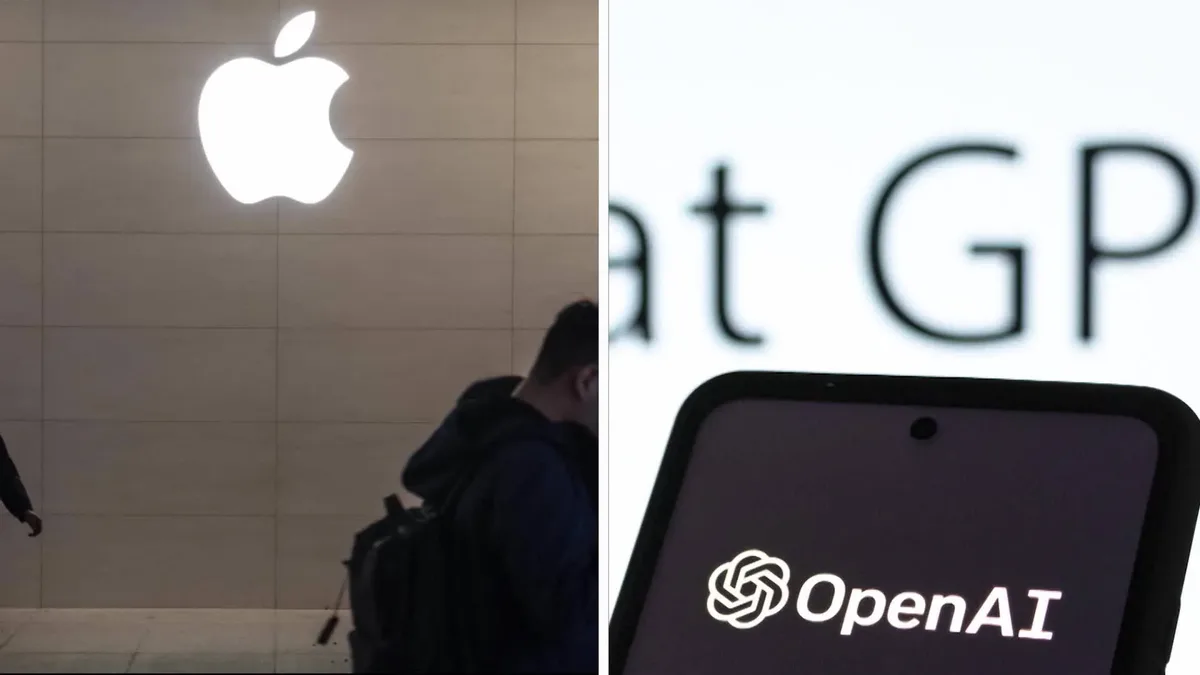
Apple and OpenAI began a two-year partnership in June 2024 to integrate ChatGPT into Apple devices and software such as Siri and iOS features [1, 2, 3, 4, 5]. OpenAI has grown dissatisfied, accusing Apple of failing to effectively promote or deeply integrate ChatGPT functionalities, which limited user discoverability and reduced subscription growth expectations [1, 2, 3, 6, 7, 4, 5]. An anonymous OpenAI executive said, "They basically said, ‘OpenAI needs to take a leap of faith and trust us.’ It didn’t work out well" [2]. Another executive added that OpenAI had committed fully on the tech side but felt Apple showed no basic promotional goodwill, making OpenAI's trust feel cheapened [5].
OpenAI’s legal team is working with an outside law firm to evaluate options including potentially sending Apple a breach-of-contract notice, though no lawsuit has yet been filed [1, 2, 8, 3, 6, 7, 4, 5]. Some reports indicate the dispute centers on revenue sharing, integration depth, and whether Apple met contractual commitments [4, 5], while others note exclusivity was never guaranteed and Apple’s addition of other AI providers is not the main trigger [3, 7].
Complicating ties, Apple plans to open its AI platform in the upcoming iOS 27 to several third-party AI models such as Anthropic’s Claude and Google Gemini, which could reduce OpenAI’s role within Apple’s ecosystem [3, 7, 4, 5]. Apple also reportedly has concerns about OpenAI’s privacy policies and hardware initiatives led by ex-Apple executives, contributing further to tension [2, 5].
The strain showed in Apple’s share price, which dipped to $295.38 on May 14, 2026, following news of potential legal conflict [7]. Despite tensions, both Apple and OpenAI still hope for an out-of-court settlement [8, 5].
The upcoming Apple Worldwide Developers Conference on June 8, 2026, is expected to reveal Apple’s new AI strategy, including multi-model integration that may reshape OpenAI’s role in its ecosystem [3, 4, 5].