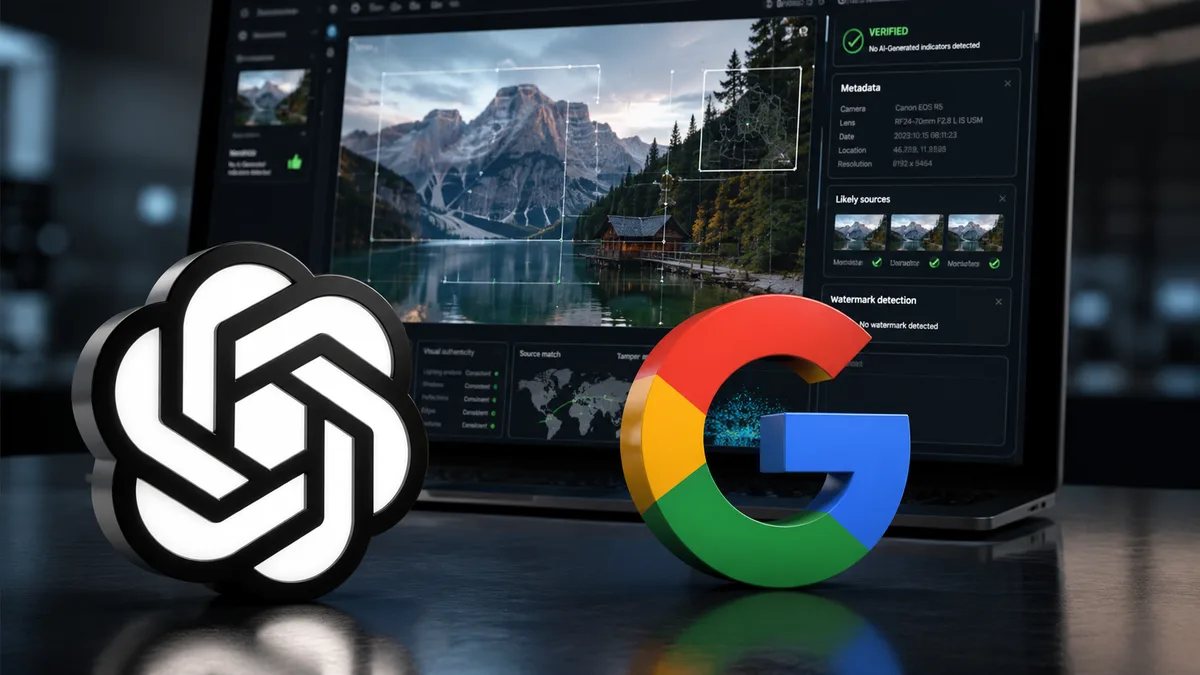
OpenAI on May 19, 2026, announced it will embed SynthID invisible watermarks and adopt C2PA metadata standards to mark AI-generated images, working with Google on the effort [1, 2]. The watermarks will be included in images created by OpenAI's ChatGPT, Codex, and OpenAI API products [1, 2, 3]. OpenAI said, "Watermarking can be more durable through transformations like screenshots, while metadata can provide more information than a watermark alone. Together, they make provenance more resilient than either layer would be on its own" [1].
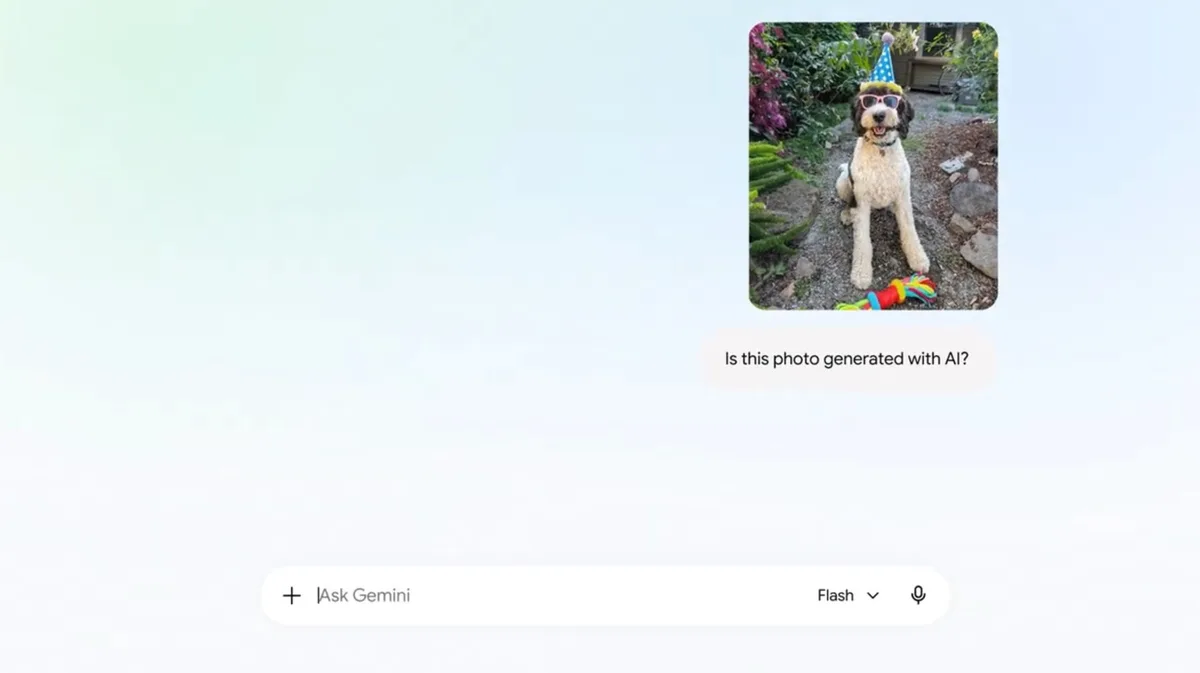
SynthID is a technology developed by Google that applies invisible watermarks to images that persist through resizing, screenshots, and edits, complementing metadata-based C2PA standards [1, 2, 4]. At Google's I/O 2026 developer conference, Google announced it will expand SynthID detection to its Chrome browser, Google Search, Google Lens, Circle to Search, and Gemini app [3, 2, 4]. These integrations will allow users to verify if images are AI-generated or AI-edited within widely used Google services.
Google has already launched an AI mode in Google Search across all supported regions as of May 20, 2026, which supports content provenance verification [4]. Chrome will begin rolling out SynthID watermark verification along with C2PA content credential validation within weeks, continuing over the coming months [2, 4]. This is significant given Chrome's global browser market share of 68% and Google's 90% market share in web search [2].
Other companies including Kakao and ElevenLabs are also adopting the SynthID watermarking standard for their AI-generated content products [3, 2, 4]. However, limitations remain as some social media platforms strip C2PA metadata when users upload or reshare images, potentially creating gaps in provenance data [2].
OpenAI has also previewed a public verification tool designed to let users easily check if an image was generated by OpenAI’s models, though this tool is in early stages [1]. Looking ahead, Google plans to launch Gemini Spark, a personal AI assistant integrated with Chrome, initially in beta for Google AI Ultra subscribers in summer 2026 [4].
The combined use of SynthID watermarks and C2PA metadata aims to create a more robust way to identify AI-generated images and combat misinformation or manipulation. Google’s rollout of verification features in Chrome and Search will begin in the coming weeks, marking the start of broader adoption of these standards across digital platforms [2, 4].