French AI startup Mistral AI has signed deals with Airbus SE and BMW AG to integrate artificial intelligence into their manufacturing processes, including design, simulation, and quality control [1, 2]. Airbus agreed to a five-year contract to use Mistral's AI capabilities across its commercial aircraft, helicopter, and space divisions [1, 2]. BMW will deploy Mistral’s AI tools to address challenges in automobile manufacturing and research [1, 2].
Founded in 2023, Mistral AI has quickly grown to about 1,000 employees and was valued between 11.7 and nearly 12 billion euros last year [1, 3, 2]. The company aims to reach revenue of 1 billion euros or more in 2026 [1, 2]. It has invested 4 billion euros in data centers across France and Sweden to support its AI computing capacity [3].
Mistral recently acquired Austrian AI simulation startup Emmi in May 2026, strengthening its simulation offerings [1, 2]. On May 28, 2026, Mistral announced its contracts with Airbus and BMW alongside plans to open a new 10MW AI inferencing data center near Paris in the third quarter of 2026 [1, 2]. The company targets expanding this site to 200MW by 2027 and 1GW by 2030 [1, 2].
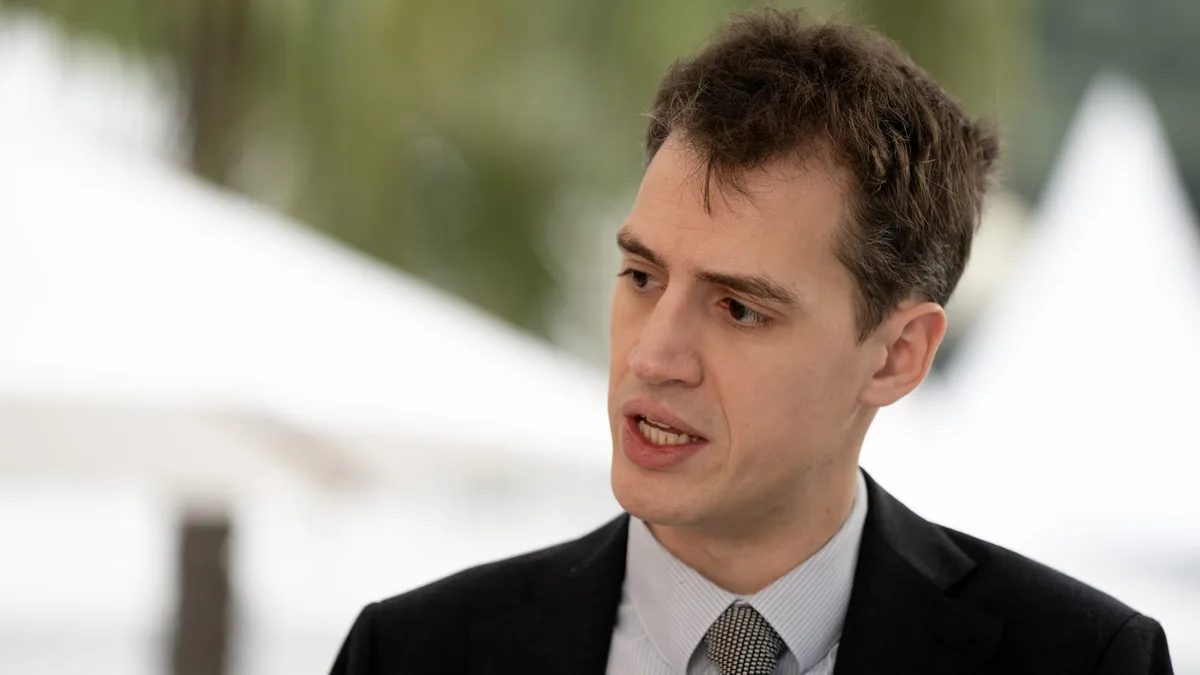
The startup also secured a 1.3 billion-euro investment last year from Dutch chipmaker ASML Holding NV, forming a strategic partnership [1, 2]. Mistral is exploring designing its own custom AI chips to reduce costs and improve integration but currently relies on Nvidia GPUs, CEO Arthur Mensch said. "Owning the chips may come, I think it should come at some point, but for now we are relying on Nvidia," Mensch said [3].
Mensch noted Europe lags behind in AI infrastructure buildout and said Mistral is investing heavily to close that gap. "One of the strengths of Europe is in its high-end manufacturing. Intelligence into products that have a real existence," he added [1, 3].
The company plans to invest a total of 10 billion euros in the coming years to build out its AI hardware and software capabilities [1, 2]. Its next milestone is opening the 10MW Les Ulis data center in Q3 2026, a key step to expanding its AI inferencing power near Paris [1, 2].