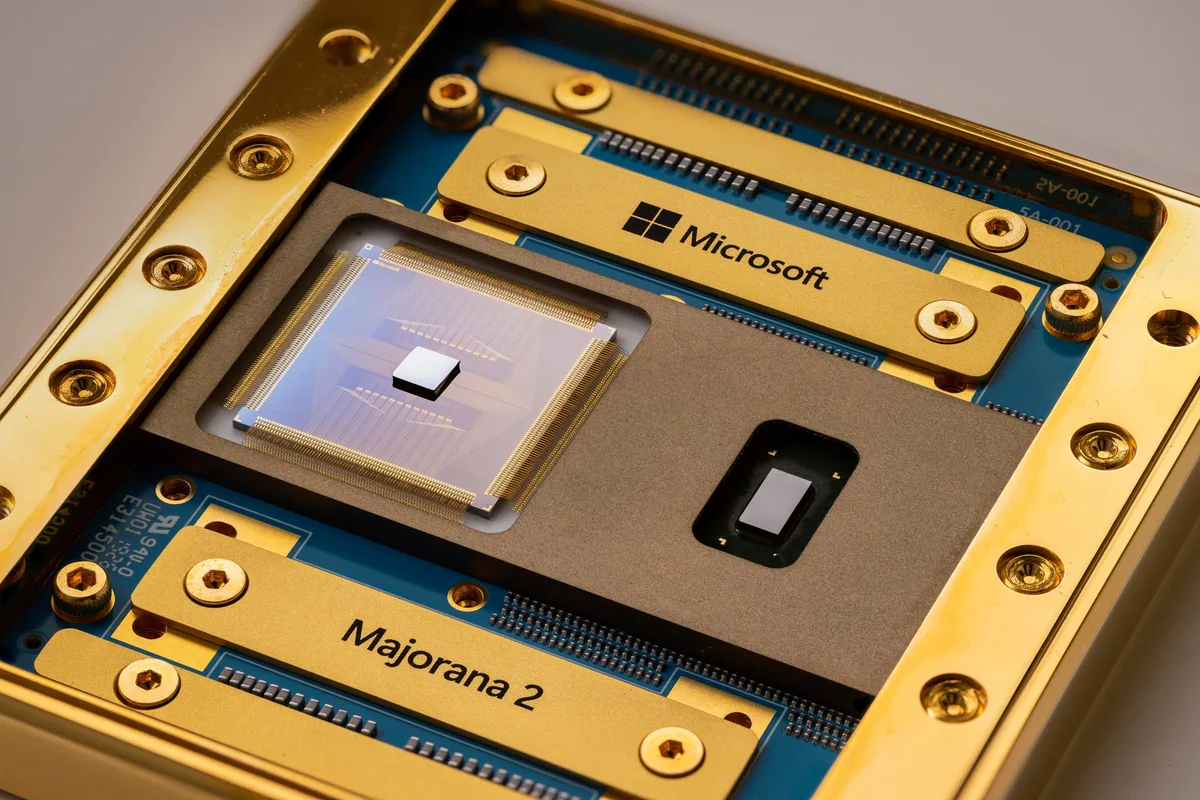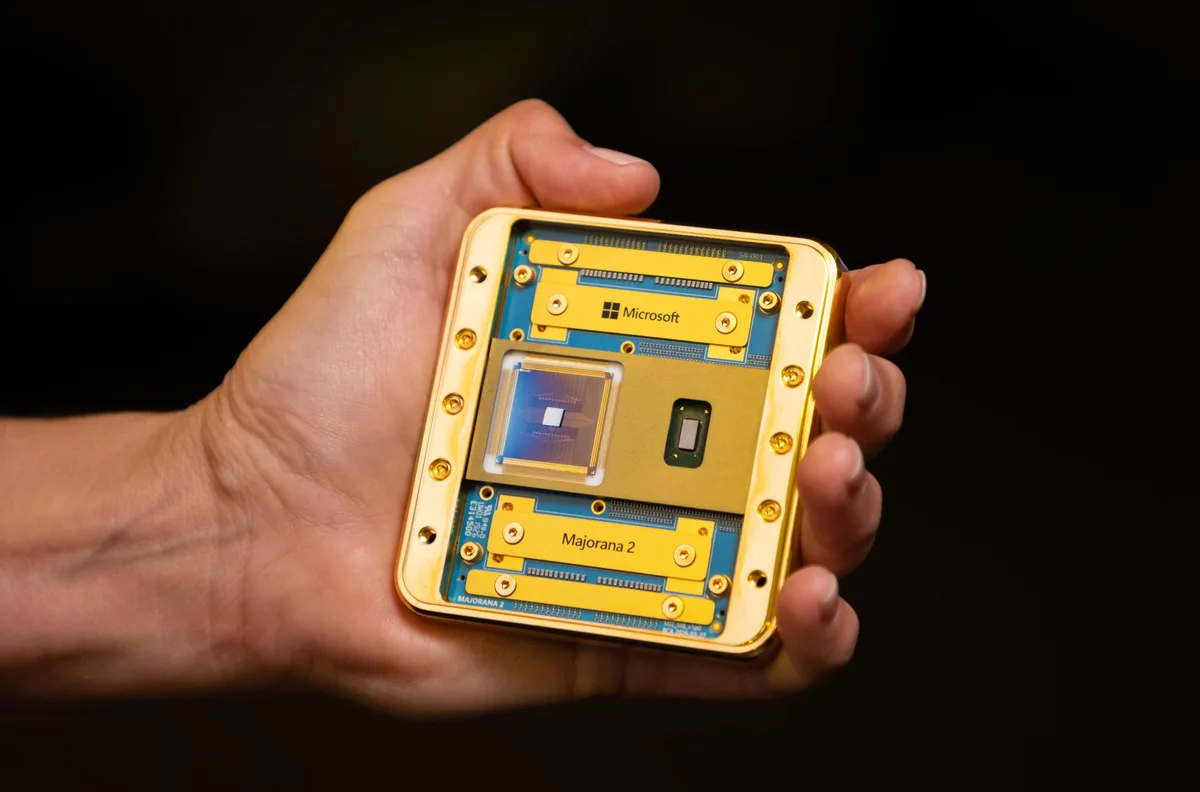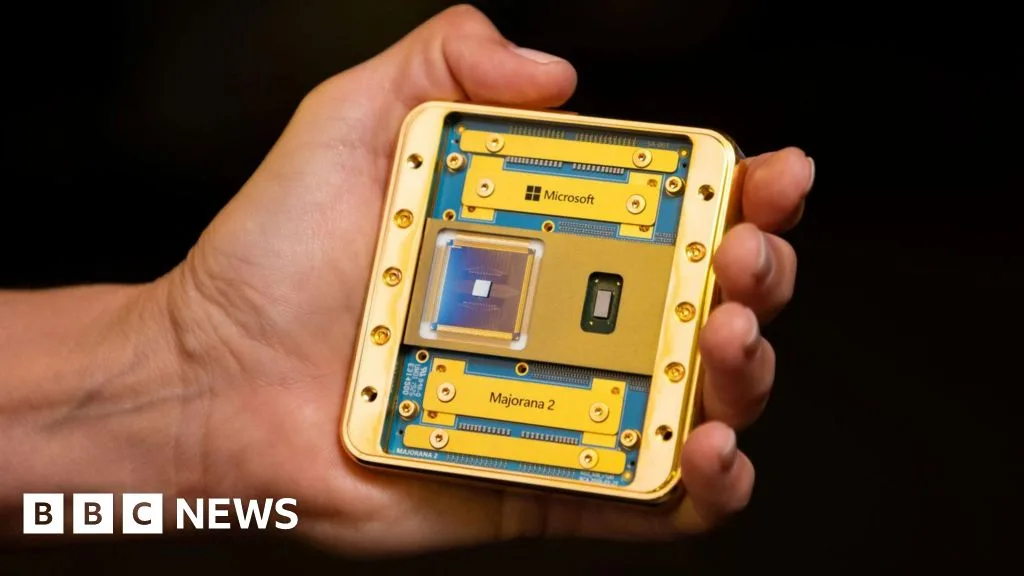
Microsoft unveiled its Majorana 2 quantum chip on June 2, boasting qubits with coherence times exceeding 20 seconds—1000 times longer than the initial Majorana chip—and featuring 12 qubits, up from 8 or 12 in the previous generation depending on sources [1, 2, 3, 4]. The new chip marks a significant step in Microsoft's quantum computing program, which targets a commercially useful fault-tolerant quantum computer by 2029, cutting the timeline in half from earlier projections [1, 2, 3, 4].
The Majorana 2 chip employs a new material stack that replaces aluminum superconductors with lead and updated compounds of indium arsenide and indium arsenide antimonide. Microsoft credits AI-driven tools for discovering the use of lead, overcoming manufacturing challenges such as its water solubility. Jason Zander, Microsoft EVP, said, "The breakthrough... was figuring out how to use lead, which is water soluble, on a chip without the lead washing away during the manufacturing process" [2, 3].
Microsoft’s topological qubit approach exploits Majorana quasiparticles, theoretical particles predicted in the 1930s but only recently realized in hardware [1, 3]. The company does not publicly disclose full technical details, citing commercial confidentiality, prompting some skepticism from physicists. Paul Stevenson, physics professor at University of Surrey, said, "Microsoft appears to have made a leap... If they succeed, they will leap from being a player with no production quantum computer, to being a serious player" [1].
The initial Majorana chip was released in 2025 with either 8 or 12 qubits, depending on the source [1, 4]. The original qubit coherence time ranged from 1 to 12 milliseconds, compared to Majorana 2’s 20 seconds, with some exceeding one minute [1, 2]. Microsoft’s VP of Quantum, Zulfi Alam, stated, "We will have a quantum machine in 2029 that can solve commercially viable, reasonable problems" [1]. Technical fellow Chetan Nayak said, "Based on this rapid progress, we are accelerating our roadmap... and now aim to reach this target by 2029" [2].
Microsoft plans to continue developing the Majorana 2 chip technology in the coming years to meet the 2029 target for scalable, practical quantum systems [1, 2, 3, 4].