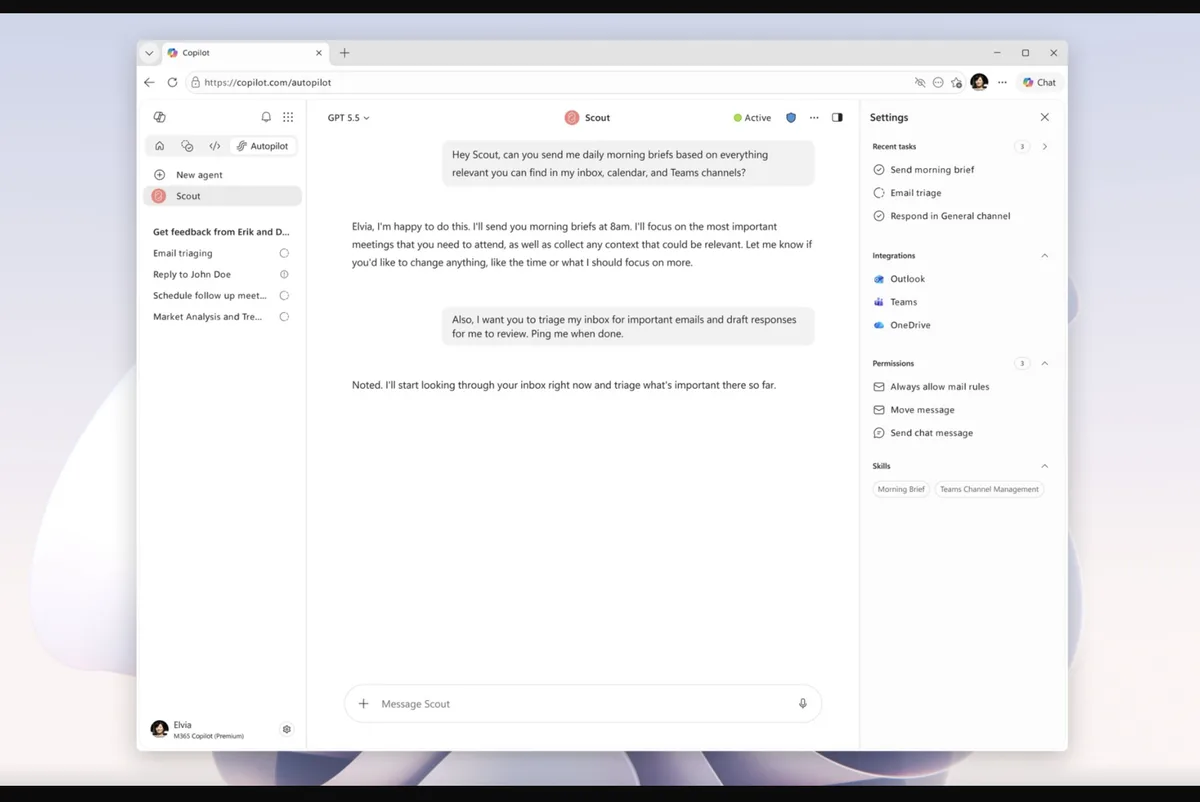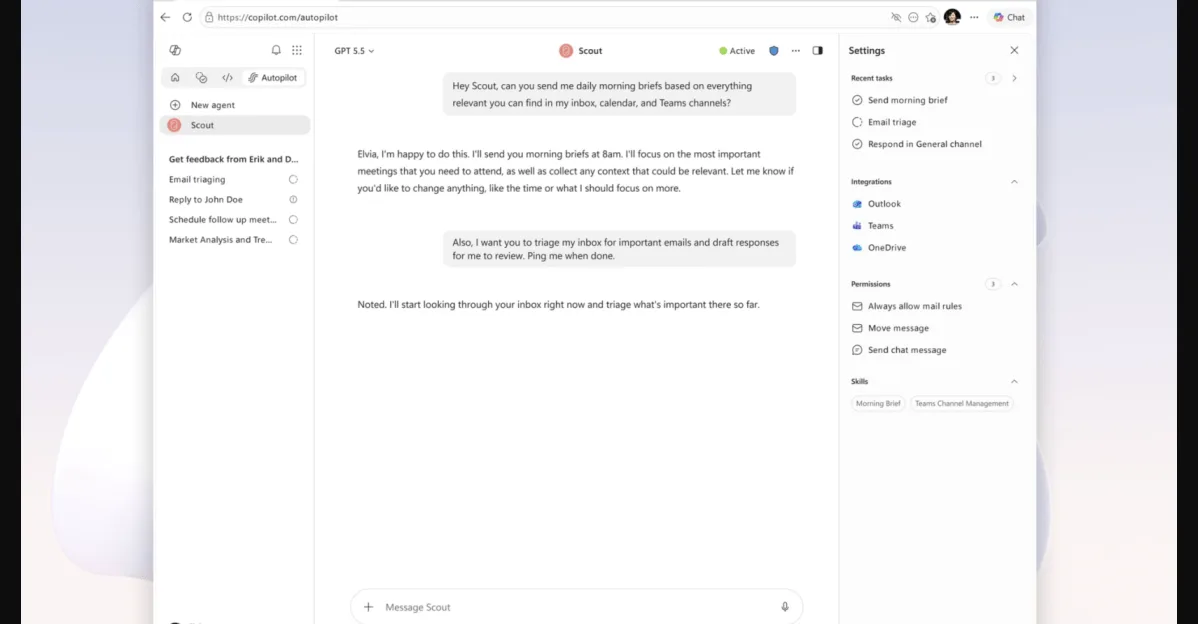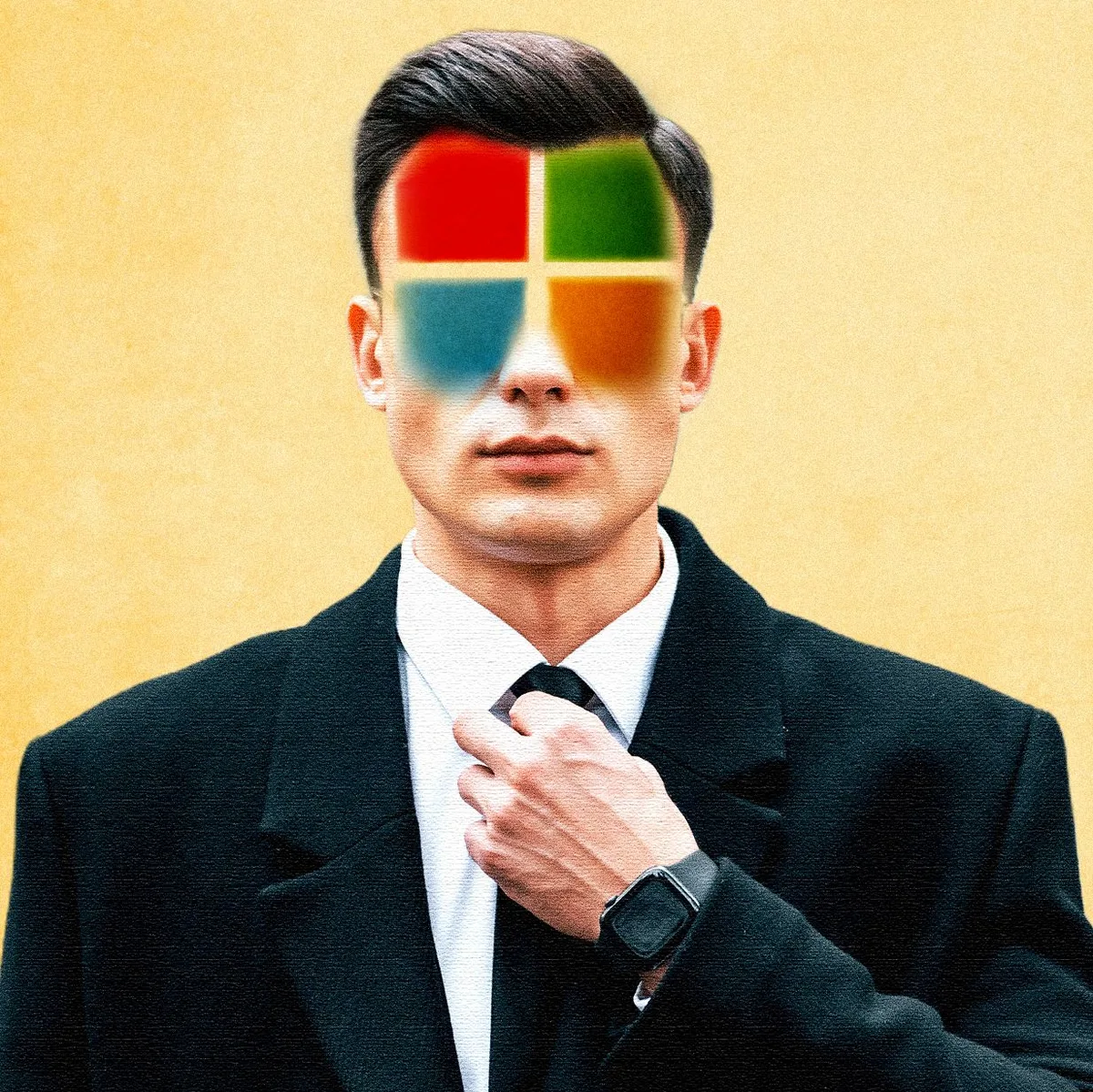
Microsoft introduced Scout, a new always-on autonomous AI personal assistant, at its Build developer conference on June 2, 2026 [1, 2, 3, 4, 5, 6, 7]. Built on the OpenClaw framework, Scout operates across Microsoft 365 apps including Teams, Outlook, OneDrive, and SharePoint, automating routine work such as scheduling meetings, blocking calendar time, preparing agendas, spotting stalled decisions, expense reporting, and drafting emails [1, 3, 4, 5, 6].
The assistant runs cross-platform on cloud, desktop, and web environments, and links to external applications through a model context protocol (MCP) [1, 2, 3]. Scout is currently available only as a preview release to Microsoft Frontier customers and requires a GitHub Copilot subscription, according to some sources [1, 2, 3, 4, 5, 6, 7]. Over 3,000 Microsoft employees have used Scout’s desktop app internally for tasks like scheduling and paperwork [3, 5].
Omar Shahine, Microsoft Corporate Vice President, described Scout as "the first real personal assistant we’ve offered customers," highlighting that it can initiate actions proactively and even make phone calls unlike prior chat-based AI [3]. He said, "Autopilots stay active in the background, understand how work gets done across your apps and systems, and take action without needing to be prompted each time" [1]. Shahine also noted users can personalize Scout by naming it and providing ongoing feedback to improve its skills and agency [2, 5].
Scout features strong security protections, including a policy conformance system and execution of AI workflows inside Windows-enforced containers to safely run multi-step tasks, according to Kyle Daigle, Microsoft Developer CMO [2, 6]. It is designed to understand users’ work habits, adapt over time, and integrate deeply with enterprise workflows and business logic [1, 2, 4, 6]. The assistant can operate autonomously even when users are offline and monitor local traffic to recommend departure times for appointments or pickups [1, 3, 5, 6, 7].
Microsoft also unveiled seven new AI models alongside Scout, notably MAI-Thinking-1, a reasoning model with 35 billion parameters and a 128,000-token context window. Mustafa Suleyman, head of Microsoft AI, said this model performs well on complex multi-step instructions, long-context reasoning, and code generation [6, 7].
CEO Satya Nadella positioned Scout as part of Microsoft’s transition to an "AI native enterprise" focused on superintelligence aligned with human values [6]. The company emphasized integrating AI natively into workflows with strong security and reducing reliance on third-party models like OpenAI [6, 7].
Scout remains in experimental preview, with broader availability and additional features expected later this year.