Google revealed Googlebooks, its new line of laptops running an Android-based platform built around Gemini Intelligence AI, at the Android Show: I/O Edition on May 12, 2026 [1, 2, 3]. The laptops aim to succeed the 15-year-old Chromebook line by offering a more capable AI and Android-native experience [4, 2, 5].
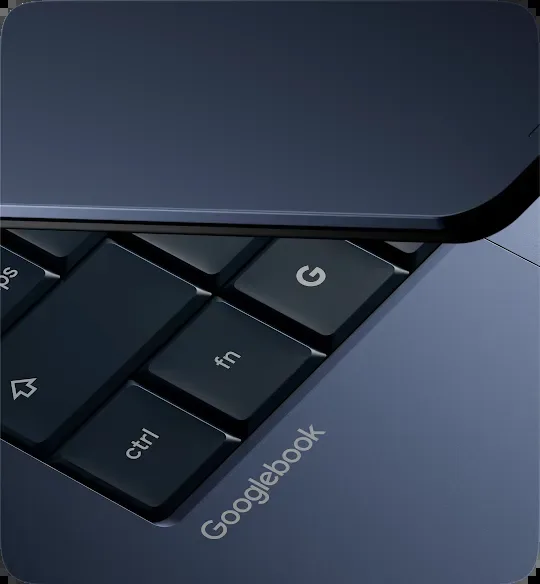
Googlebooks will launch commercially in fall 2026 with hardware partners Acer, Asus, Dell, HP, and Lenovo, marking a major push involving five OEMs [1, 2, 5, 3]. Details on hardware remain limited, though reports mention an aluminum build and a glowing light bar but no full specs yet [5, 6].
The laptops will run on a new OS internally codenamed 'Aluminium OS,' which merges Android and ChromeOS technologies, though the official name is not yet confirmed [5, 6, 3]. The user interface reportedly resembles ChromeOS with docks, floating windows, and app menus [7].
Googlebooks feature several AI-powered capabilities driven by Gemini Intelligence. One standout is the 'Magic Pointer,' an AI-powered cursor that activates contextual interactions when wiggled over screen elements. Google’s Alexander Kuscher said, "It really exemplifies how we think about AI features throughout Googlebooks. It’s built-in, but not in your face" [2].
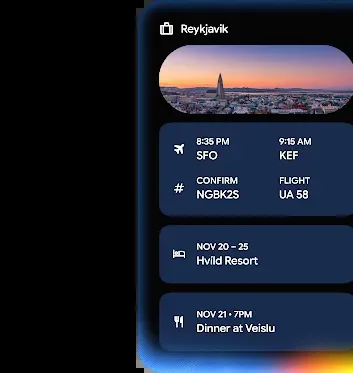
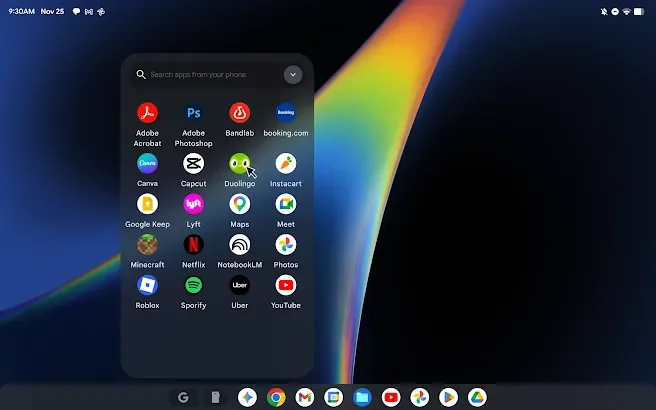
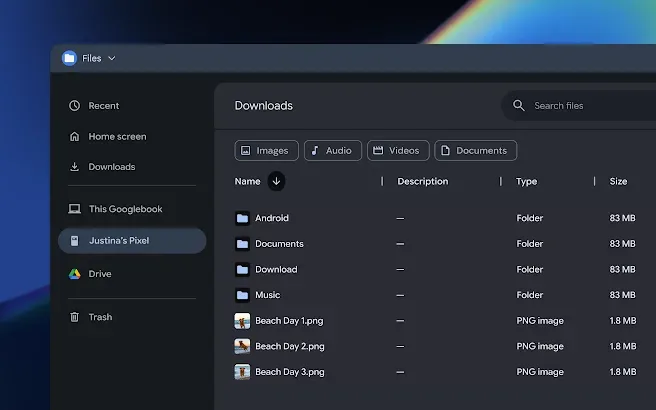
The laptops are tightly integrated with Android phones. Users can run Android phone apps directly on Googlebooks without installs and share files seamlessly between devices through a file browser integration [4, 1, 2, 5, 7]. Gemini Intelligence also powers a 'Create My Widget' feature allowing users to build custom widgets from natural language prompts [1, 2, 8, 3].
Gemini AI enables agentic features across Android devices, capable of completing multistep tasks across apps with user confirmation. Android 17 will add new Gemini-powered widgets, autofill improvements, and enhanced dictation called Rambler [9, 8, 10]. Google’s Sameer Samat described the shift as "We're transitioning from an operating system to an intelligence system" [11].
Other Gemini AI features include contextual suggestions, calendar integration, image combination, browsing and form-filling in Chrome, shopping cart management, and cross-app task automation, all with emphasis on user privacy and human oversight for approvals [4, 1, 2, 9, 11, 8].
Ahead of the laptops’ fall release, Google plans to launch the 'Create My Widget' feature on Samsung Galaxy and Pixel phones this summer, followed by Gemini AI integration into the Android Chrome browser with summarization and assistance features in late June 2026 [1, 9, 8].