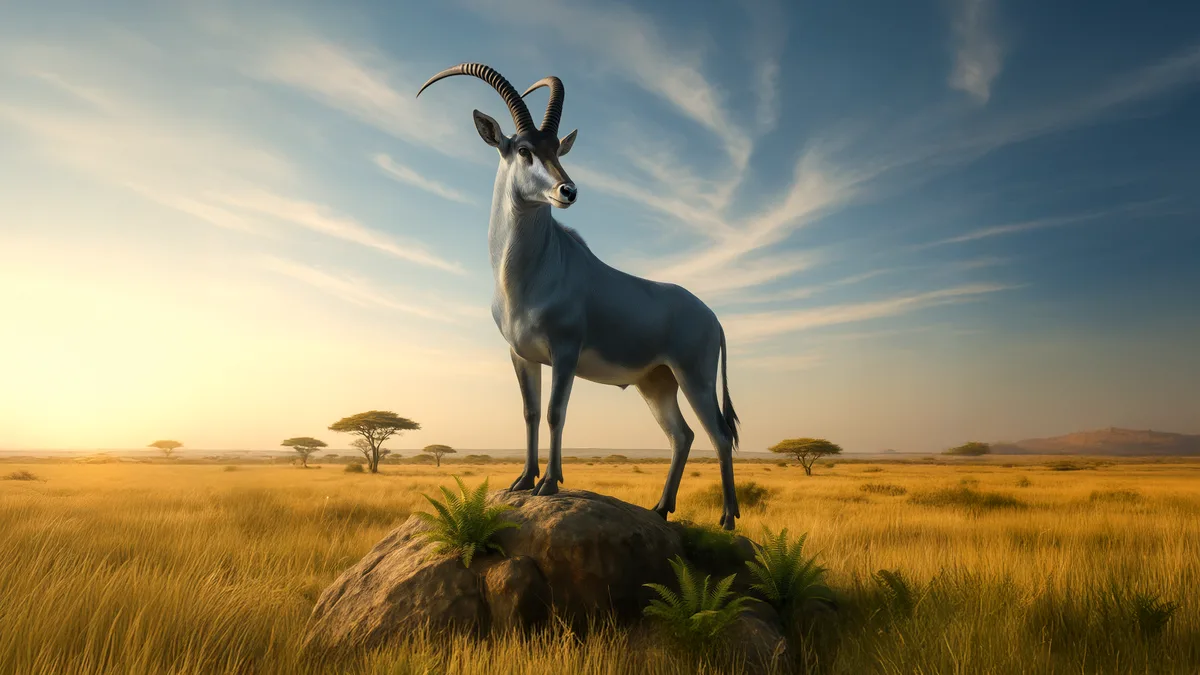
Colossal Biosciences announced progress on reviving the bluebuck, making it the sixth species in its de-extinction portfolio. The bluebuck, an antelope that lived in modern-day South Africa, was hunted to extinction over two centuries ago [1].
CEO Ben Lamm said the company obtained and mapped bluebuck DNA and compared it with the closest living relatives. The project is now in the final and most difficult phase of genomic editing, he said, with plans for a birth after a nine-month gestation in approximately 2028 [1].
Colossal described rewilding the revived bluebuck into native habitats as a long-term goal. The company is supported by South African conservation groups but has no plans for traditional zoo exhibits. Lamm said the revived animals could live in ecological preserves open to the public but stressed the decision rests with governments and local communities. "If governments and indigenous people groups and others locally want to create opportunities … we are all about that," he said, referencing examples like Kruger National Park [1].
The bluebuck project runs alongside Colossal’s highest-profile effort to revive the woolly mammoth. That mammoth team is in the final editing stages and preparing for embryo transfer into elephant surrogates, with a first mammoth birth also expected by 2028 [1]. Lamm confirmed, "The team is in the last stages of editing. The next stage will be doing embryo transfer into elephants." [1]
Colossal first gained global attention in 2025 when it showcased multiple dire wolf projects, species extinct for more than 12,500 years, highlighting the company’s broad work in de-extinction [1].
Critics question the scientific and ecological value of these projects. Scientists Paul and Anne Ehrlich called reviving extinct species an "awful idea" and others warn of potential ecological risks, though Colossal promotes its work as enhancing biodiversity and sustainability [1].
The bluebuck birth around 2028 is a key next milestone for Colossal, representing a major step toward restoring a species lost for over 200 years [1].