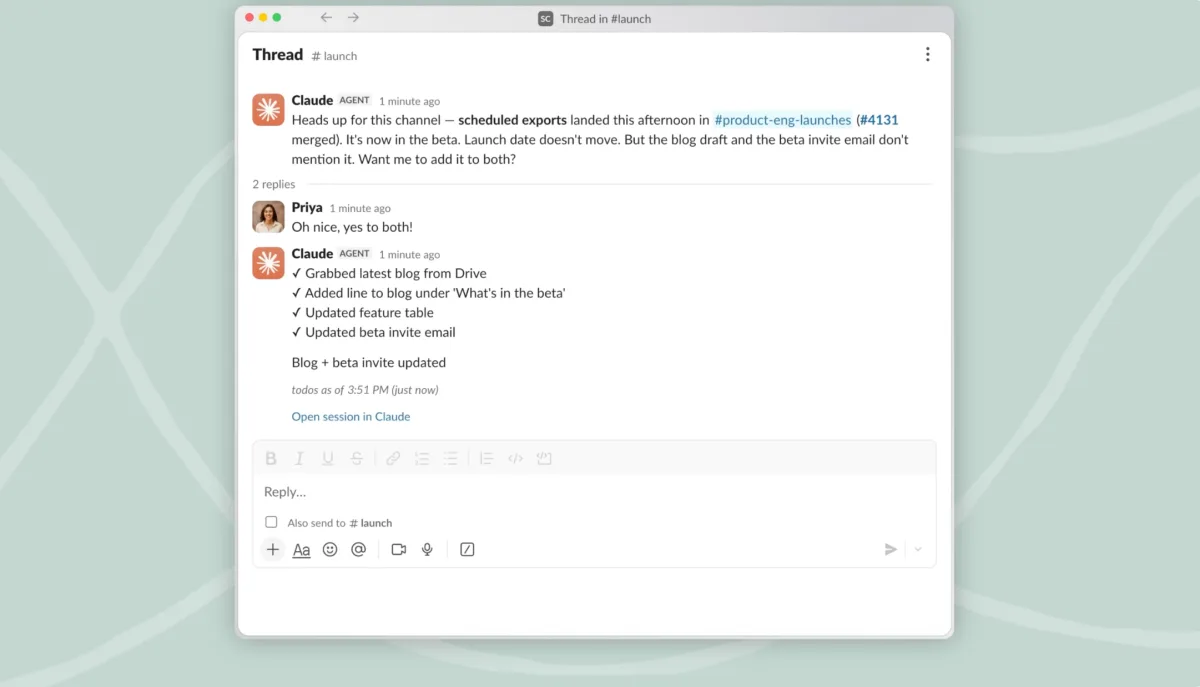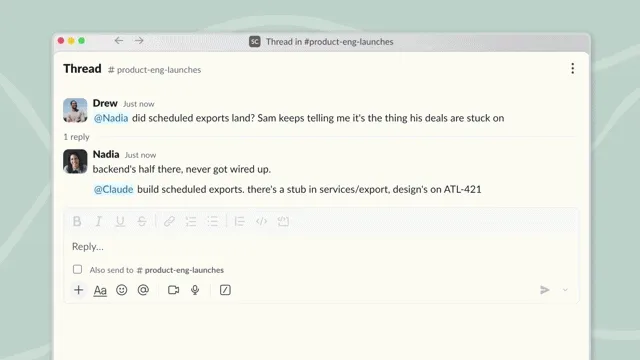
Anthropic announced and launched Claude Tag on June 23, 2026, as a new AI assistant integrated into Slack for Enterprise and Team customers in a research preview phase [1, 2, 3, 4, 5]. Claude Tag appears in Slack as a persistent, shared teammate with its own identity accessible by multiple users in a channel [1, 2, 3, 4, 5].
It can proactively monitor conversations and respond to mentions or tag requests. Claude Tag breaks down and completes tasks by connecting to various tools and data within Slack [1, 2, 3, 4, 5]. The assistant builds and remembers context over time within channels, reducing the need to repeatedly explain inputs. With admin permission, Claude Tag can learn from multiple channels while keeping knowledge domains separated to prevent data crossover, such as between legal and engineering teams [2, 3, 4, 5]. Anthropic said, "Claude Tag makes it feel like you’re working with a real colleague — one that can produce work in public view, with far greater context and understanding than before" [3].
Claude Tag replaces earlier Claude Slack integrations, adding persistent context and an ambient mode that can update teams proactively and follow up on inactive threads or tasks [3, 4, 5]. Administrators fully control Claude Tag's access to channels, data sources, and tools, ensuring data boundaries are maintained. Anthropic noted, "A Claude set up for legal work won’t pass on memories to one for engineering, nor provide engineers access to any legal data or tools" [5].
Anthropic aims to expand Claude Tag beyond Slack to other collaboration platforms in the future [2, 4]. Currently, Claude Tag is available exclusively to customers on Claude Enterprise and Team plans within Slack, still in beta and research preview [2, 3, 4, 5].
The product team at Anthropic reportedly creates 65% of their code using Claude Tag internally, demonstrating its impact on their development workflow [2]. The launch follows earlier milestones including the original Claude Slack app in October 2025 and Claude Code added in December 2025, which routed coding tasks to full online coding sessions [4].