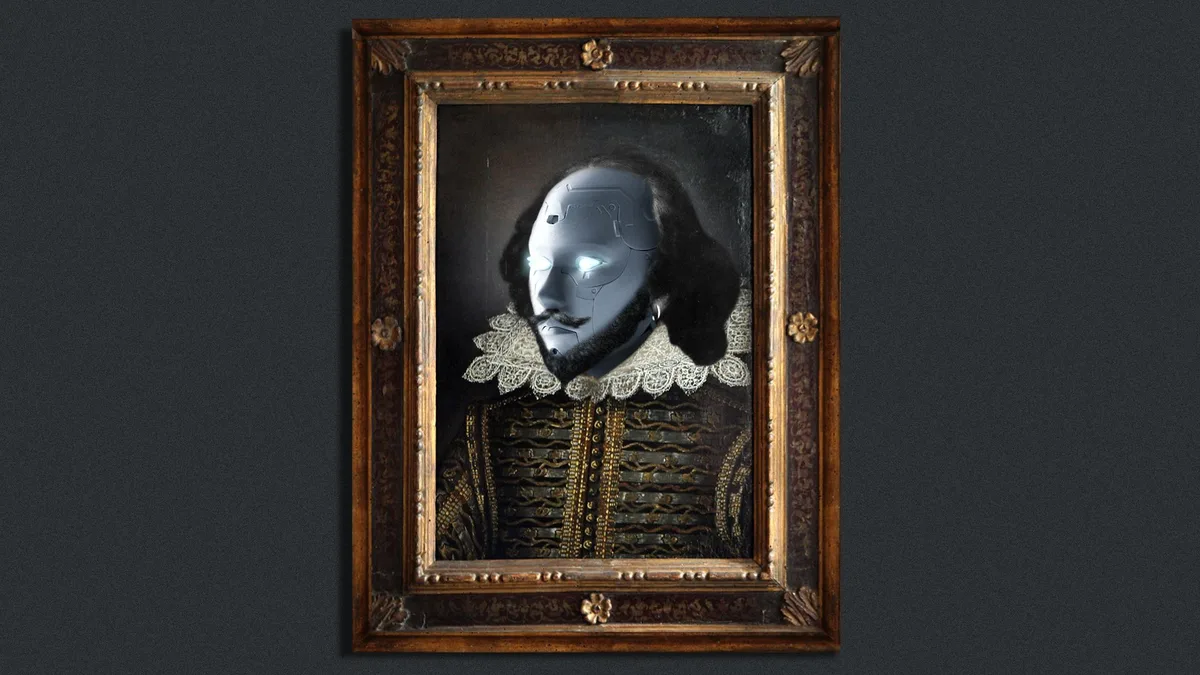
Researchers at the University of Southern California and the Max Planck Institute say large language models such as ChatGPT are reducing diversity in writing styles, with users shifting toward more standardized sentence patterns and vocabulary after the chatbot’s late-2022 release. [1]
The team examined scientific journals, local news and social media and found a sharp drop in style diversity after ChatGPT appeared. It also found that words favored by the chatbot, including “delve,” “meticulous,” “boast” and “comprehend,” showed up more often in everyday conversation. [1]
Morteza Dehghani, a USC professor, said people adapt to the model’s tone. “People get used to this idealized, very predictable form of language, and even people who are not using it, in order to have that sense of powerful, influential writing, they start writing more like LLMs,” he said. [1]
Linguists and instructors say the result is a flatter, corporate style of speech that can dull authentic voices. Alex Mahadevan, chief AI instructor at the Poynter Institute, said AI writing is “noticeably 'soulless' and 'mediocre,' even though it is grammatically correct. There's no art in it.” [1]
Emily Bender, a linguist at the University of Washington, said synthetic text can be hard to spot. “I do my very best not to read any synthetic text. But oftentimes people will send me something and I won't know,” she said. Bender also said struggle in writing has value because it helps people think and express themselves. [1]
The shift is already reaching the workplace. A 2025 Brookings survey found 32% of small businesses use AI for customer service and outreach, while 16% of individuals use large language models for communication or social media. Researchers said the pressure to sound polished can make AI-generated prose spread even when people are not directly using the tools themselves. [1]
The Max Planck team said its analysis covered 740,249 hours of content. Researchers and educators say the loss of imperfect, distinctly human writing risks replacing it with text that sounds clean but less personal. [1]